Bumper Crack Repair Kits: How to Choose and Use
A bumper crack repair kit bonds a split bumper cover back together, and the right kit depends on the plastic, the shape of the crack and the set time the listing states.

On this page
A parking lot tap leaves a split in the bumper cover, and the crack grows a little every time the bumper flexes over a bump. A bumper crack repair kit is the home fix for that split: an epoxy, a plastic welder or an adhesive that bonds the plastic back together, fills the gap and seals the crack to hold it closed. This guide explains how to pick the kind that fits the crack and how to use it.
As an Amazon Associate I earn from qualifying purchases. GarageToolHQ earns a commission when you buy through links on our product pages, at no extra cost to you. Read our affiliate disclosure.
Below: what a bumper crack needs, the kinds of repair kit, and the steps to a lasting repair.
Bumper crack repair kit: what a crack needs
A crack in a plastic bumper needs a bond that holds the plastic together, a fill that closes the gap, and a finish that can be sanded and painted. The listings in this guide cover each of those jobs. The J-B Weld BumperWeld listing states a two-part adhesive that bonds, fills gaps and seals cracks, works on bumpers made from ABS, PC, fiberglass, aluminum and most other plastics, and will not shrink over time. The J-B Weld PlasticWeld listing states a hand-mixable two-part epoxy putty stick for auto bumpers and more, made to repair and rebuild plastic compounds and surfaces.
The crack itself decides the kit. A hairline split with the edges still touching needs a bond more than a fill, while a gap that shows daylight needs a filler that can bridge it, and a crack that runs to an edge needs reinforcement behind it. The plastic matters too: the BumperWeld listing names ABS, PC, fiberglass and aluminum, the PlasticWeld listing names ABS, PVC and CPVC pipes and plastics, and the plastic welder kit lists rods in ABS, PP, PE, TPE, PC, PUR and PA. Match the kit to the plastic and to the shape of the crack before buying.
Kinds of bumper crack repair kit, and which one fits the crack
| Kind | How it works | Fits |
|---|---|---|
| Two-part epoxy putty stick | Hand-mixable stick, sets in 25 minutes and hardens in 3 hours | Rigid and semi-flexible plastic, ABS, PVC and CPVC, auto bumpers and trim |
| Two-part syringe adhesive | 1:1 mix ratio through a self-mixing static mixer, sets in 15 minutes, sand and paint in 30 minutes | Cracks and gaps in bumpers, with the BumperWeld syringe naming ABS, PC, fiberglass and aluminum |
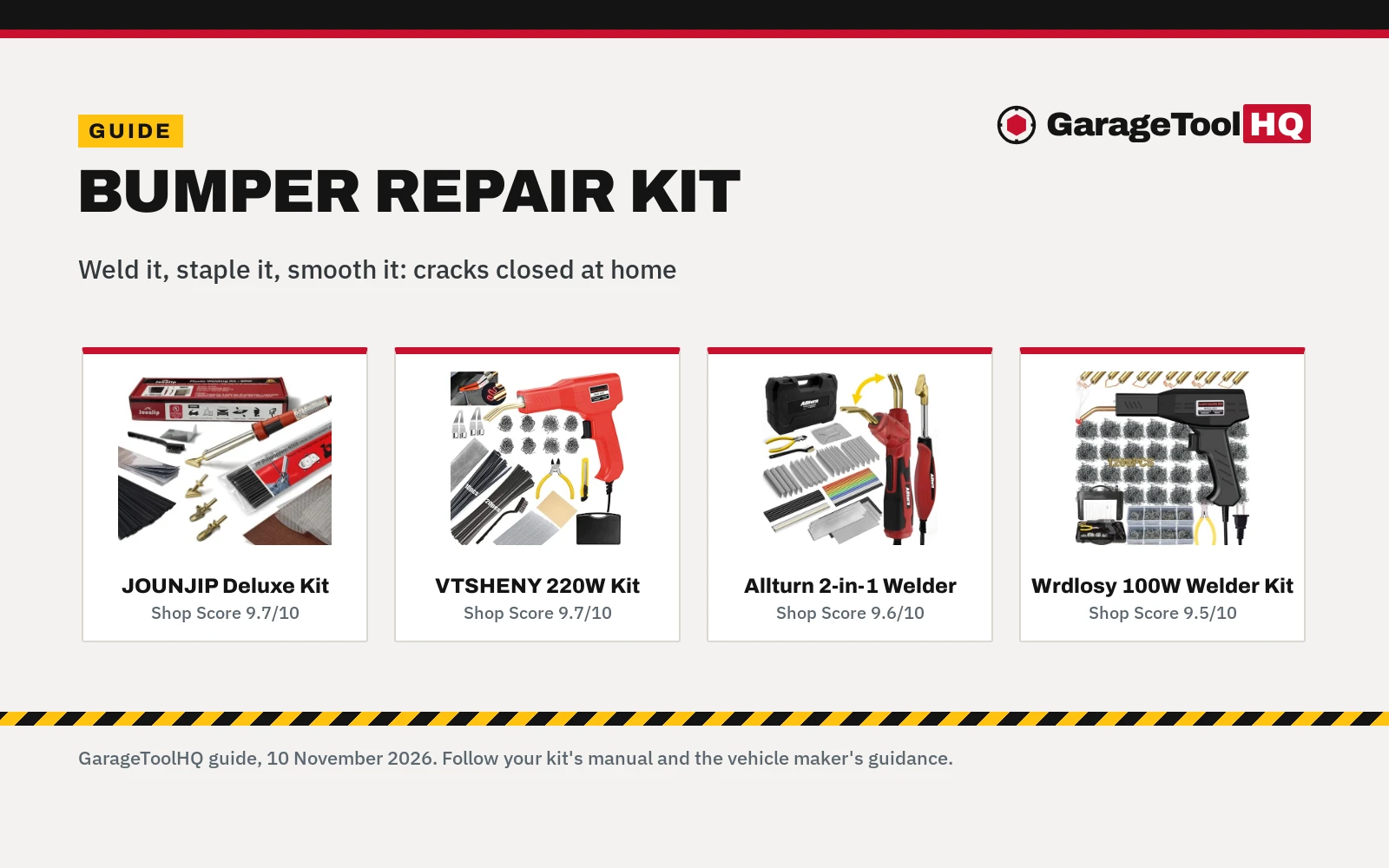
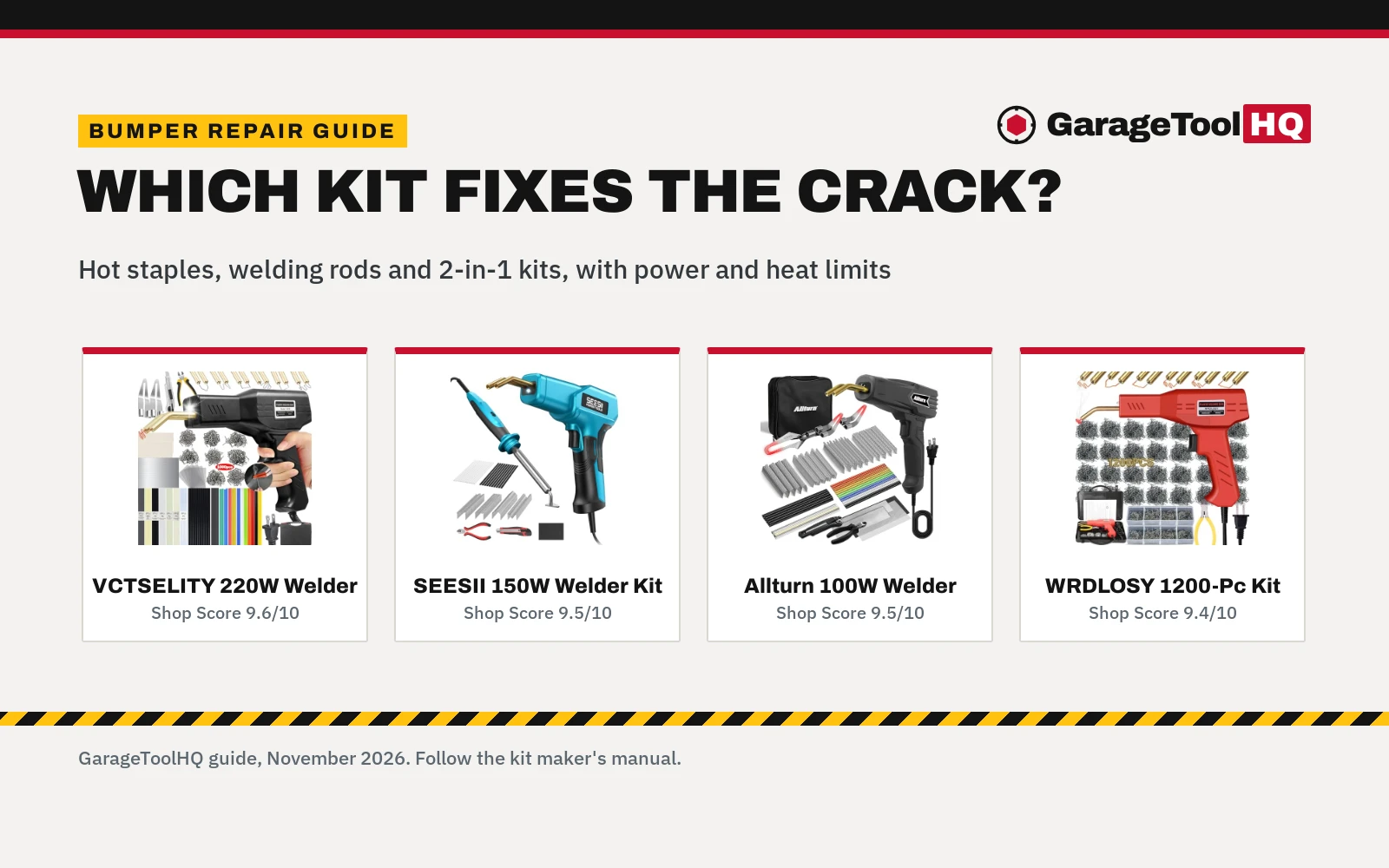
| Plastic welder kit | 100W iron with 3 temperature settings melts rods into the crack, with mesh for reinforcement | Cracked plastic bumpers, dashboards and kayak hulls |
| Ready-to-apply adhesive | Ready to apply, with no special tools required | Small cracks and splits on bumpers and plastic surfaces |
The label and the listing decide which group a kit is in, not the size of the crack alone. A putty stick sets in 25 minutes and a syringe adhesive sets in 15 minutes, so the putty leaves more time before it sets.
How to use a bumper crack repair kit: the steps
- Clean the crack and the plastic around it. Dirt and wax keep the bond from holding, so the repair starts with a clean surface on both sides of the crack.
- Check the plastic. Match the kit to the material the listing names: ABS, PC, fiberglass and aluminum for the BumperWeld syringe, and ABS, PVC and CPVC for the PlasticWeld putty.
- Mix or knead the two parts together. The syringe kits dispense in a 1:1 mix ratio through a self-mixing static mixer, and the putty stick is kneaded by hand until the two parts are mixed.
- Work the repair into the crack and fill the gap. The BumperWeld listing states it can bond, fill gaps and seal cracks, and the PlasticWeld listing states it can be molded, shaped, sanded, drilled and cut.
- Wait for the set. The syringe kits set in 15 minutes, and the putty stick sets in 25 minutes and hardens in 3 hours.
- Sand and paint. The syringe kits can be sanded and painted in 30 minutes, and the putty can be molded, shaped, sanded, drilled and cut.
- Reinforce a crack that runs to an edge. Melt a stainless mesh into the plastic behind the crack with a plastic welder, using the 5.9 by 7.9 inch mesh sheets, or the mesh in the welder kit.
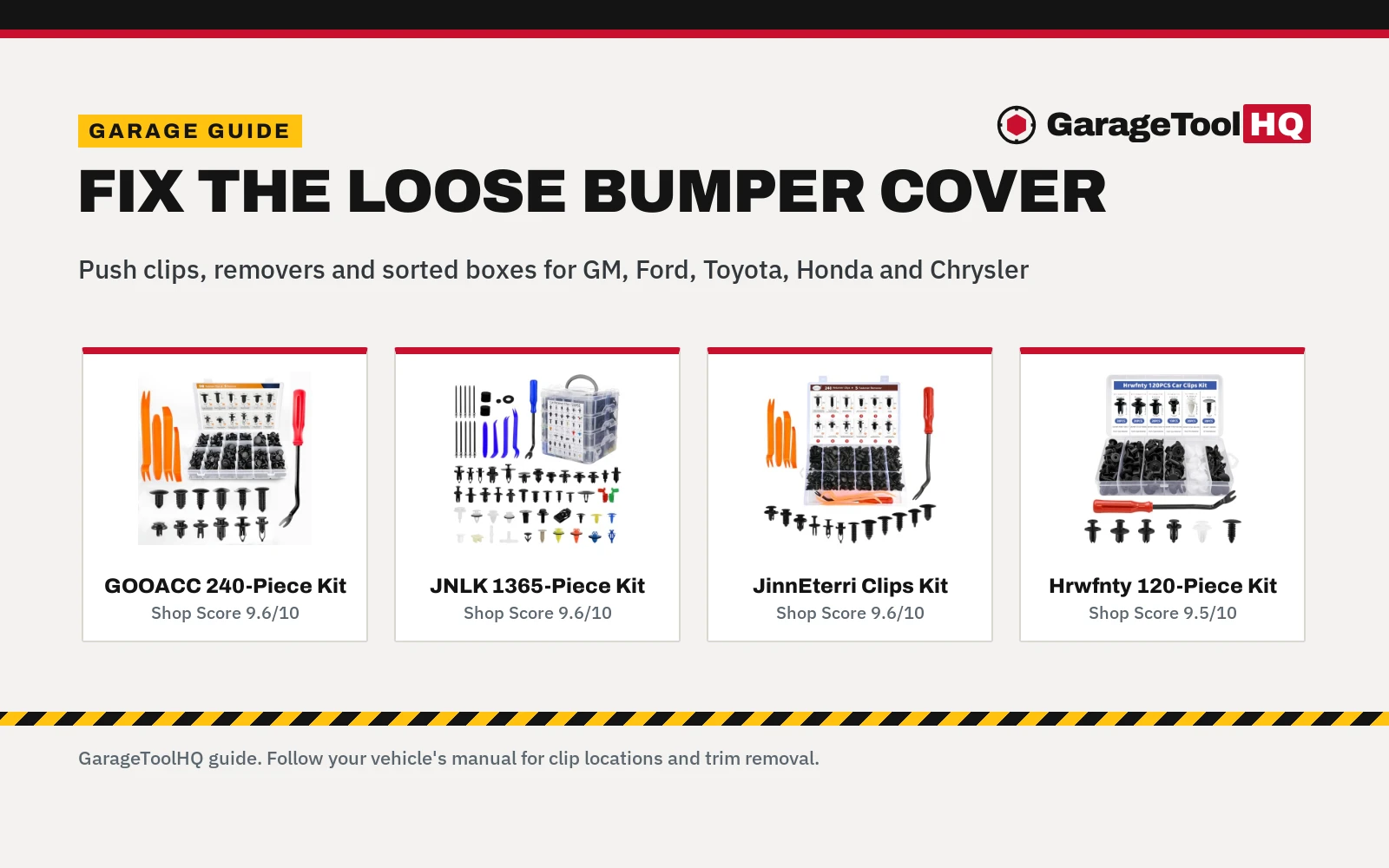
- Refit the clips. A 260-piece clip kit in 12 sizes, with 5 fastener removers, covers the push retainers that hold a bumper cover, door trim panel and fender in place.
Follow the kit maker’s instructions for the exact order, and check the repair before driving: if a spot flexes or gaps again, clean it back and redo the repair.
A crack repair bonds plastic back together. A scratch repair only dresses the surface: the trim restorer in these listings is a dye-infused restorer for faded bumpers and trim, not a crack fix, so use it for faded plastic around the repair, not on the crack itself.
What the listings state about strength and heat
Strength figures belong to the kit that states them, not to bumper repair in general. The PlasticWeld putty lists a lap shear strength of 600 PSI and states it can withstand continuous temperatures up to 250 degrees Fahrenheit (121 degrees Celsius) and intermittent temperatures up to 300 degrees Fahrenheit (148 degrees Celsius) when fully hardened. The AutoWeld and BumperWeld syringes each list a strength of 3770 PSI, and the BumperWeld listing adds 35% elongation.
Size figures matter when the crack is long or the gap is wide. The welder kit lists 56 plastic rods at 33 cm, with 7 types to match the plastic, and 5 stainless mesh sheets, 5 foil tape pieces and 3 sandpaper sheets in the box. The separate mesh sheets measure 5.9 by 7.9 inch (20 by 15 cm). The trim restorer comes as a 4oz kit, and the maker states a finish that lasts 6+ months. The multi-purpose adhesive in these listings comes as a 2-piece set, and the maker states no special tools are needed.
The clip kit is a separate job from the repair itself: 260 pieces in 12 sizes, with 5 fastener removers, in a box with labeled compartments, for bumper, door trim panel and fender clips across GM, Ford, Toyota, Honda and Chrysler.
When a kit is not enough
A kit suits a crack in the plastic cover. It does not straighten a bent bumper beam, replace a torn mounting tab, or fix paint that has lifted across a wide area. If the bumper cover will not sit back in its clips, or the crack opens again once the cover is back on the car, the cover may need a shop repair or a replacement cover. The clip kit helps only when the clips themselves are the problem: worn or broken push retainers that let the cover sag.
For the tools, see our picks for the best plastic welder kit and the best plastic stapler welder for bumper repair.
FAQ: garage tools
Can a bumper crack repair kit fix any crack?
It fixes cracks in plastic bumper covers that the kit listing covers: ABS, PC, fiberglass and aluminum for the BumperWeld syringe, and ABS, PVC and CPVC for the PlasticWeld putty. A crack in a mounting tab, a torn clip seat or a bent beam needs more than a kit.
How long before I can sand and paint?
The syringe kits state sanding and painting in 30 minutes, after a 15 minute set. The putty stick sets in 25 minutes and hardens in 3 hours, and once hardened it can be molded, shaped, sanded, drilled and cut.
Do I need a plastic welder for a bumper crack?
Not for every crack. A syringe adhesive or a putty stick bonds and fills a crack without heat. A welder kit suits a crack that needs reinforcement: it melts rods into the plastic and mesh behind the crack, with 3 temperature settings and a 100W iron.
Will the repair hold in heat?
The PlasticWeld listing states continuous temperatures up to 250 degrees Fahrenheit (121 degrees Celsius) and intermittent temperatures up to 300 degrees Fahrenheit (148 degrees Celsius) when fully hardened. Check the listing for the kit you buy, since each kit states its own limits.
What if the bumper cover will not stay clipped on?
Check the clips before the crack. The clip kit in these listings holds 260 pieces in 12 sizes with 5 fastener removers, for bumper clips, door trim panel clips and fender clips across GM, Ford, Toyota, Honda and Chrysler.
Related: our picks for the best plastic welder kit, the best plastic stapler welder for bumper repair, the plastic welder for bumper repair guide and the bumper scratch repair kit guide.