Carbon Monoxide Detector vs Propane Detector: Which One Should You Buy?
A carbon monoxide detector and a propane detector sense different gases, so a garage with propane heat needs the distinction clear before buying either device.

On this page
Top picks at a glance
As an Amazon Associate I earn from qualifying purchases.
- 1
 FOXWELL 2026 ST203 Smoke Machine Leak Detector with Air +9.7/10View on Amazon
- 2
 TAOPOWER Smoke Machine Automotive Diagnostic Detector9.6/10View on Amazon
- 3
 M-T Automotive Smoke Machine Leak Detector for EVAP Vacuum9.6/10View on Amazon
- 4
 TOPTES CT-580 Portable Carbon Monoxide DetectorView on Amazon
- 5
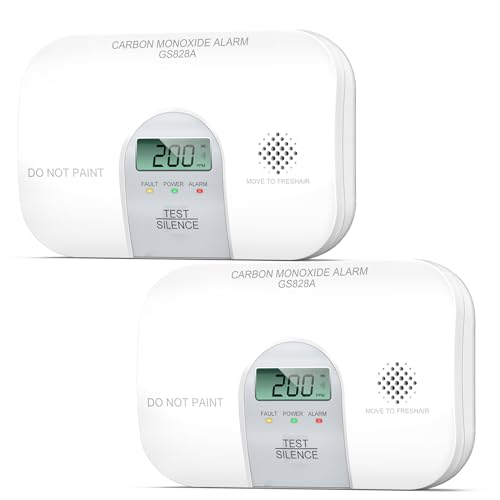 SITERWELL Carbon Monoxide Detector 7 Year Product Life CoView on Amazon
- 6
 TopTes S2 Multi Natural Gas Detector & Carbon MonoxideView on Amazon
- 7
 TOPTES CT-913 Portable Carbon Monoxide DetectorView on Amazon
- 8
 Propane Tank Gauge Level Indicator Leak Detector for BBQ GasView on Amazon
- 9
 PT205 Natural Gas Detector with Audible & Visual AlarmView on Amazon
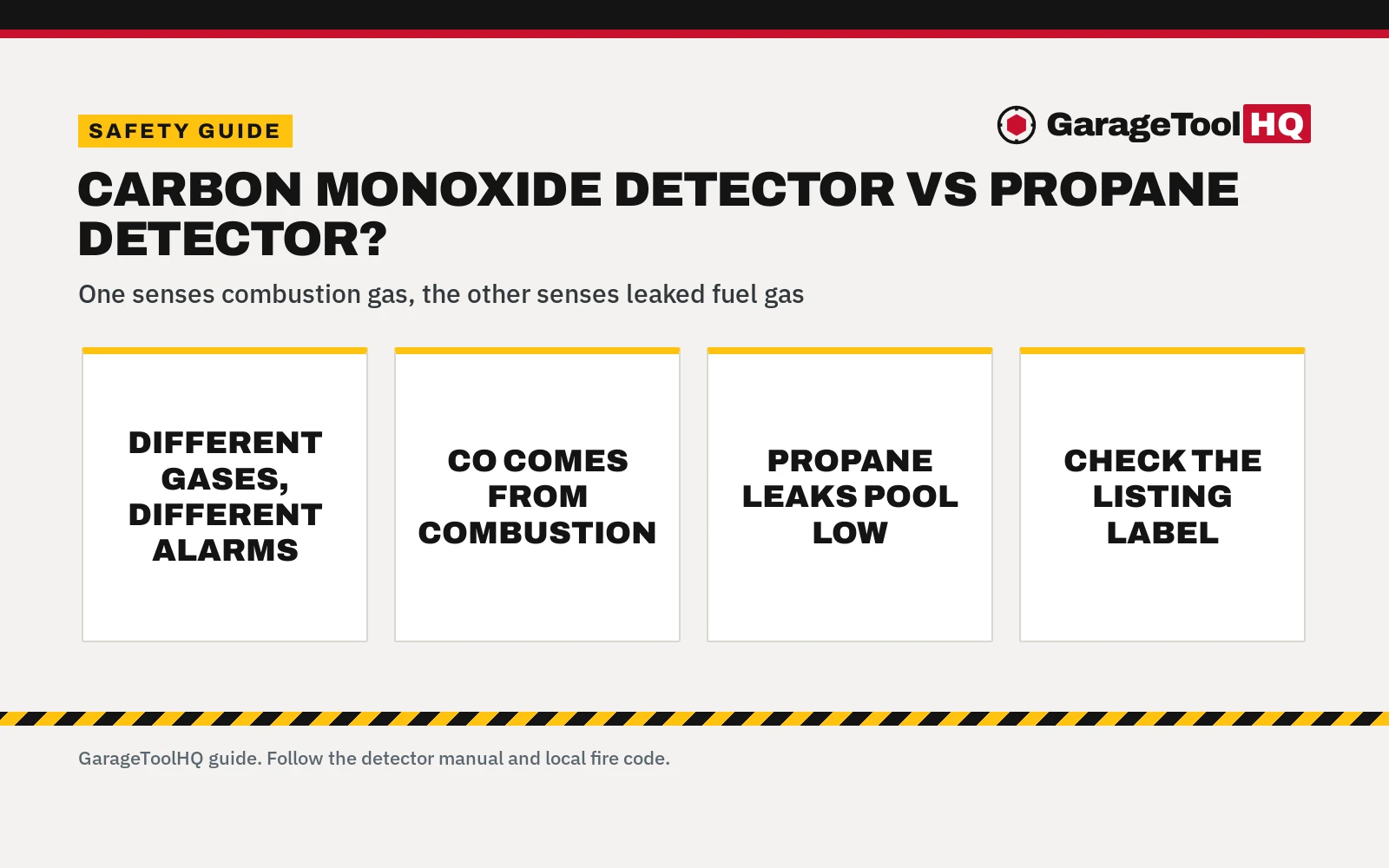
A garage with a propane heater raises a plain question: carbon monoxide detector vs propane detector, which device covers the hazard at hand? The short answer is that the two devices watch different gases. A carbon monoxide detector watches for carbon monoxide, the odorless gas produced by incomplete combustion. A propane detector watches for leaked propane gas before it can build up in a low spot or reach a flame. Because the gases differ, the alarms differ too, and a garage that burns propane needs to understand both before choosing.
Other tools worth a look
 TOPTES CT-580 Portable Carbon Monoxide DetectorCheck price on Amazon
 SITERWELL Carbon Monoxide Detector 7 Year Product Life CoCheck price on Amazon
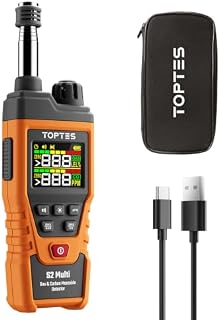 TopTes S2 Multi Natural Gas Detector & Carbon MonoxideCheck price on Amazon
 TOPTES CT-913 Portable Carbon Monoxide DetectorCheck price on Amazon
 Propane Tank Gauge Level Indicator Leak Detector for BBQ GasCheck price on Amazon
 PT205 Natural Gas Detector with Audible & Visual AlarmCheck price on Amazon
GarageToolHQ earns a commission when you buy through links on our product pages, at no extra cost to you. Read our affiliate disclosure.
Below: what each device senses, why a garage with propane heat needs both kinds of warning, and how the carbon monoxide detectors in the listings below compare.
Carbon monoxide detector vs propane detector: what each one senses
The confusion is understandable, because both devices sit in the same safety corner of a garage and both sound an alarm. The difference is the gas each one is built to sense. A carbon monoxide detector looks for carbon monoxide, which comes from fuel burning without enough air: a heater running dirty, a heater starved of fresh air, or an engine idling where exhaust cannot clear. A propane detector looks for propane itself, the fuel gas, escaping from a cylinder, a hose, a fitting or a heater connection before anything ignites it.
| Device | What it senses | When it matters | What it cannot do |
|---|---|---|---|
| Carbon monoxide detector | Carbon monoxide from incomplete combustion | While any fuel heater or engine runs in or beside the garage | Sense a propane leak; it only watches for carbon monoxide |
| Propane detector | Leaked propane gas from fuel supply parts | Whenever propane cylinders, hoses or heaters are stored or used nearby | Sense carbon monoxide; it only watches for propane gas |
That split is the whole buying decision. Swapping one device for the other leaves a gap: a carbon monoxide detector stays quiet during a propane leak, and a propane detector stays quiet while carbon monoxide builds from a poorly vented flame. Neither device replaces fresh air or the heater manual.
Why a garage with propane heat needs both kinds of warning
A garage is a hard room for combustion safety. It holds gasoline, solvents, brake cleaner and paint, and leaked propane is heavier than air, so it pools low near the floor where an open flame or a hot element can reach it. In an attached garage, carbon monoxide can also move into the house through the connecting door and gaps, which is why alarms belong on both sides of that door, not only beside the heater.
Ventilation is the other half of the answer. A vented propane unit heater sends combustion gases outside through a flue. A portable heater rated by its maker for indoor use still needs the fresh-air opening the manual calls for, and it must never run in a closed garage. Never run a car, a generator or any gas engine in a closed garage, even with the door partly open, and never use an outdoor-only heater inside. For fuel heaters: ventilation per the maker plus a carbon monoxide alarm, and a licensed electrician for electrical work.
The gear: carbon monoxide detectors from the listings
All 4 listings below are carbon monoxide detectors; none of the 4 listings states propane detection. The X-Sense listing adds smoke detection alongside carbon monoxide. Ranked by stated coverage, stated warranty terms and install flexibility, the order runs from the Kidde COP plug-in first to the Siterlink plug-in last.
Kidde COP plug-in carbon monoxide detector
The Kidde COP listing leads on stated warranty and install detail. It plugs into a 120V AC outlet and carries 2 AA backup batteries, included, so detection continues during an outage. The rotating plug fits vertical or horizontal outlets, and the listing states power surge immunity to help maintain performance. The alarm sounds at 85 dB, an LED warning light indicates hazard, and a hush button covers quick checks and silencing. The listing states the alarm meets UL 2034 5th Edition standards and is ETL Listed, and it carries a 10-year limited warranty on the alarm. Listed dimensions are 1.52 Inches x 5.47 inches x 5.47 inches, and listed weight is 0.43 pounds. The listing also describes the unit as suitable for use at home or for travel, including hotels or vacation rentals.
X-Sense SC01 smoke and carbon monoxide detector, 5-Pack
The X-Sense SC01 is the combination pick: one device that watches for both smoke and carbon monoxide, sold as a 5-Pack. It runs on a 10-year sealed battery and is not hardwired, so mounting needs no rewiring, using the included mounting bracket, screws and anchor plugs. A display shows CO and battery levels, and the alarm sounds at 85 dB. The listing states UL 217 and UL 2034 certification and ETL certification, with a 5-year quality warranty. Listed dimensions are 5.7 inches x 5.7 inches x 2.0 inches. The limits are stated plainly too: the SC01 is a basic standalone unit that does not support wireless interconnection, does not have Wi-Fi, and cannot be used with a base station.
Kidde KN-COB-DP2 plug-in carbon monoxide detector
The Kidde KN-COB-DP2 is a straightforward plug-in for a standard 120V outlet, with 2-AA battery backup for protection during a power outage. The alarm sounds at 85 dB, LED status light indicators show the unit state, and Peak Level Memory records the last time carbon monoxide was detected. The listing names the unit as the 3rd Edition. Listed dimensions are 2.32 inches x 2.83 Inches x 4.72 Inches. No warranty term is stated in the listing data for this model, which is the main gap against the COP above it: same plug-in idea, but no stated warranty term and no rotating plug or surge immunity stated.
Siterlink plug-in carbon monoxide detector
The Siterlink listing closes the ranking on travel convenience rather than stated certifications. It plugs into a standard outlet for continuous AC operation, with a 10-year battery backup for protection during an outage. A foldable plug keeps the unit compact for packing, and the listing describes it as ideal for hotels and homes. A soft green status light shows a steady power supply without disturbing sleep, and an electrochemical sensor is stated to minimize false alarms. No dimensions, no warranty term and no certification are stated in the listing data, so buyers who want stated certifications should look at the Kidde or X-Sense listings above.
How to choose for a garage
Start from the fuel in the garage. If propane cylinders, hoses or a propane heater are present, a propane detector belongs in the plan alongside a carbon monoxide detector, because the carbon monoxide listings above do not state propane detection. Then match the carbon monoxide detector to the room: a plug-in suits a garage with a free standard outlet, while a sealed-battery unit suits a wall or ceiling spot with no outlet nearby. Check the manual for placement and for what each light and alarm pattern means. Keep the connecting door to an attached house closed, keep gas cans and solvents well away from any flame, and store spare propane cylinders upright outdoors, away from doors and vents, as local fire code requires.
Never run a fuel-burning heater, generator or engine in a closed garage: carbon monoxide builds up fast and has no smell. Fit a CO alarm, keep clearances to cars and storage, use vented gas heaters installed to code, and put 240V electric heaters on a dedicated circuit. See CPSC carbon monoxide guidance. Read our Safety Disclaimer.
FAQ: garage tools
Can a carbon monoxide detector sense a propane leak?
No. A carbon monoxide detector senses carbon monoxide from incomplete combustion, not propane gas. A propane leak needs a propane detector, which is a separate device built for that gas.
Does a garage with a propane heater need a propane detector too?
Yes, in practical terms. The heater itself creates the carbon monoxide risk that a carbon monoxide detector watches, while cylinders, hoses and fittings create the leak risk that a propane detector watches. The two devices cover different hazards, so one does not stand in for the other.
Where should a carbon monoxide detector go in a garage?
Follow the detector manual for placement, and fit alarms in the garage and in the house beside an attached garage, since carbon monoxide can move through the connecting door and gaps. The manual also states what each light pattern means, so the alarm is understood before it ever sounds.
What does the 85 dB alarm mean across these listings?
85 dB is the alarm loudness stated on the Kidde COP, the Kidde KN-COB-DP2 and the X-Sense SC01 listings. The Siterlink listing states no alarm loudness, so its alarm volume cannot be compared from the listing data.
Can a plug-in detector keep working during a power outage?
It depends on the backup stated in the listing. The Kidde COP carries 2 AA backup batteries, the Kidde KN-COB-DP2 carries a 2-AA battery backup, and the Siterlink unit carries a 10-year battery backup. The X-Sense SC01 is not a plug-in at all; it runs on a 10-year sealed battery.
Do any of these listings state propane detection?
No. All 4 listings are carbon monoxide detectors, and the X-Sense listing adds smoke detection. None of the 4 listings states propane detection, which is why a propane detector must be chosen as a separate device.
Related: garage heater sizing by BTU, the best garage heater for a 2-car garage, the cost to heat a garage and the garage upgrades hub.