Diesel Heater Maintenance: Complete Step-by-Step Shop Guide
How to handle diesel heater maintenance in your home garage: regular inspection steps, fuel system care, glow pin cleaning, soot removal and seasonal storage.

On this page
Top picks at a glance
As an Amazon Associate we earn from qualifying purchases.
- 1
 LF Bros 5KW Diesel Heater9.5/10View on Amazon
- 2
 VEVOR 8KW Diesel Heater with Bluetooth App Control For9.5/10View on Amazon
- 3
 VEVOR Diesel Heater9.5/10View on Amazon
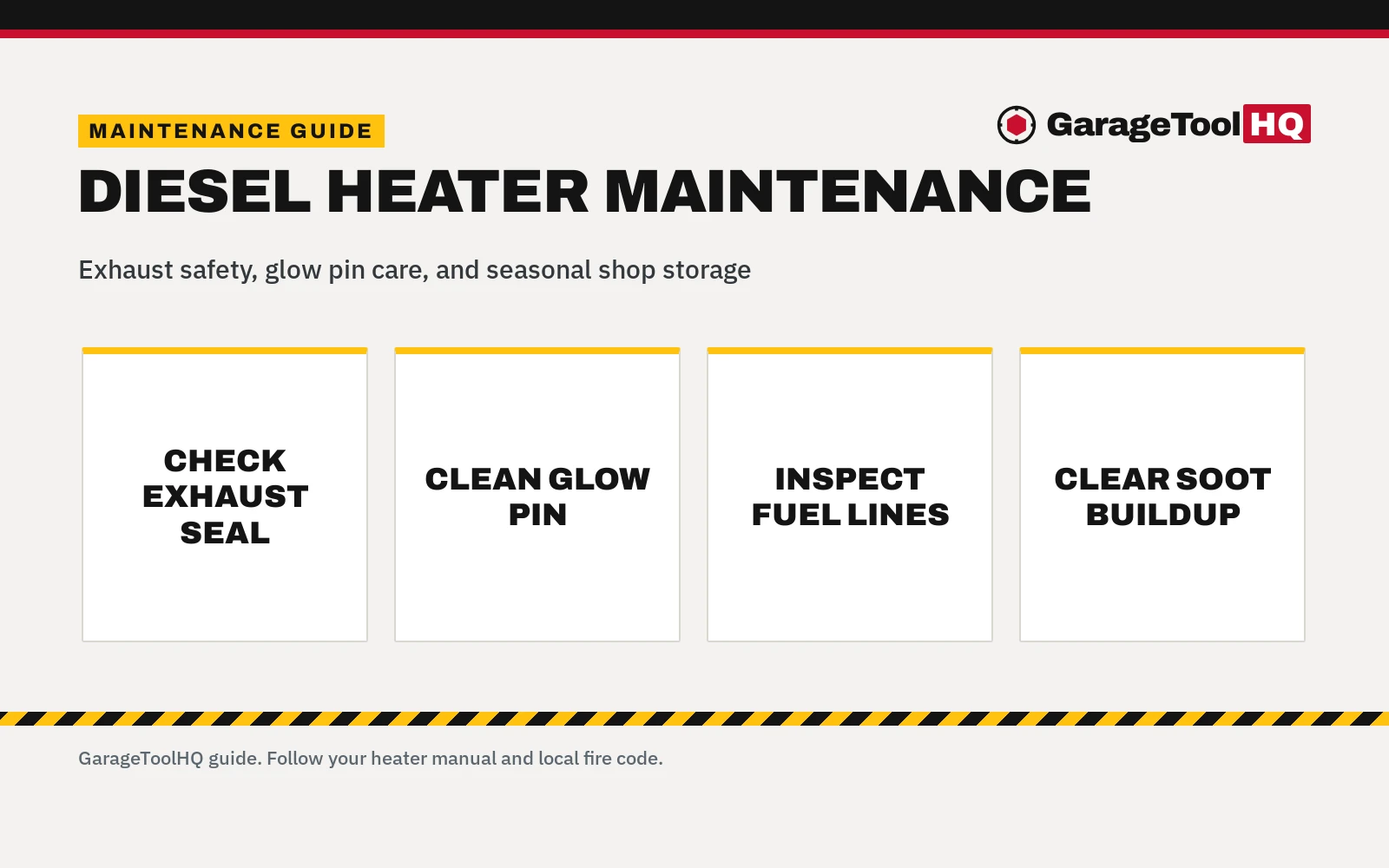
Stepping into a freezing garage for an evening brake job or oil change is miserable without dependable heat. Regular diesel heater maintenance keeps an auxiliary heater running cleanly, prevents heavy soot buildup inside the burner chamber, and ensures exhaust gases vent safely outside your shop. Maintaining a diesel heater involves clearing carbon from the glow pin, inspecting fuel lines for air leaks, checking exhaust plumbing, and preparing the unit before seasonal storage. Staying on top of these routine checks prevents unexpected shutdowns, reduces smoky ignitions, and protects garage air quality throughout winter.
GarageToolHQ earns a commission when you buy through links on our product pages, at no extra cost to you. Read our affiliate disclosure.
Below: why soot and air leaks cause burner failures, how to inspect core components, a step-by-step shop checklist, and safe storage practices for the off-season.
Diesel heater maintenance: why regular servicing matters
Diesel parking heaters pack strong heating performance into a compact footprint, but burning liquid fuel inside a small combustion pot requires regular attention. When fuel atomization or airflow degrades, issues multiply quickly across your workspace:
- Soot accumulation. Incomplete combustion creates sticky carbon flakes along burner walls. A neglected combustion chamber restricts airflow, slows heat transfer through the aluminum casing, and causes white or black smoke on startup.
- Air bubbles in fuel lines. Loose clamps or cracked nylon fuel lines admit air pockets. When air bubbles reach the metering pump, fuel delivery pulses unevenly, causing flameouts and repeated failed ignitions that soak the burner screen in unburned fuel.
- Exhaust pipe restriction. Combustion exhaust carries moisture, sulfur deposits, and carbon particles. If condensation pools in low dips or carbon clogs the muffler, backpressure builds inside the burner, increasing carbon monoxide risks around loose slip joints.
- Blower dust accumulation. Wood sanding, grinding metal, or sweeping pulls shop dust into the intake. Dirt collects on blower fan blades, reducing fan speed and starving the flame of combustion oxygen.
Core diesel heater components and maintenance routines
Every diesel heater relies on several interconnected subsystems: fuel delivery, combustion air, ignition electronics, and exhaust extraction.
| Component | Maintenance task | Inspection detail |
|---|---|---|
| Exhaust pipe and muffler | Carbon clearing and clamp tightening | Tight exhaust clamps, clear pipe exit, absence of soot staining around slip joints, and complete seal through the garage wall |
| Glow pin and screen | Deposit removal and screen renewal | Heavy carbon accumulation on the heating element, scorched or torn mesh screen, and firm electrical plug connections |
| Fuel pump and filter | Debris clearing and seal inspection | Clean inline filter bowl, absence of diesel weeping around barb fittings, flexible rubber mounts, and smooth fuel flow without air bubbles |
| Combustion fan and intake | Dust clearing and intake inspection | Unrestricted rotation of the blower wheel, clear intake air ducting, clean intake silencer foam, and absence of shop debris inside the housing |
| Burner chamber | Deposit clearing and gasket replacement | Hard carbon crusting across burner walls, cracked heat exchanger gaskets, clear fuel vapor nozzle, and flat mating surfaces |
Inspecting these assemblies before cold weather arrives catches minor defects before they leave your garage freezing during a weekend project.
How to perform diesel heater maintenance: the shop checklist
- Inspect the exhaust plumbing. Check the metal exhaust pipe from the burner base to the outside exit. Confirm all clamps remain tight, verify the exhaust pipe slopes downward to drain condensation, and confirm the pipe terminates well clear of garage doors, windows, and vehicle tires outside.
- Verify the carbon monoxide alarm. Place an audible carbon monoxide alarm in the garage workshop and another inside the adjacent living space. Confirm alarm battery strength before lighting the burner. If an alarm sounds, immediately shut down the heater, move outside into fresh air, and open the garage door.
- Check fuel lines and fittings. Examine transparent fuel lines from the tank to the metering pump and burner. Check for cracking, loose clamps, or air bubbles that cause flameouts. Drain sediment from the fuel filter bowl and tighten all hose clamps.
- Clean the glow pin and atomizer screen. Unscrew the glow pin using a slotted socket. Scrape away carbon deposits with a brass wire brush, avoiding steel abrasives. Remove the cylindrical glow pin mesh screen with a pick tool and replace it if clogged or burnt thin.
- Clear the combustion air intake. Inspect the ribbed intake pipe and silencer for cobwebs, sawdust, or debris. Blow compressed shop air through the intake pipe to ensure unobstructed airflow into the burner chamber.
- Inspect the burner chamber and heat exchanger. Separate the heater casing to expose the aluminum heat exchanger. Brush out powdery soot and scrape hard carbon crusting from burner ports. Replace brittle heat-resistant sealing gaskets before reassembling the casing sections.
- Check electrical connections and battery health. Clean dust from the wiring harness, inspect spade terminals for corrosion, and verify tight battery terminal clamps. Diesel heaters require strong voltage to ignite the glow pin, so keep auxiliary batteries connected to a dedicated charger.
- Run a burn cycle at maximum heat. After reassembly, start the heater and let it run at maximum heat output to burn off remaining residue and dry internal condensation. Never cut power at a battery disconnect while running; always allow the automatic cool-down cycle to finish blowing air across the chamber.
- Prepare for seasonal summer storage. Before putting the heater away for warm months, burn out remaining fuel, add a fuel stabilizer to the reservoir, or drain the fuel system completely. Place protective caps over intake and exhaust openings to keep dirt and insects out of the burner during humid summer months.
Never operate a diesel heater inside an enclosed garage without the exhaust pipe routed completely outside through an airtight wall thimble. Carbon monoxide is odorless and fatal. Inspect exhaust clamps before cold weather arrives, maintain a dedicated carbon monoxide alarm, and never vent exhaust into a crawlspace, attic, or near open windows.
Never run a fuel-burning heater, generator or engine in a closed garage: carbon monoxide builds up fast and has no smell. Fit a CO alarm, keep clearances to cars and storage, use vented gas heaters installed to code, and put 240V electric heaters on a dedicated circuit. See CPSC carbon monoxide guidance. Read our Safety Disclaimer.
Diesel heater vs electric garage heater upkeep
If you are deciding between heating options for your shop, compare ongoing maintenance requirements between diesel burners and electric shop heaters:
- Combustion vs heating elements: diesel heaters burn liquid fuel, creating soot, exhaust condensation, and carbon buildup on glow pins that demand seasonal cleaning. Electric heaters rely on sealed resistance elements that require no fuel handling, no burner de-coking, and no exhaust inspection.
- Dust and shop air circulation: both heating systems circulate ambient shop air with internal blower fans. In a woodworking or metal fabrication garage, airborne dust settles across fan blades and heating fins. Blowing compressed shop air through cooling passages keeps both systems running safely and prevents burning dust smells.
- Electrical system demands: an electric garage heater demands a dedicated high-voltage circuit installed by a licensed electrician. A diesel heater requires auxiliary low-voltage direct current power to drive its internal blower, glow pin, and fuel pump. Maintaining steady battery charge is essential for reliable diesel heater ignition.
- Fuel quality and storage: diesel heaters require clean, moisture-free fuel. Degraded fuel or summer algae growth clogs tiny pump screens and atomizer nozzles. Electric garage heaters eliminate fuel storage cans, messy spills, and seasonal fuel stabilization altogether.
To evaluate overall installation expenses and operating costs, explore our comparison of diesel heater vs electric heater cost. For sizing requirements based on garage dimensions, review our guide on what size garage heater you need.
Battery health and power supply during heater startup
Diesel parking heaters draw substantial amperage during initial startup while the ceramic glow pin preheats the combustion chamber. If supply voltage drops under heavy load, the digital controller resets, triggering shutdown error codes or flooding unburned diesel into the burner pot. Low battery voltage remains a frequent cause of smoky startups, false starts, and rapid soot accumulation. Connecting a dedicated battery charger maintainer keeps your auxiliary power supply ready for cold garage work. Always route battery cables away from hot exhaust plumbing, and keep battery vents clear of open burner intakes.
Frequently Asked Questions
How often should I perform diesel heater maintenance?
Perform a visual inspection before cold weather arrives and check exhaust joints periodically throughout winter. Clean the glow pin, inspect the atomizer mesh screen, and clear the burn chamber whenever you notice white smoke at startup, delayed ignition, or diminished heat output. Units burning clean kerosene or premium diesel accumulate soot far more slowly than heaters burning dirty fuel.
Why is my diesel heater blowing white smoke on startup?
White smoke indicates unburned diesel vapor inside the combustion chamber. This condition occurs when a weak battery cannot heat the glow pin sufficiently, when the atomizer screen is clogged with carbon, or after repeated failed start attempts flood the burner. Clean the glow pin, replace the mesh screen, verify battery voltage under load, and check for air bubbles in the fuel supply line.
Can I run a diesel heater inside a garage with the doors closed?
You may operate a diesel heater with the garage closed only if the combustion exhaust pipe is sealed and routed completely outdoors through an airtight wall plate. The combustion intake should also draw fresh air from outdoors whenever possible. Never allow exhaust fumes into the shop, and always keep an audible carbon monoxide alarm installed in your workspace. Check our recommendations for a diesel heater for indoor use for safe shop installation guidelines.
How do I remove carbon buildup from the combustion chamber?
Disconnect the power and fuel supply, separate the outer plastic shell, and unbolt the aluminum burner sections. Use a plastic scraper or stiff brass wire brush to dislodge crusty carbon flakes from the combustion pot and heat exchanger fins. Avoid hard steel chisels that gouge aluminum surfaces. Blow away loose debris with compressed shop air and install fresh sealing gaskets before tightening the housing bolts.
What should I do with my diesel heater during summer storage?
Before storing the heater for the warm season, burn out remaining fuel or drain the tank completely to prevent fuel degradation and algae growth. Alternatively, treat stored diesel with a biocidal fuel stabilizer. Run the unit at maximum heat output to evaporate moisture, allow the cool-down fan cycle to finish completely, and place protective covers over the exhaust pipe and combustion air intake to keep insects out.
Can I use kerosene instead of diesel to keep the heater clean?
Kerosene burns cleaner than standard pump diesel and produces substantially less soot buildup inside the burner chamber. Running clean kerosene through the heater before seasonal storage or periodically during winter helps burn off soft carbon deposits from the glow pin and burner walls. Check our detailed guide on the best fuel for diesel heaters to compare fuel options for shop heating.
Related: diesel heater for indoor use, our comparison of diesel heater vs electric heater cost, our guide to the best fuel for diesel heaters, the garage upgrades hub, and the how to keep a garage warm in winter guide.