Gear Driven vs Random Orbital Polisher: Which One Should You Buy?
Gear driven vs random orbital polisher explained: how forced rotation changes correction speed, who needs each machine, and the orbit sizes, speeds and weights from current listings.

On this page
Top picks at a glance
As an Amazon Associate we earn from qualifying purchases.
- 1
 Rupes LHR21ES Big Foot Random Orbital Polisher Features 150mm9.6/10View on Amazon
- 2
 Griot's Garage G9 Random Orbital Polisher9.6/10View on Amazon
- 3
 BATOCA 2026 New Dual Action Polisher9.5/10View on Amazon
- 4
 Rupes LHR 15ES Big Foot Random Orbital Polisher FeaturesView on Amazon
- 5
 Chemical GuysView on Amazon
- 6
 Griot's Garage G8 Orbital Polisher for Car Polishing andView on Amazon
- 7
 AUTIWOZ 5 Inch DA Polisher for Car DetailingView on Amazon
- 8
 3M Perfect-It Random Orbital PolisherView on Amazon
- 9
 BATOCA P1 Car Buffer PolisherView on Amazon
The gear driven vs random orbital polisher question is really about how much correction you need. A random orbital polisher spins the pad and orbits it at the same time, with the pad free to slow under pressure, which makes it forgiving on paint. A gear driven polisher forces the pad to keep rotating through gears, so it keeps cutting when you lean on it. Buy the random orbital for safe one-step correction and finishing; buy the gear driven for heavier defect removal when a free-spinning pad stalls out.
More options to compare
 Rupes LHR 15ES Big Foot Random Orbital Polisher FeaturesCheck price on Amazon
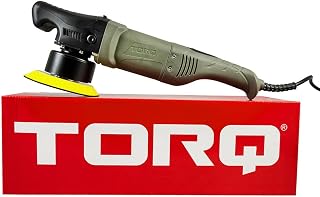 Chemical GuysCheck price on Amazon
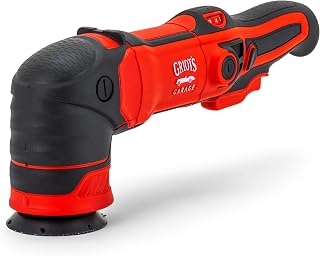 Griot's Garage G8 Orbital Polisher for Car Polishing andCheck price on Amazon
 AUTIWOZ 5 Inch DA Polisher for Car DetailingCheck price on Amazon
 3M Perfect-It Random Orbital PolisherCheck price on Amazon
 BATOCA P1 Car Buffer PolisherCheck price on Amazon
GarageToolHQ earns a commission when you buy through links on our product pages, at no extra cost to you. Affiliate disclosure.
How a random orbital polisher works
A random orbital, also called a dual action (DA), moves the pad in two ways at once: it spins and it orbits. The pad is not mechanically driven in rotation, so when you press down it slows, which is why these machines are hard to burn paint with. Throw size sets the character: the Milwaukee M18 lists a 15mm orbit, the Chemical Guys TORQX lists a 9mm orbit, and both the Chemical Guys TORQ 10FX and the Griot’s G8 list 8mm orbits. Longer throws cover more area per pass; shorter throws are easier to control on curves. Speeds vary widely: the PORTER-CABLE 7424XP dials from 2,500 to 6,800 OPM, the VERVEWAVE cordless runs 1,800 to 5,500 RPM, and the Milwaukee runs 2,650 to 5,100 RPM. Power runs from the RUPES 500 watts to the TORQX 800 watts, with the TORQ 10FX and Griot’s G8 at 700 watts each. Weights stay friendly: 6 lb on the Milwaukee, 5.8 lb on the PORTER-CABLE, 7.6 lb on the TORQ 10FX. See what does dual action polisher mean for the full mechanism.
What gear driven adds
A gear driven polisher is a random orbital with one mechanical change: gears link the pad rotation to the orbit, so the pad cannot slow or stop when you lean on it. That forced rotation keeps the cutting action going under pressure, which is exactly where a free-spinning pad gives up. The trade is that the same forced rotation removes the safety valve: press too hard in one spot and the pad keeps cutting, so heat builds faster and the paint is at more risk. Technique matters more here, with flat pad contact and steady movement, because the machine will not forgive a stalled, tilted pad the way a free-spinning one does.
Correction power: where they diverge
On light swirls, oxidation and water spots, both do the job: the TORQX listing describes one-step scratch and swirl correction at 4,550 OPM with a 9mm throw, which is a random orbital doing exactly what buyers want most. The difference shows on deeper defects. A free-spinning pad slows when it meets resistance, so on heavier scratches you work longer or step up the compound. A gear driven pad keeps its rotation through the same resistance, so each pass removes more clear coat. That is why detailers who do paid correction keep a gear driven machine for the cutting stage and a random orbital for finishing: one for speed of cut, one for safety of finish. If you only buy one machine for your own cars, the random orbital covers nearly everything a hobbyist corrects.
Size and power choices on the random orbital side
Pad size follows the panel. The Griot’s G8 ships 2 in and 3 in backing plates for tight contours and spot work, the PORTER-CABLE and VERVEWAVE run 6 in pads for general panels, and the CRAFTSMAN runs a 10 in orbital pad for large flat surfaces. Voltage is a non-issue for correction quality: corded listings run 110 to 120 volts, while the Milwaukee runs on 18 volt batteries and the VERVEWAVE and CRAFTSMAN on 20 volt batteries. Cordless buys freedom from the cord at the cost of watching battery charge; corded buys unlimited runtime. Either way, match the machine to the panel size rather than chasing the biggest number on the box. Our how to choose a car polisher guide walks through the full decision.
Gear driven vs random orbital polisher: who should buy which
Buy the random orbital if you are correcting your own cars, learning paint correction, or doing one-step polishing and waxing. It is the beginner-safe choice: the TORQ 10FX listing calls out beginner-safe design that resists burning paint, and the free-spinning mechanism is why the category earns that reputation. Buy the gear driven if you already own a random orbital and find yourself fighting pad stall on heavier correction, or if you correct paint for money and need the faster cut. Skip both and look at a rotary only if you know exactly why you need one: the Makita 9237CX2 at 1,200 watts and 13 lb and the DEWALT DWP849 at 12 amp are pro-grade rotaries with no safety net at all. See dual action vs rotary polisher and forced rotation vs free spinning polisher for the neighboring comparisons.
Frequently Asked Questions
Can a random orbital polisher burn paint?
It is very hard to. The free-spinning pad slows under pressure, which is the built-in safety valve. Beginners still succeed with these machines; the TORQ 10FX listing markets beginner-safe design for exactly this reason. Keep the pad flat and moving and you will be fine.
Is gear driven better for beginners?
No. The forced rotation removes the safety valve that makes random orbitals forgiving. Start with a random orbital, learn pad control and paint reading, and only step up to gear driven when a free-spinning pad genuinely limits your correction speed.
What orbit size should I get?
For general use, the middle ground works: 8mm and 9mm orbits like the TORQ 10FX, Griot’s G8 and TORQX balance correction and control. The 15mm Milwaukee orbit covers more area per pass on large flat panels. Small 2 in and 3 in pads like the Griot’s G8’s are for spot work and tight contours. See best long throw polisher for long-throw options.
Corded or cordless polisher?
Corded for unlimited runtime on big corrections; cordless for convenience. The 20 volt CRAFTSMAN and VERVEWAVE and the 18 volt Milwaukee run on their battery platforms, so factor batteries into the cost if you are not already on the platform. See best cordless polisher for battery options.
Do I need a gear driven polisher for swirl removal?
No. Light to moderate swirls are exactly what random orbitals are built for; the TORQX listing describes one-step swirl correction at 4,550 OPM. Reserve gear driven machines for deeper defects where a free-spinning pad stalls.
Related guides
See how to use a dual action polisher for technique and mini polisher for motorcycle for small-panel work.