Parts Washer Nozzle: Types, Fit and Cleaning
What a parts washer nozzle does, how spray patterns differ, how to match connection, hole size and flow, and how to clear a clogged nozzle.

On this page
Top picks at a glance
As an Amazon Associate I earn from qualifying purchases.
- 1
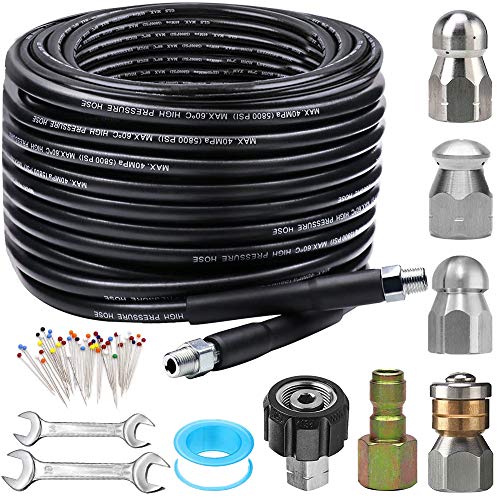 ZOFINE Sewer Jetter Kit for Pressure Washer 100FT9.5/10View on Amazon
- 2
 Tool Daily Pressure Washer Nozzle Kit for Washing9.4/10View on Amazon
- 3
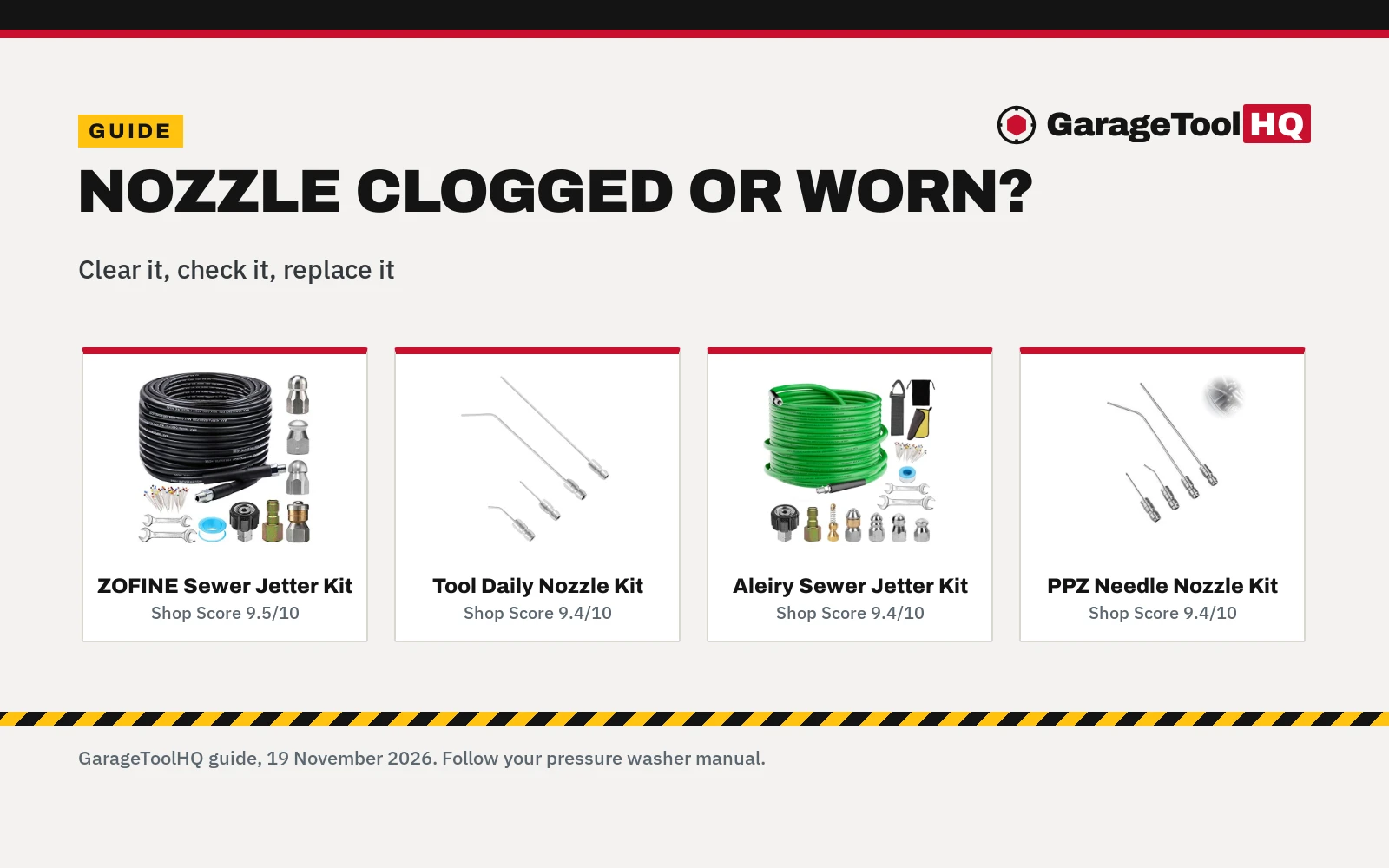
 Pressure Washer Needle Nozzle Kit9.4/10View on Amazon
Greasy brake parts on the bench and a parts washer that dribbles instead of spraying will slow any job down, and the parts washer nozzle is the small fitting that shapes that solvent stream. A parts washer nozzle directs cleaning fluid from the washer pump onto the part, and the right type and fit decide whether the stream reaches into passages or splashes across the tank. This guide explains the types, the fit checks, and the cleaning steps in order.
GarageToolHQ earns a commission when you buy through links on our product pages, at no extra cost to you. Read our affiliate disclosure.
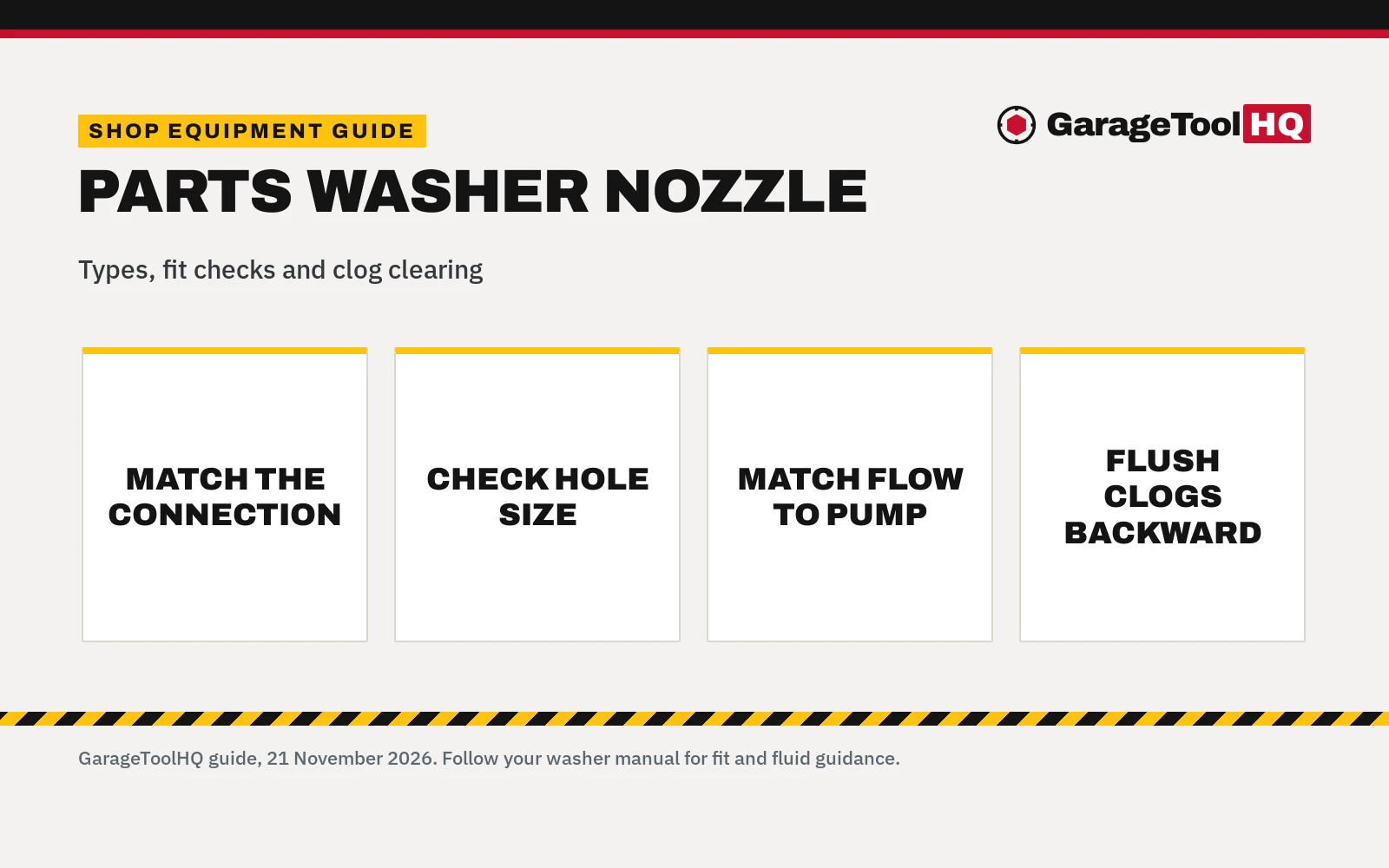
Below: what a parts washer nozzle does, how nozzle types differ, how to match thread and flow to your washer, and how to clear a clogged nozzle.
What a parts washer nozzle does
A shop parts washer pumps cleaning fluid from a tank or drum through a hose to a nozzle over the work area. The nozzle narrows and directs that flow so solvent reaches the part with enough force to carry loosened grease back to the tank. Many washers pair the nozzle with a flow-through brush, so fluid arrives at the bristles while you scrub. The Parts Brush Oriflo brush with hose, for example, connects to a washer nozzle and is made for petroleum or water-based cleaning solutions, as its maker states. When flow drops, the nozzle, the hose, and the pump are the path to check, in that order from the part backward.
Parts washer nozzle types and spray patterns
| Type | Stream shape | Typical use |
|---|---|---|
| Straight jet nozzle | Narrow, concentrated stream | Flushing passages and stubborn deposits |
| Fan spray nozzle | Wide, flat fan | Rinsing broad surfaces and large parts |
| Adjustable nozzle | Stream shape changes with adjustment | Switching between jet and fan work |
| Brush hose nozzle | Flow delivered through a brush hose | Scrubbing while solvent flows |
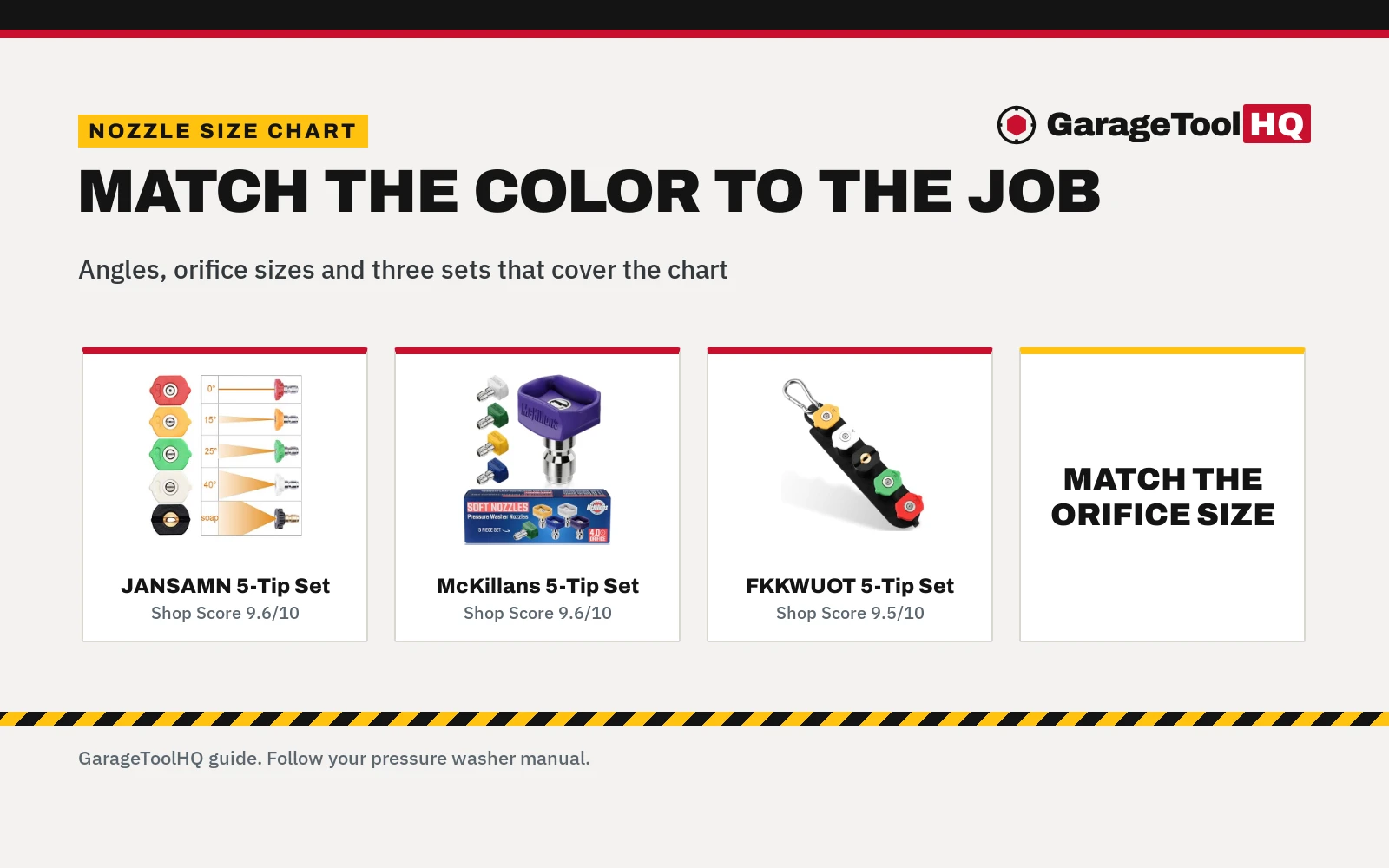
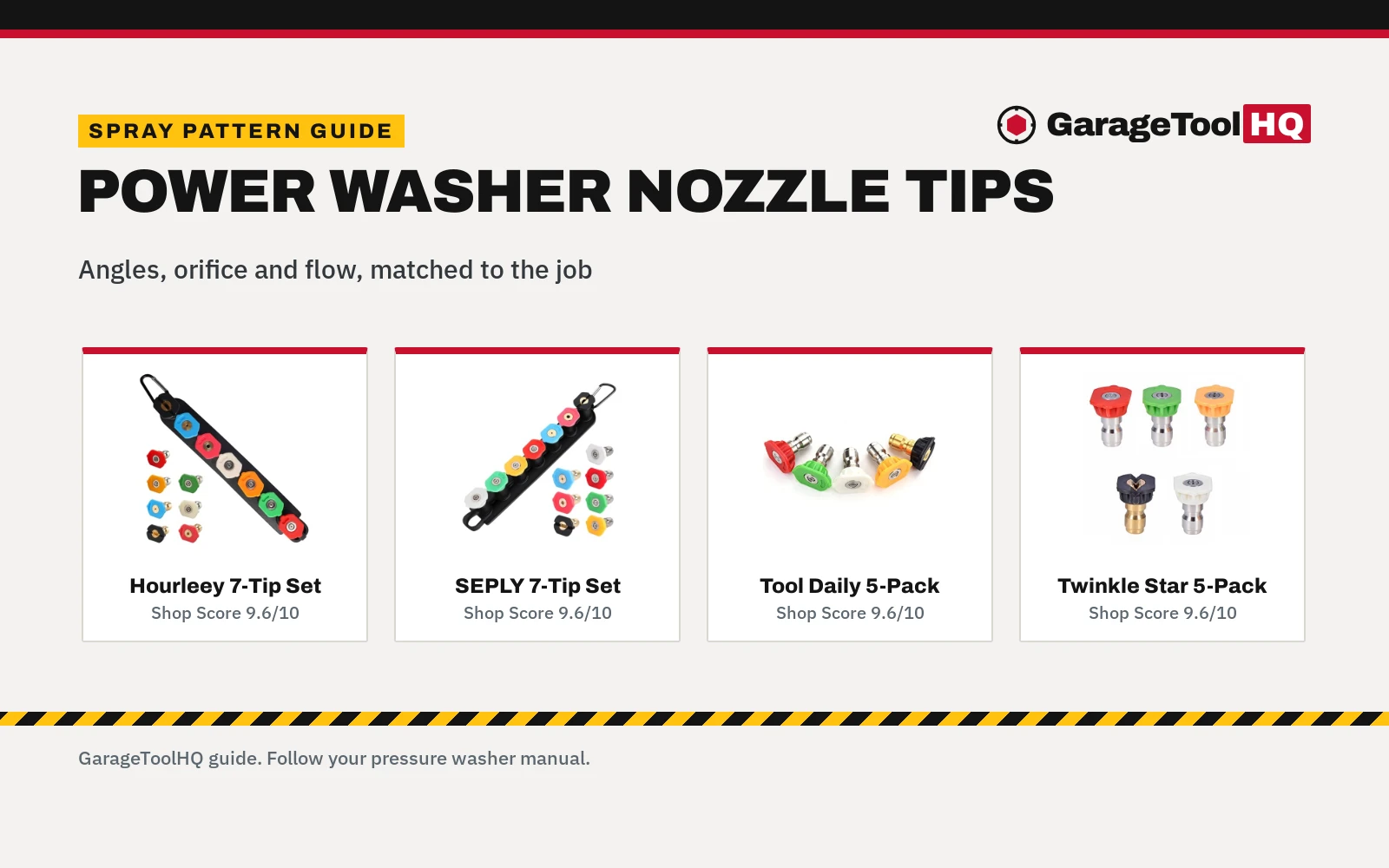
Spray pattern figures from pressure washer tips show how angle describes stream shape: Qimshemi lists tip angles of 0, 15, 25, 40, and 65 degrees, with soap and rinse modes, on a 1/4 inch quick connector. A narrow angle concentrates force on a small spot, and a wide angle spreads flow across a surface. Those angles describe pressure washer tips, not parts washer nozzles, so use them only to understand stream shape: choose a narrow stream for flushing and a wide fan for rinsing. An adjustable nozzle lets you redirect the stream without swapping parts.
How to match a parts washer nozzle to your washer
- Check the connection. Match the nozzle inlet to your hose or wand fitting. Measure the fitting on your washer and confirm the replacement matches it before ordering; a size listed for a pressure washer attachment does not prove a fit on a parts washer.
- Check the hole and thread size. Measure the mounting hole and thread before ordering, and match them to the fitting on your washer.
- Match flow to the pump. The nozzle opening shapes flow, so confirm the nozzle suits your washer pump output. Check your washer manual for the pump rating; a flow figure listed for a pressure washer nozzle does not describe a parts washer pump.
- Do not match by pressure washer PSI ratings. Pressure washer attachments carry pressure limits, such as 4000PSI on the Qimshemi turbo nozzle (on Amazon) and 3600 PSI on the Westinghouse 6-in-1 nozzle (on Amazon), but those figures describe pressure washers, not solvent parts washers. A shop parts washer runs at far lower pressure, so a PSI rating alone does not confirm solvent use.
- Confirm solvent compatibility. Check that nozzle and seal materials suit your cleaning fluid, petroleum or water-based, before the first use.
If your washer uses a brush hose, the nozzle and brush work as a pair. The Parts Brush Oriflo with hose uses a 28 inch hose that connects to the washer nozzle, so hose length and nozzle fit both matter for reach across the tank. For whole-machine context, see our guides to the parts washer pump kit and parts washer fluid.
How to clear a clogged parts washer nozzle
- Switch the washer off and let fluid settle. Work with the pump off so solvent stays in the tank.
- Remove the nozzle from the hose or wand. Keep seals and washers with the nozzle so they go back in the same order.
- Flush the nozzle backward. Run clean fluid or air through the outlet toward the inlet to push debris out the way it entered.
- Inspect the opening. Hold the nozzle up to light and confirm the passage is clear. Avoid enlarging the opening with hard tools, since the opening size shapes the stream.
- Refit and check the stream. Reconnect the nozzle, run the pump, and confirm the stream shape is back to normal.
Weak flow after cleaning points back along the path: a kinked hose, a clogged filter, or a worn pump. Our guide to a parts washer with filter covers the filtration side, and the parts washer brush guide covers brush and hose pairings.
Search results mix shop parts washer nozzles with windshield washer nozzles for cars. A windshield nozzle sprays washer fluid onto glass and fits a vehicle hood or cowl; it is not a solvent nozzle for a shop parts washer. Match the part to the machine before ordering.
Read the manual before first use, wear eye protection, keep the work area clear and ventilated, and stay within every stated rating. Read our Safety Disclaimer.
FAQ: garage tools
What does a parts washer nozzle do?
It directs cleaning fluid from the washer pump onto the part. The nozzle shape decides whether the stream flushes passages with a narrow jet or rinses broad surfaces with a wide fan.
How do I know which nozzle fits my parts washer?
Match the inlet connection, hole and thread size, and flow to your washer. Measure the fitting on your washer and compare it with the replacement before ordering.
Why is my parts washer nozzle spraying weakly?
Debris in the nozzle opening is a common cause. Switch the pump off, remove the nozzle, flush it backward, and inspect the opening. Weak flow after cleaning points to the hose, filter, or pump.
Can I use a pressure washer nozzle on a parts washer?
Check fit, flow, and solvent compatibility first. Pressure washer tips list figures such as 4000PSI and 3600 PSI ratings, while a shop parts washer runs solvent at pump flow rates, so the rating alone does not confirm the swap.
What is a brush hose nozzle?
It delivers solvent through a hose into a scrub brush. The Parts Brush Oriflo with hose connects to a washer nozzle on a 28 inch hose and is made for petroleum or water-based cleaning solutions.
Related: engine and shop equipment, the best parts washer for home garage, our parts washer brush and hose guide and the safety disclaimer.