Rear Bumper Repair Kit: Types and How to Use Them
What a rear bumper repair kit can fix, the main types from clips to plastic welders, and how to match the kit to the damage on the cover.

On this page
Top picks at a glance
As an Amazon Associate I earn from qualifying purchases.
- 1
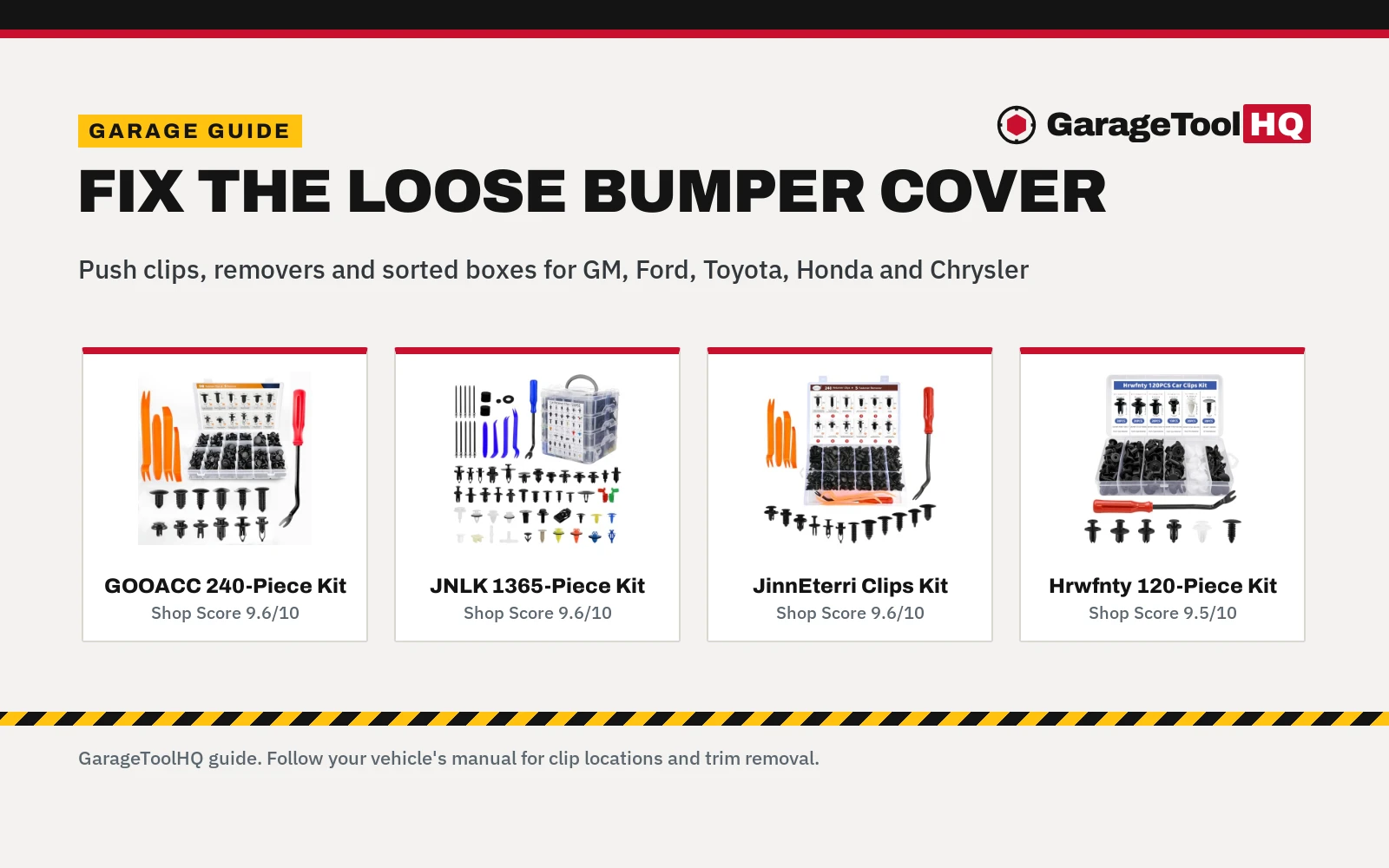
 GOOACC 240PCS Bumper Retainer Clips Car Plastic Rivets9.6/10View on Amazon
- 2
 240PCS Car Bumper Retainer Clips Kit9.6/10View on Amazon
- 3
 Hrwfnty 120PCS Car Clips Kit9.5/10View on Amazon
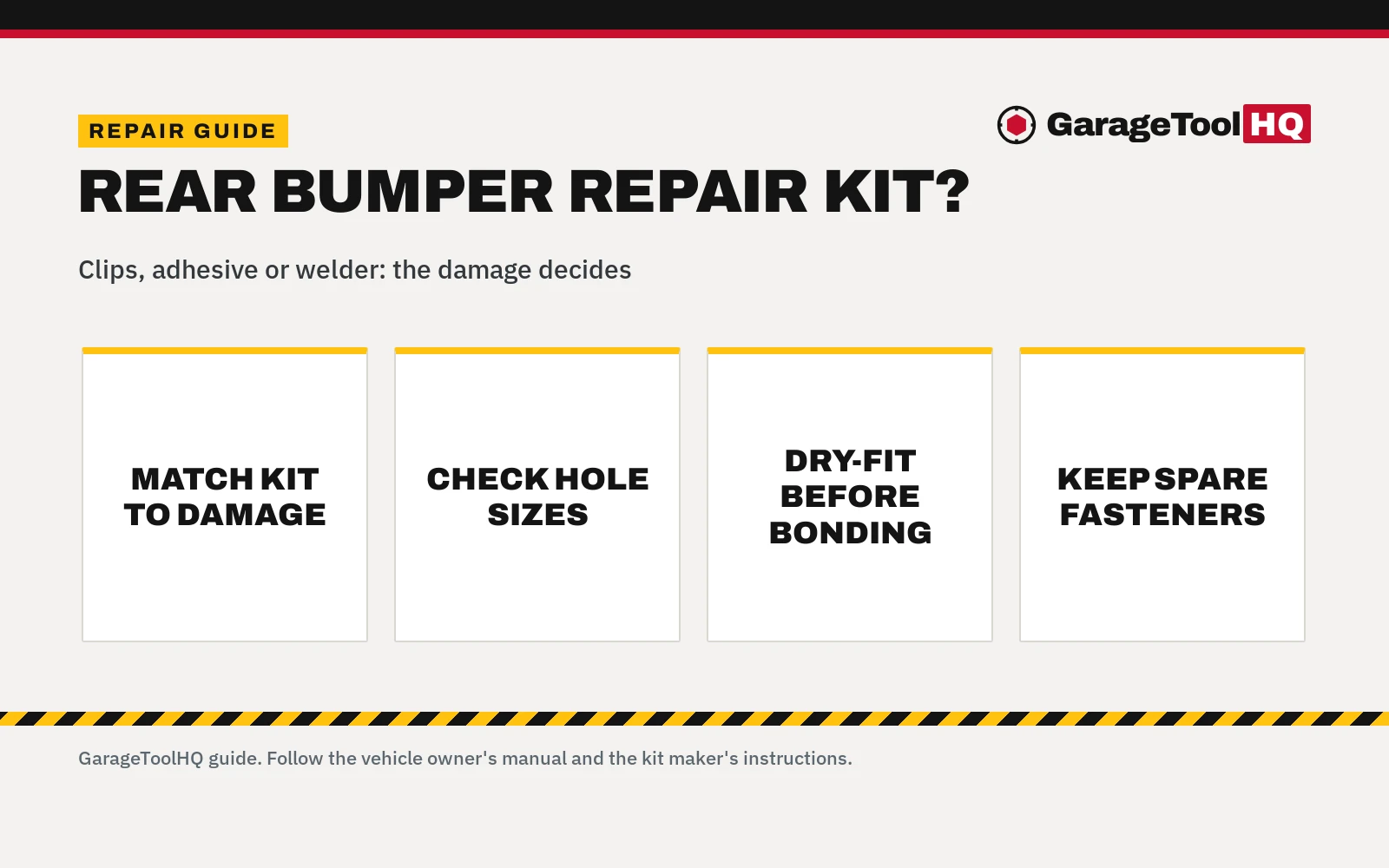
A rear bumper cover that has cracked at the corner, sagged away from the body or lost the clips that hold it tight is a common sight after a low-speed bump in a parking lot or a nudge against a garage post. A rear bumper repair kit is a set of clips, fasteners, adhesive or welding supplies made to put that cover back in place and close up minor damage without replacing the whole cover. Which type you need depends on the damage: loose or missing fasteners call for clips, a sagging corner calls for a tab or lifter kit, a split in the plastic calls for adhesive or a plastic welder, and a cover you remove often calls for quick-release fasteners.
GarageToolHQ earns a commission when you buy through links on our product pages, at no extra cost to you. Read our affiliate disclosure.
Below: what each kind of kit does, how to match the kit to the damage on your car, and the order to work in so the cover sits straight when you are done.
What a rear bumper repair kit can and cannot fix
Modern rear bumper covers are flexible plastic panels held to the body with clips, screws and tabs, over a reinforcement bar behind them. A repair kit works on the cover and its mounting points. It can reattach a loose corner, replace broken push pins, pull a sagging edge back into line, and close a crack or split in the plastic so it does not spread.
What it cannot do is restore crash protection. If the reinforcement bar behind the cover is bent, if mounting points on the body are torn, or if the cover is split across a large area with material missing, a kit is the wrong tool and the cover or the bar needs replacement. The same goes for damage around parking sensors, lights or wiring: check the owner’s manual for what sits behind the cover on your vehicle before you pull anything apart, and leave sensor and wiring work to the manual’s instructions.
Types of rear bumper repair kit
| Type | What it fixes | What the maker states |
|---|---|---|
| Clip and push-pin kits | Missing or broken fasteners, loose bumper panels, fender liners and trim | DUMPILL lists a pack with 150 zip ties and 150 buckles in nylon, for holes of 0.33 in or larger with the T-head method, or 0.2 in or larger with the tail method |
| Quick-release fastener kits | A bumper that comes off often, or a corner that will not stay clipped | Mellbree lists 4 tabs with 12 nitrile rubber O-rings, 10 of them spares, with stainless steel bolts, nuts and washers; Sixzoo lists the same counts in aluminum alloy |
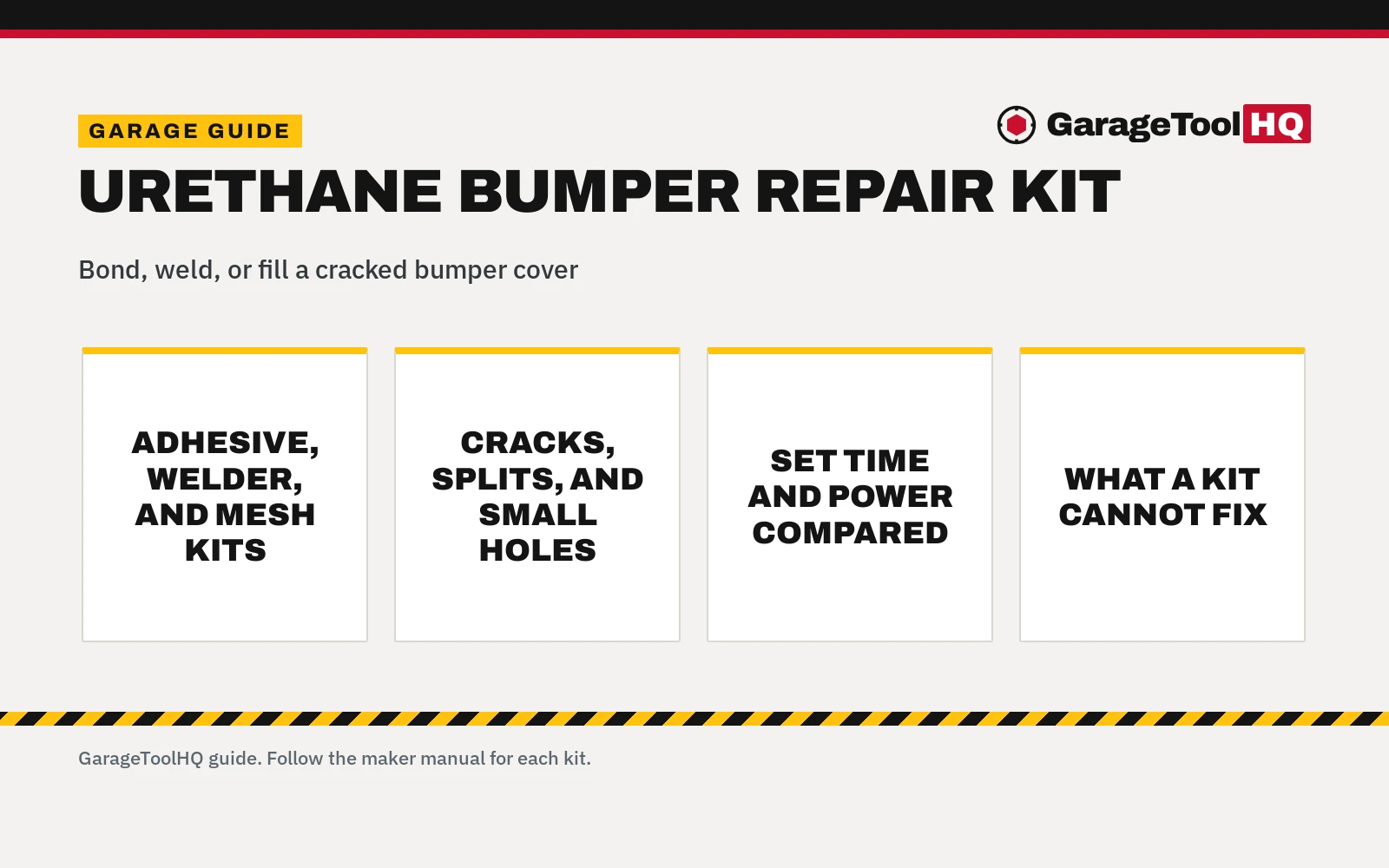
| Adhesive repair kits | Cracks, splits and breaks in the plastic cover | retigazo lists a 2-piece multi-purpose adhesive for cracks, splits and breaks on bumpers and other plastic surfaces, applied with no special tools |
| Plastic welding kits | Cracked or torn plastic that needs material added back | OAMCE lists a 110V welder with 100W and 60W settings heating to 842°F/450°C, with 40 weld rods and 2 tips, for ABS, TPO, TEO and PP plastics |
| Vehicle-specific tab and lifter kits | Sagging bumpers and uneven gaps on a named model | motoparty lists a stainless steel lifter and tab kit for Lexus IS250 and IS350 models from 2006-2013, with bolts, washers and nuts for front and rear, and a 1 Year warranty |
The clip style matters as much as the count. A push-pin kit replaces factory fasteners in existing holes, a quick-release kit adds new mounting points you can open by hand, and an adhesive or welder works on the plastic itself. Our guide to a bumper clip repair kit covers the fastener side in more depth, and the plastic welder for bumper repair guide covers the welding side.
How to choose the right kit for the damage
- Cover loose, plastic sound. Start with fasteners. Check whether the original clips are broken or simply missing, and match the hole size the maker states before ordering. Nylon fasteners are stated to resist wear, heat and automotive chemicals better than PP plastic.
- Corner sagging or gaps uneven. Look for a tab or lifter kit made for your model. A vehicle-specific kit is built around that car’s mounting points; a universal kit asks you to choose the mounting points yourself.
- Crack or split in the cover. Adhesive suits a clean split that can be pushed back together. A plastic welder suits a crack that needs filler rod melted into it, or a torn section that needs mesh reinforcement behind it.
- Bumper comes off for access. Quick-release kits add tabs and O-rings you can open and close by hand, which suits a car whose cover is removed for maintenance or customization.
- Damage beyond the cover. Stop and get the structure checked. No clip, adhesive or welder restores a bent reinforcement bar.
If you are weighing repair against replacement in general, start with can you repair plastic car bumpers at home and the broader bumper repair kit guide, then come back to the rear-specific choices here.
Using a rear bumper repair kit, step by step
- Read the kit maker’s instructions and the owner’s manual. The manual shows where the cover’s fasteners sit and what is mounted behind the cover on your vehicle.
- Clean the work area. Wash dirt and road film off the cover and the mounting points so clips seat fully and adhesive or weld rod bonds to clean plastic.
- Dry-fit the cover. Hold the cover in its correct position and check the gaps against the body panels before you fasten or bond anything. Mark hole positions where the kit maker asks for marks, as the quick-release kits do.
- Work on the plastic before the fasteners. Close cracks with adhesive or the welder while the cover is easy to reach. For welding, the maker lists cleaning the surface, fitting the tip and rod, heating the tip, then feeding rod into the repair, with a heat-insulated handle and an indicator for the heat setting.
- Fit the fasteners. Zip-tie buckles lock onto the notched strip, and the excess tail is cut off after locking. Quick-release tabs are bolted through the marked holes and the O-ring is stretched over the tab to hold the cover.
- Check the fit. Sight along the gaps, confirm the cover sits flush, and make sure no fastener is carrying the whole load on its own. Keep spare O-rings with the car’s tools; the quick-release kits include 10 spare O-rings because the maker calls the rubber ring a consumable.
A plastic welder tip reaches the temperature the maker states and stays hot after switch-off. Keep it away from fuel lines, wiring and anything flammable, use the stand the kit provides, and let the tip cool before storage. Broken plastic edges are sharp: wear gloves when you handle a cracked cover.
Read the manual before first use, wear eye protection, keep the work area clear and ventilated, and stay within every stated rating. Read our Safety Disclaimer.
Rear bumper repair kit vs a new cover
A kit makes sense when the cover is mostly sound: fasteners missing, a corner sagging, or a crack that can be closed. A new cover makes sense when material is missing or the damage reaches the structure behind the cover. Kits restore shape and attachment, not finish: a repaired crack still shows until it is filled, sanded and painted. The front bumper repair kit guide covers the same trade-off at the other end of the car.
FAQ: garage tools
What does a rear bumper repair kit include?
It depends on the type. Fastener kits include clips, push pins or quick-release tabs with bolts and O-rings. Adhesive kits include the adhesive itself. Plastic welding kits include the welder, tips, weld rods and accessories such as mesh and sandpaper. Vehicle-specific kits include the tabs, lifters and hardware for that model.
Can a repair kit fix a cracked rear bumper?
Yes, if the crack is in the plastic cover and the pieces can be brought back together. Adhesive bonds a clean split, and a plastic welder melts filler rod into the crack to join the plastic. A crack with material missing, or damage to the bar behind the cover, needs more than a kit.
Will a universal kit fit my car?
Universal fastener kits are stated to fit most vehicles, but the hole size the maker states decides the fit on your car. Compare the hole sizes the maker states with your car’s holes before ordering. Vehicle-specific kits avoid that guesswork for the models they name.
Do I need to remove the bumper cover to use a kit?
Not always. Replacing a few accessible clips or closing a surface crack can often be done with the cover in place. Rebuilding tabs, welding from behind, or fitting quick-release hardware usually needs the cover off, following the owner’s manual for fastener locations.
How long does a bumper repair last?
That depends on the repair type and the plastic. A welded joint with the right rod for the plastic type joins the cover material back together. O-rings are wear items: the quick-release kits include 10 spare O-rings, and a ring that has stretched or cracked should be replaced rather than trusted.
Related: our garage upgrades hub, the bumper crack repair kit guide and the bumper scratch repair kit guide for surface damage.