Types of Reciprocating Saws: Which One to Buy
Full-size, one-handed, corded and cordless reciprocating saws compared, with orbital action, stroke length and blade choices explained.

On this page
A rusted exhaust hanger has to come off before the new pipe goes on, a tree root blocks the fence post hole, and a length of old pipe needs cutting out of a tight corner. Each of those jobs calls for a saw that reaches into awkward spots and cuts through mixed material without a clean setup. That saw is a reciprocating saw. Types of reciprocating saws fall into a few clear groups: full-size saws held with both hands, compact one-handed saws, corded models and cordless models, with straight or orbital cutting action. The right type depends on the size of the cut, the material in front of the blade and where you stand while you cut.
As an Amazon Associate I earn from qualifying purchases. GarageToolHQ earns a commission when you buy through links on our product pages, at no extra cost to you. Read our affiliate disclosure.
Below: the main types side by side, what each one does well, how corded and cordless models differ, and how to match a type to the job in front of you.
Types of reciprocating saws at a glance
| Type | What it is | Suits | Watch out |
|---|---|---|---|
| Full-size | A large saw held with both hands, built for demolition and long cuts | Framing, pipe and demolition work | Heavy and awkward in tight spots |
| Compact one-handed | A short saw for tight corners and overhead cuts | Pipe inside a wall, pruning, exhaust work | Less reach on deep cuts |
| Corded | Plugged into mains power for continuous running | Long sessions with power nearby | Tied to an outlet |
| Cordless | Runs on a removable battery pack | Jobs away from power, quick cuts around the car | Stops when the pack runs flat |
| Orbital action | The blade moves in a small oval path as well as back and forth | Fast cuts in wood | Rougher cut, not for clean metal work |
The table gives the shape of the choice. The sections below explain each type in more detail, so you can match the saw to the job instead of buying on size alone.
Full-size reciprocating saws
A full-size reciprocating saw is the demolition tool of the group. Held with both hands, it drives a long blade through framing, pipe, nails and old fixtures, and it keeps cutting where a smaller saw stalls. The long body gives leverage and control on straight cuts, and the weight of the saw does part of the work on downward cuts. For garage work that means cutting out rusted exhaust sections, opening a wall to reach a pipe, or breaking down a bench or shelf that has to go. The drawback is size: in a tight corner, under a car or between joists, a full-size saw can be hard to place, and the blade can hit what sits behind the cut. When the job is big and the space is open, this is the type to reach for.
Compact one-handed saws
A compact one-handed saw trades reach for access. The short body fits where a full-size saw cannot, overhead, inside a wall cavity or under a car, and the short grip leaves the other hand free to steady the work. The Milwaukee M18 FUEL Hackzall is an example of the compact type: the maker lists a 7/8 in. stroke length, a pivoting shoe that keeps contact with the work and a one-handed design for control in tight spots. The maker also claims up to 3x longer tool life than competitive one-handed models. A compact saw suits pipe cuts in a wall, pruning, exhaust hangers and any cut in a tight space a full-size saw cannot reach. It is not the pick for long demolition cuts, where a full-size saw covers more ground with each stroke.
Corded vs cordless reciprocating saws
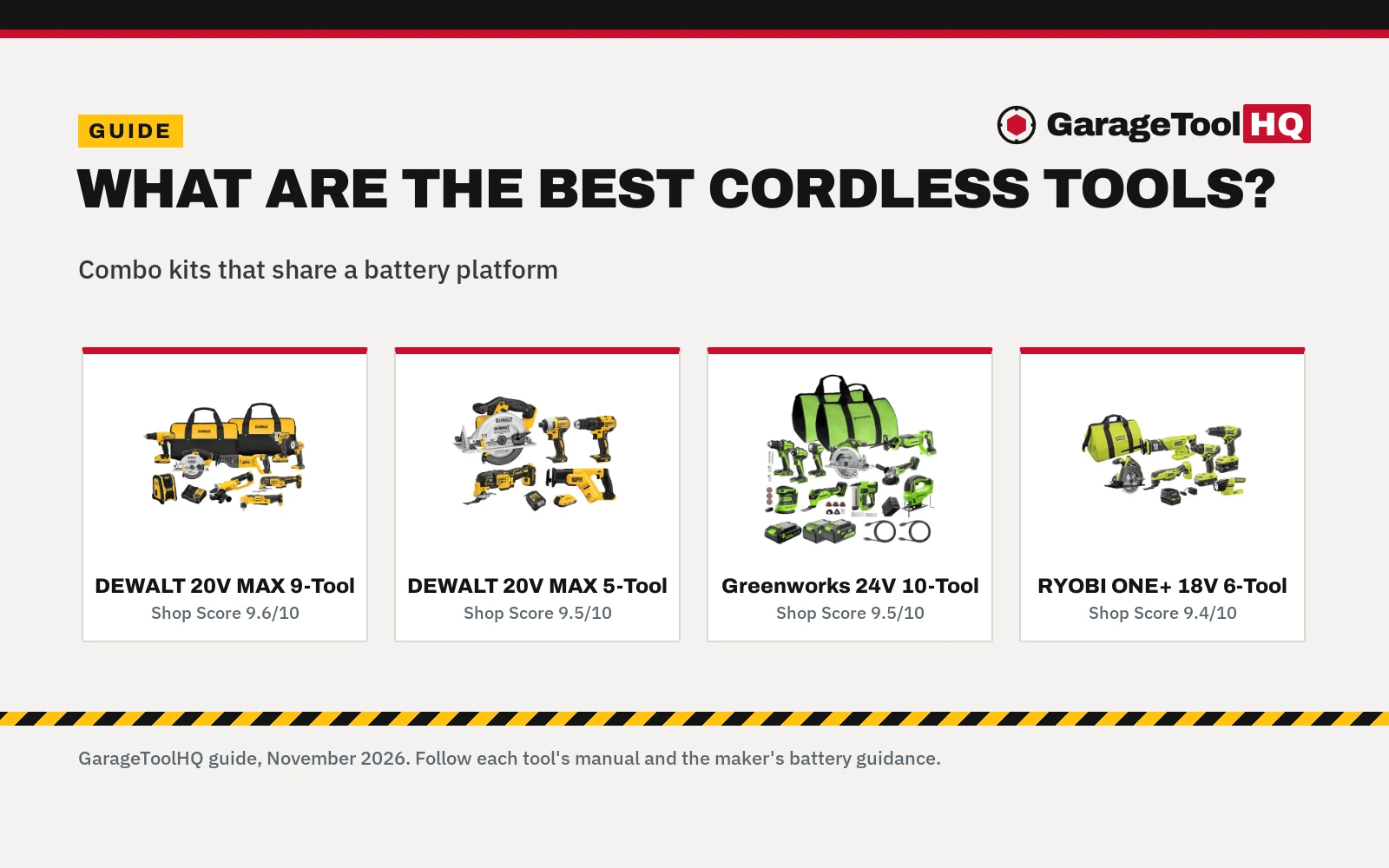
Corded and cordless models cut the same way; the difference is power supply. A corded saw plugs into mains power and runs as long as the job lasts, which suits long demolition sessions and bench work where an outlet sits nearby. The cord limits reach and needs care around the blade, so it pays to route the cord behind the cut. A cordless saw runs on a removable battery pack and goes anywhere, which suits quick cuts around the car, work outside and jobs where a cord would snag. The pack sets the limit: when it runs flat, the saw stops until the pack charges. If the garage already runs on a battery platform, a cordless saw that shares those packs keeps the kit simple. If the job runs for hours with power nearby, corded is the calmer choice.
Orbital action vs straight cut
Some reciprocating saws add orbital action, where the blade moves in a small oval path as well as back and forth. The oval path clears chips faster and cuts wood quicker, which suits framing and demolition where speed matters more than finish. Straight cutting moves the blade only back and forth, which gives a cleaner, more controlled cut. That suits metal, plastic and pipe, where a rough cut leaves a burr or a ragged edge. Many saws let you switch the orbital action off, so the same saw can cut wood fast and then switch to a straight stroke for metal. When choosing, check whether the saw offers the switch, and match the setting to the material in front of the blade.
Blades decide what a saw can cut
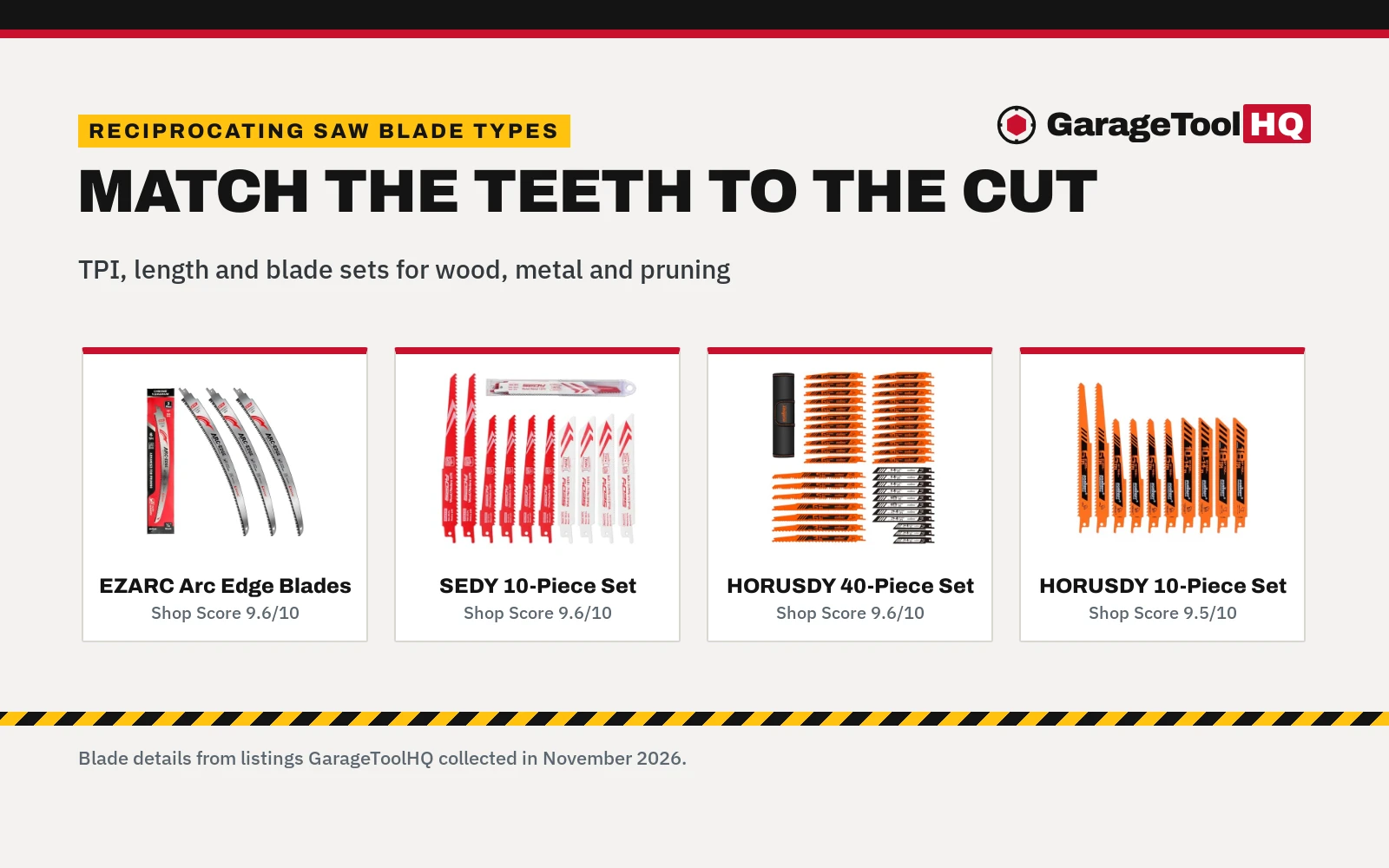
The saw sets the power and the reach; the blade sets the material. Wood blades have coarse teeth for fast cuts in framing and branches. Metal blades have fine teeth for pipe, sheet metal and bolts. Demolition blades handle wood with nails in it. Pruning blades are shaped to cut green wood and clear chips as they cut. A blade that is too long flexes and wanders, while a blade that is too short cannot reach through the work. Match the blade to the material, keep a spare of each type in the box, and change blades when the teeth dull instead of pushing harder. The guide to reciprocating saw blade types covers each blade in detail.
How to pick the right type
Start with the cut, not the catalog. A long demolition cut through framing calls for a full-size saw. A pipe cut inside a wall or an exhaust hanger overhead calls for a compact one-handed saw. Next, look at power: a corded saw suits long sessions near an outlet, while a cordless saw suits quick cuts away from power and shares packs with the rest of the kit. Then check the action: orbital action speeds up wood cuts, while a straight stroke suits metal and clean work. Finally, buy blades for the materials the job actually involves, and keep spares on hand. The picks for the best reciprocating saw compare real models side by side once the type is settled.
Read the manual before first use, wear eye protection, keep the work area clear and ventilated, and stay within every stated rating. Read our Safety Disclaimer.
FAQ: garage tools
What is a reciprocating saw used for?
Cutting in demolition and repair work: framing, pipe, metal, tree limbs and old fixtures. The blade moves back and forth and cuts on the pull stroke, so it works in spots where a circular saw cannot fit.
Are one-handed reciprocating saws strong enough for demolition?
They handle light demolition, pipe cuts, pruning and exhaust work. For long cuts through framing or heavy demolition, a full-size saw covers more ground and stays steadier.
Should I buy a corded or cordless reciprocating saw?
Buy corded for long sessions with an outlet nearby, since it runs without stopping. Buy cordless for quick cuts away from power, and pick a model that shares battery packs with the tools already in the garage.
What does orbital action do on a reciprocating saw?
Orbital action moves the blade in a small oval path as well as back and forth, which clears chips faster and cuts wood quicker. If the saw has the switch, turn orbital action off for metal and plastic, where a straight stroke gives a cleaner cut.
Can a reciprocating saw cut metal?
Yes, with a fine-tooth metal blade and a straight stroke. Keep the speed down, let the blade do the work, and keep the shoe pressed against the work so the blade does not bounce.
Related: best reciprocating saw picks, circular saw vs reciprocating saw, uses for a portable band saw and best saw for cutting PVC pipe.