What Is an Air Ratchet? Garage Tool Guide
A complete guide to what an air ratchet is, how compressed air powers the mechanism, how it compares to an impact wrench, and how to use it safely.

On this page
Top picks at a glance
As an Amazon Associate we earn from qualifying purchases.
- 1
 CRAFTSMAN 3/8-in Air Ratchet Wrench9.7/10View on Amazon
- 2
 Ingersoll Rand 1211MAX-D3 3/8" Drive Air Ratchet Wrench9.7/10View on Amazon
- 3
 Ingersoll Rand 109XPA 3/8" Drive Air Ratchet Wrench Features9.6/10View on Amazon
- 4
 DYNAMIC POWER 3/8 inch Professional Air RatchetView on Amazon
- 5
 Chicago Pneumatic CP886 3/8-Inch Drive Standard-Duty AirView on Amazon
- 6
 Campbell Hausfeld 3/8-Inch Reactionless Air RatchetView on Amazon
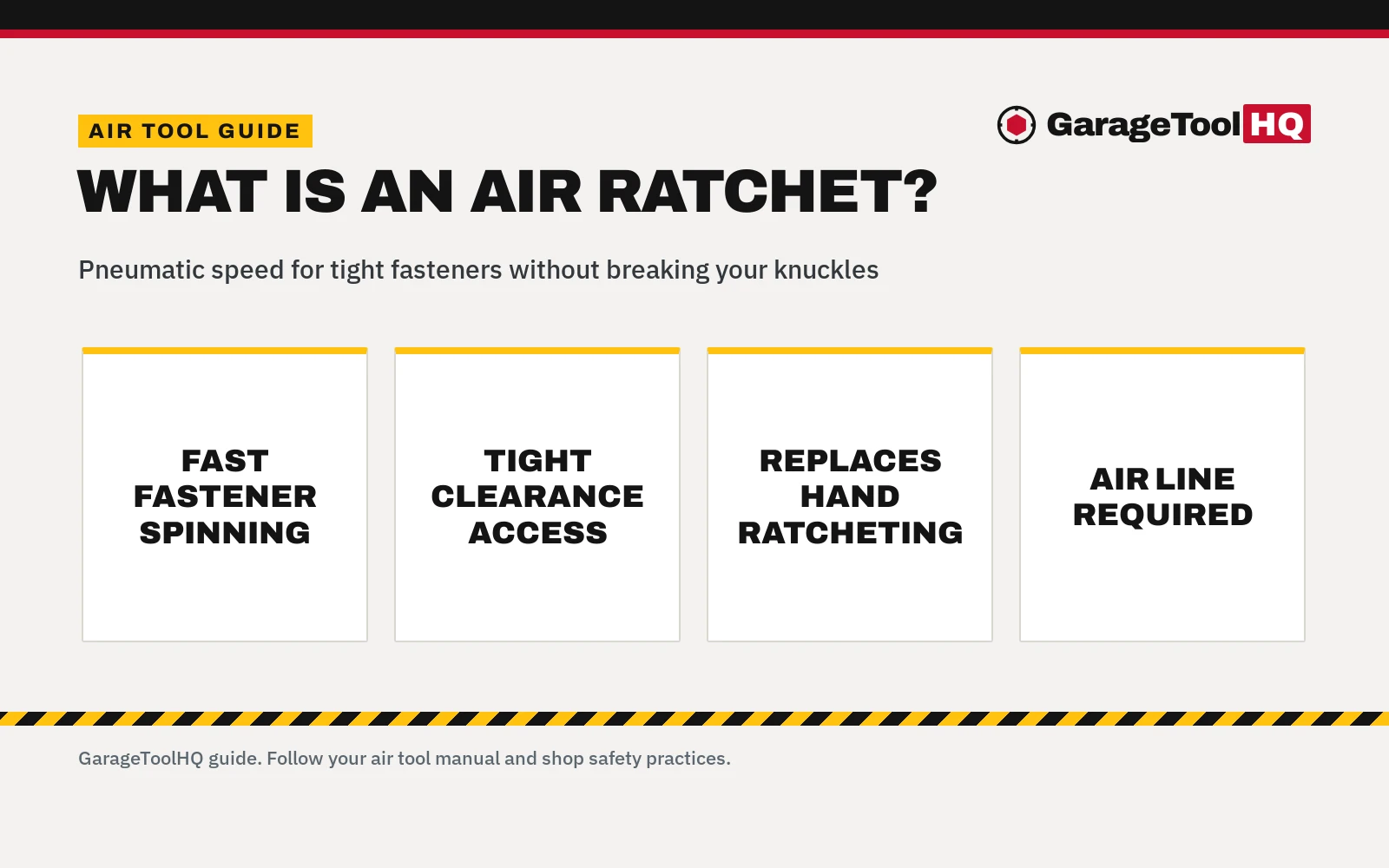
When you are bent over a fender pulling an intake manifold or replacing a water pump, spinning long-threaded fasteners out of tight corners by hand quickly wears out your wrists. That frustration leads mechanics to pneumatic power, raising the obvious question: what is an air ratchet? An air ratchet is a pneumatic hand tool that uses compressed air to drive a socket anvil through an air motor, planetary gearbox, and oscillating ratchet yoke. It combines the slender head of a hand ratchet with motorized speed to run fasteners down or spin them off rapidly. Unlike high-torque impact tools, an air ratchet is built for running fasteners in cramped spaces rather than breaking loose rusted bolts.
More options to compare
 DYNAMIC POWER 3/8 inch Professional Air RatchetCheck price on Amazon
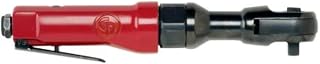 Chicago Pneumatic CP886 3/8-Inch Drive Standard-Duty AirCheck price on Amazon
 Campbell Hausfeld 3/8-Inch Reactionless Air RatchetCheck price on Amazon
GarageToolHQ earns a commission when you buy through links on our product pages, at no extra cost to you. Read our affiliate disclosure.
Below: how an air ratchet works, how it compares to cordless ratchets and impact wrenches, safe operating practices, and answers to common garage questions.
What is an air ratchet? How the tool works
An air ratchet resembles a thick-handled manual ratchet connected to an air hose. While a standard ratchet requires swinging the handle back and forth, an air ratchet turns fasteners automatically using compressed air flow. That makes the tool invaluable inside cramped engine bays, under dashboards, or around transmission tunnels where swing clearance is restricted.
The mechanical operation inside the housing relies on several key components:
- Air motor. Compressed air enters through the handle fitting when you press the throttle lever, spinning composite vanes slotted into an eccentric rotor at high speed.
- Planetary gearbox. Because a pneumatic vane motor spins rapidly with minimal raw torque, the motor shaft feeds into a planetary gearbox that reduces speed while multiplying turning torque.
- Drive yoke. The gear assembly turns an eccentric drive pin that oscillates an internal drive yoke back and forth in a rapid rocking motion.
- Pawl and ratchet gear. Inside the ratchet head, drive pawls engage the perimeter teeth of the central gear, pushing it forward to rotate the square drive anvil holding your socket.
- Direction selector. A lever or dial on the ratchet head flips which pawl engages the teeth, switching between tightening fasteners and spinning them off.
Because the drive anvil connects directly to the internal ratchet gear, the tool also functions as a manual hand ratchet when the motor is idle. Mechanics use this capability to break standard fasteners loose manually before applying air power, then squeeze the throttle to spin fasteners off rapidly. For seized, rusted, or high-torque bolts, always break them free with a breaker bar first to avoid damaging internal drive pawls.
Air ratchets compared with cordless ratchets and impact wrenches
Mechanics often compare air ratchets, cordless electric ratchets, and pneumatic impact wrenches because they all drive automotive sockets. However, their mechanisms, power delivery, and shop roles differ:
| Tool Type | Drive Mechanism | Best Garage Use | Fastener Risk |
|---|---|---|---|
| Pneumatic Air Ratchet | Vane motor, planetary reduction, oscillating yoke | Spinning long fasteners in cramped engine bays and dashes | Moderate risk on small threads if stalled; handle kickback |
| Cordless Electric Ratchet | Battery motor driving a geared ratchet head | Mobile maintenance where dragging an air hose is impractical | Moderate risk on small threads if stalled; bulkier body |
| Pneumatic Impact Wrench | Air motor driving a rotating hammer and anvil | Breaking loose stubborn suspension hardware and lug nuts | High risk of snapping small hardware or stripping threads |
The main advantage of an air ratchet over a cordless ratchet is head size and weight. Without a motor armature or battery pack on the handle, an air ratchet maintains a slim profile that slips into clearances where battery tools cannot fit. Compared to impact wrenches, air ratchets lack internal hammers, delivering smooth rotational drive rather than concussive blows that can crack castings. However, because an air ratchet applies torque until the motor stalls, operators must feather the throttle on small fasteners to avoid stripping threads in aluminum housings.
How to use an air ratchet safely in the garage: the checklist
- Break fasteners loose before pulling the throttle. Never rely on the air motor to break loose tight fasteners. Use the tool manually to crack standard fasteners loose initially, but switch to a breaker bar for rusted or seized bolts to avoid overstressing internal pawls.
- Keep knuckles clear of pinch points. When a fastener seats, the motor stalls and the tool handle kicks in the opposite direction. Keep hands clear of frame rails, brackets, and sharp edges to prevent crushing injuries.
- Regulate compressor pressure. Operate within the manufacturer recommended pressure range. Excessive pressure accelerates wear on internal vanes and increases handle kickback when a fastener bottoms out.
- Lubricate the air inlet regularly. Pneumatic motors require routine lubrication. Place several drops of air tool oil into the air inlet connector prior to attaching your air hose.
- Drain moisture from your compressor tank. Condensed water in air lines washes away lubricant and rusts motor vanes. Drain your air tank regularly and install an inline moisture separator.
- Wear safety glasses and hearing protection. High-velocity exhaust air can blow road dirt and metal shavings toward your face. Always protect your vision and hearing during operation.
- Inspect sockets before attachment. Make sure sockets seat firmly on the drive anvil detent ball. Damaged sockets can slip under load, rounding fasteners and causing sudden hand slippage.
- Disconnect the air line when swapping sockets. Detach the quick-disconnect coupler before changing sockets, clearing debris, or servicing the ratchet head to prevent accidental throttle activation.
Never rely on the air motor to break loose seized fasteners, and avoid pulling with excessive manual leverage on the handle. Forcing the motor against a seized bolt stalls the tool and whips the handle into your hand, while excessive manual force can shear internal drive pawls. Break stubborn fasteners loose with a breaker bar first.
Wear eye protection with every air tool, use impact-rated sockets on impact wrenches, disconnect the air line before changing accessories, and finish lug nuts with a torque wrench to the vehicle's spec. See OSHA eye and face protection. Read our Safety Disclaimer.
Air ratchet vs impact wrench: choosing the right tool for the job
Choosing between an air ratchet and an impact wrench depends on fastener size, torque demands, and physical access:
- Fastener task: Air ratchets excel at running down long fasteners quickly after initial loosening, while impact wrenches break free frozen or high-torque bolts that resist manual turning.
- Torque delivery: An air ratchet delivers smooth rotational drive through internal gear reduction and an oscillating pawl. An impact wrench produces concussive rotational blows from an internal hammer striking an anvil.
- Reaction to your hand: Impact wrenches absorb rotational shock within their internal hammer mass, transmitting minimal twist to the operator. Air ratchets transmit direct reaction torque through the handle when a fastener stops turning.
- Access and clearance: Air ratchets feature narrow neck castings that reach between pulleys and brackets. Impact wrenches feature wide pistol-grip bodies requiring broad access clearance.
If you are planning your compressor setup, review our guide on what size air compressor do I need for air tools to ensure adequate airflow. Home mechanics evaluating specific models can read our comparison of the best air ratchet picks for home garages, or compare air tools against battery platforms in our cordless ratchet vs impact wrench comparison.
Air supply and lubrication requirements for air ratchets
Keeping an air ratchet running smoothly requires clean, dry compressed air and regular lubrication. Pneumatic vane motors operate with tight clearances; when moisture or debris enters the motor chamber, performance drops and internal components wear prematurely.
Moisture is the primary cause of air tool failure. Compressing atmospheric air creates water condensation in your storage tank. If moisture enters your air hose, it washes away lubricating oil, corrodes internal steel cylinders, and gums up ratchet pawls. Installing an inline filter regulator and draining your compressor tank after work sessions prevents moisture damage.
Regular lubrication is equally essential. Before connecting your air hose, add several drops of air tool oil into the inlet fitting. Inflowing air aerosolizes the oil, coating rotor vanes, cylinder walls, and planetary gears. Learn proper maintenance in our guide on how to oil air tools. For shop sizing, check our guide on what CFM do air tools need and explore compressor options in our roundup of the best air compressor for home garage setups.
Frequently Asked Questions
What does an air ratchet do?
An air ratchet speeds up automotive repairs by rapidly spinning threaded fasteners using compressed air. It eliminates repetitive arm swinging, reducing time spent running long fasteners during intake manifold jobs, water pump replacements, and chassis work.
What are air ratchets good for in a home garage?
Air ratchets excel in confined spaces where bulky power tools cannot reach. They are ideal for fasteners on engine accessories, bellhousings, radiator mounts, and oil pans where long thread engagement makes manual ratcheting slow.
Can you use an air ratchet like a regular hand ratchet?
Yes. Because the drive anvil connects mechanically to the ratchet gear, an air ratchet functions as a manual wrench when the throttle is released. Mechanics use it manually to break standard fasteners free before applying air, and to snug bolts by feel. For seized or high-torque bolts, always use a breaker bar to avoid shearing internal pawls.
Can an air ratchet remove lug nuts?
No. Air ratchets lack the torque and hammering action needed to loosen lug nuts. Attempting to remove lug nuts with an air ratchet stalls the motor and can wrench the handle violently against your wrist. Lug nuts require an impact wrench, breaker bar, or torque wrench.
What is the difference between an air ratchet and an impact wrench?
An air ratchet uses planetary gear reduction and an oscillating yoke to spin fasteners smoothly at moderate torque in tight clearances. An impact wrench uses a spinning hammer striking an anvil to deliver concussive blows for breaking loose stubborn or high-torque fasteners.
What is the best way to maintain an air ratchet?
Add several drops of air tool oil into the air inlet before each use and drain tank condensation regularly. Store the tool in a dry toolbox drawer and wipe road grime from the ratchet head after messy repairs.
Related: our best air ratchet guide, the air tools category hub, our shop tutorial on how to oil air tools, our guide to what CFM do air tools need, and our comparison of the best cordless ratchet models.