Why Is My Air Compressor Not Building Pressure? What to Check
Why an air compressor runs without building tank pressure, covering common air leaks, faulty check valves, unloader issues and step-by-step pump inspection.

On this page
Top picks at a glance
As an Amazon Associate we earn from qualifying purchases.
- 1
 Amazon Basics Retractable Air Hose Reel9.4/10View on Amazon
- 2
 Stealth Air Compressor 2 Gallon9.7/10View on Amazon
- 3
 Craftsman 3 Gallon Hot Dog Air Compressor9.6/10View on Amazon
- 4
 Air Pressure Switch 90-120 PSI 1/8"-27 NPT DC 24V 12V AirView on Amazon
- 5
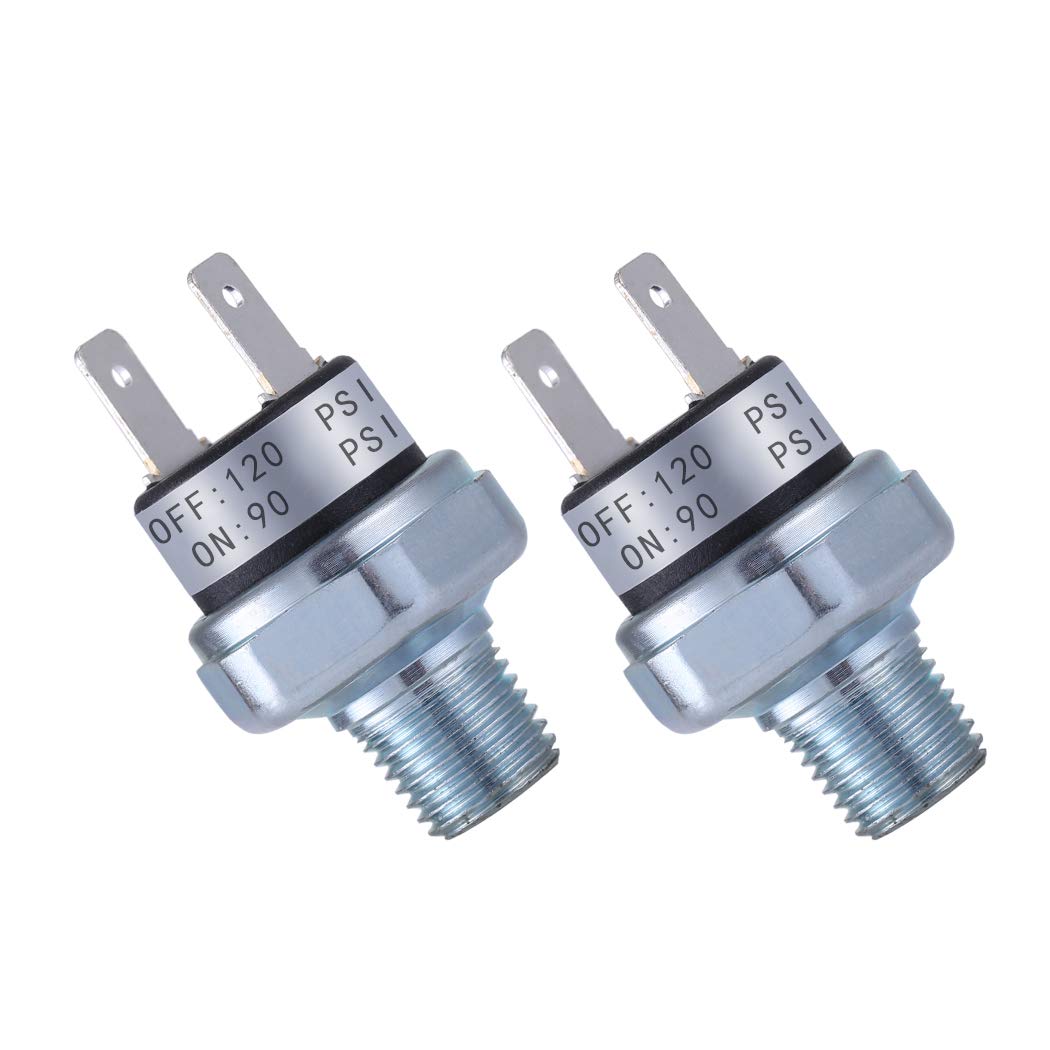 Air Pressure Switch 90-120 PSI 1/4"-18 NPT DC 24V 12V AirView on Amazon
- 6
 Heavy Duty Air Compressor Pressure Switch Control 90-125 psiView on Amazon
- 7
 mankk Air Pressure Switch 90-120 PSI Thread 1/4" NPT 24V 12VView on Amazon
- 8
 90-120 PSI Air Compressor Pressure Control Switch Valve WithView on Amazon
Why is my air compressor not building pressure? An air compressor fails to build pressure because air escapes through a leak or the pump cannot compress air into the tank. Common causes include an open drain valve, leaking fittings, a sticking unloader valve, a failed check valve, or worn reed valves.
More options to compare
 Air Pressure Switch 90-120 PSI 1/8"-27 NPT DC 24V 12V AirCheck price on Amazon
 Air Pressure Switch 90-120 PSI 1/4"-18 NPT DC 24V 12V AirCheck price on Amazon
 Heavy Duty Air Compressor Pressure Switch Control 90-125 psiCheck price on Amazon
 mankk Air Pressure Switch 90-120 PSI Thread 1/4" NPT 24V 12VCheck price on Amazon
 90-120 PSI Air Compressor Pressure Control Switch Valve WithCheck price on Amazon
GarageToolHQ earns a commission when you buy through links on our product pages, at no extra cost to you. Read our affiliate disclosure.
Below: where air escapes, how leaks compare to pump wear, and a troubleshooting checklist.
Why is my air compressor not building pressure? Where the air is lost
When the motor runs but tank pressure fails to climb toward cutoff pressure, air is either escaping or failing to compress:
- Tank drain valve. If the drain petcock is cracked open or scale blocks the seal, air escapes as quickly as the pump delivers it.
- External fittings. Couplers, manifold joints, and relief valves can leak around threads or worn seals.
- Unloader valve. If the unloader valve sticks open, air escapes continuously from the unloader port while running.
- Clogged intake filter. A restricted filter starves the cylinder, slowing pressure build.
- Failed check valve. A leaking check valve allows tank air to bleed backward and escape through the unloader valve after shutdown.
- Internal pump wear. Broken reed valves, blown gaskets, or worn rings prevent compression.
Air compressor components and pressure failure symptoms
| Component | Failure symptom | Inspection or fix |
|---|---|---|
| Tank drain valve | Air hissing from bottom of tank; no pressure build | Close valve; clear debris or replace petcock |
| Fittings and manifold | Hissing at couplers or gauge threads | Apply soapy water; tighten or reseal joints |
| Tank check valve | Air leaks from unloader valve after motor stops | Depressurize tank; clean seat or replace valve |
| Unloader valve | Air hisses from unloader port while motor runs | Inspect plunger; replace sticking unloader |
| Intake air filter | Pump runs hot; slow pressure build | Clean foam or replace clogged cartridge |
| Reed valves and gasket | Air blows back out intake; pump head overheats | Remove head; replace broken reeds and gasket |
Distinguishing between external leaks and pump failure narrows down repairs before unbolting parts.
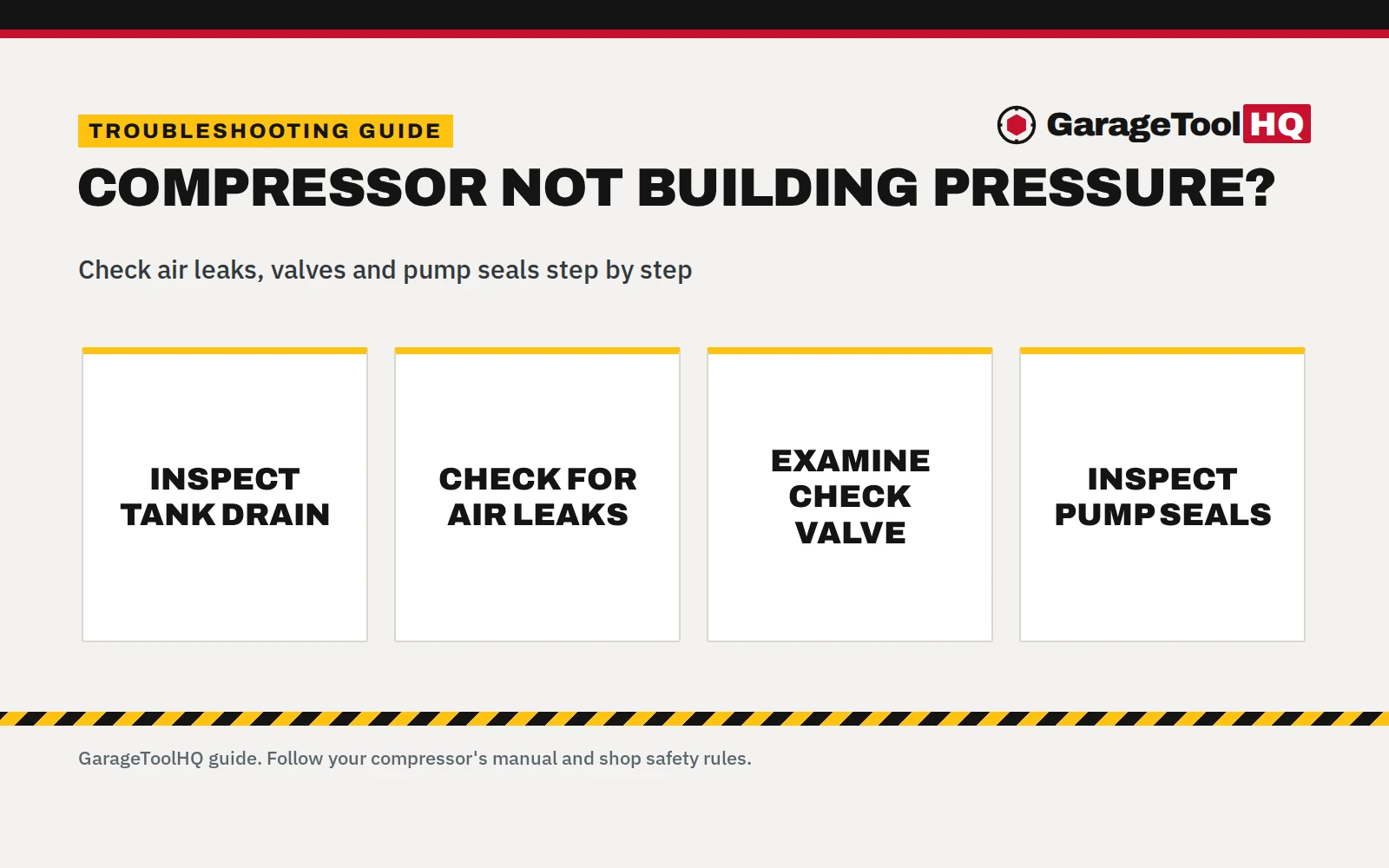
How to troubleshoot an air compressor not building pressure: step-by-step checklist
- Check the tank drain valve. Confirm the drain petcock under the tank is fully closed. If air hisses while closed, open and close it under pressure to blow out debris, or replace it. See our guide on how to drain water from an air compressor tank.
- Inspect external air leaks. Listen for hissing around the manifold, relief valve, and couplers. Brush soapy water over threaded joints to locate bubbles. Depressurize the tank before tightening fittings. For reliable shop lines, see how to plumb compressed air lines in a garage.
- Inspect the unloader valve. Locate the unloader valve on the pressure switch. If air escapes from the unloader port while the motor runs, the unloader valve is sticking open. If air escapes only after the motor shuts off, the tank check valve is leaking.
- Examine the tank check valve. Disconnect power, bleed tank air, and remove the discharge line from the check valve at the tank inlet. Inspect the internal seal for debris. A check valve sticking open bleeds tank air through the unloader port after shutdown; a valve stuck shut blocks air from entering the tank. If motor strain causes electrical issues, read why your air compressor keeps tripping the breaker.
- Inspect the intake filter. Remove the filter housing and inspect the element. A clogged filter restricts incoming air. If pressure builds normally with a clean filter, replace the old element. Never run without an intake filter, as dust damages cylinders and reeds.
- Examine reed valves and gaskets. If external fittings seal but pressure stalls, inspect the pump head. Disconnect power, bleed air, and unbolt the head. Broken, cracked, or carbon-coated reeds cannot seal, blowing air back out the intake. Inspect the head gasket for blow-by, and replace damaged reeds and gaskets together.
- Check piston rings and oil. On oil-lubricated pumps, check the sight glass. Running with low oil scores cylinders and wears rings. If air pulses from the crankcase breather, air is blowing past worn rings. Refill oil using our guide to the best air compressor oil, and follow our air compressor maintenance guide.
Never loosen air fittings or unbolt the pump head while the tank holds pressure. Disconnect power, pull the relief valve ring to vent air completely, and confirm the pressure gauge needle rests at the bottom.
Drain the tank after use so water does not rust it from the inside, never exceed the tool's rated pressure, wear eye protection, and run 240V units on the circuit the manual calls for. Do not run a gas engine compressor in a closed garage. Read our Safety Disclaimer.
External air leaks vs internal pump failure
Distinguishing between plumbing leaks and internal pump failure determines the required repair:
- External air leaks: When air escapes externally, the pump builds compression heat and the motor sounds loaded, but hissing is audible at fittings or the drain valve. Soapy water confirms leaking joints. Tightening fittings or applying thread sealant resolves the problem.
- Check valve failure: When the unloader valve hisses continuously after shutdown, the tank check valve has failed. A leaking check valve allows tank air to reverse through the unloader line. Cleaning or replacing the check valve restores normal operation without pump disassembly.
- Internal pump wear: If the motor runs smoothly, the intake filter is clean, and plumbing is tight, but pressure stalls, internal parts are worn. Common causes include broken reed valves, blown head gaskets, or worn piston rings. On oil-free pumps, the Teflon piston cup seal wears thin against the cylinder sleeve.
- Operating specifications and safety ratings: Compare performance against maker ratings. For example, the VELPAX VX1100-09 compressor listing specifies a maximum working pressure of 115 PSI and a safety valve engineered to open at 128 PSI. For that specific VELPAX model, failing to build pressure toward its 115 PSI rating with airtight plumbing indicates pump wear, while venting at the safety valve indicates opening at 128 PSI from a pressure switch failure.
When internal pump parts suffer severe wear, upgrading to a capable model in our guide to the best air compressor for home garage setups provides reliable air delivery for demanding air tools. You can also evaluate sizing needs with our guide on how to choose an air compressor.
Duty cycle limits and pump overheating
Excessive heat and duty cycle abuse frequently cause compressors to lose compression capability:
- Continuous run limits: Portable compressors feature explicit run boundaries. For example, the AstroAI ATJ-8366 listing specifies a 15-minute continuous run limit followed by at least 10 minutes of cooling time to avoid overheating. Exceeding continuous run limits damages internal seals.
- Thermal overload protection: Some portable units incorporate thermal protection. The ALL-TOP compressor listing specifies an automatic thermal cut-off engineered to activate if operating temperature exceeds 221°F. If your compressor stops unexpectedly, allow it to cool thoroughly before inspecting valves.
- Moisture accumulation: Water left in the tank promotes rust scale that can break free and lodge under the check valve or drain valve seat, preventing an airtight seal.
Frequently Asked Questions
Why is my air compressor running but not building pressure in the tank?
The most common cause is an open or leaking tank drain valve, followed by loose fittings, a stuck unloader valve, a failed check valve, or broken reed valves. Inspect the drain valve and check external fittings with soapy water before opening the pump.
How do I know if my compressor check valve is bad?
If air hisses continuously from the unloader valve after the motor shuts off, the check valve is leaking. Tank pressure pushes backward past the check valve seat and exhausts out the unloader port until the tank empties completely.
Why is air leaking from the unloader valve?
Air hissing from the unloader valve while the motor runs indicates a sticking unloader mechanism that failed to close. If air escapes only after the motor stops, the unloader valve works properly and the tank check valve is leaking.
Can a dirty air intake filter stop a compressor from building pressure?
Yes. A restricted filter starves the cylinder of air. The compressor runs continuously, overheats, and builds pressure sluggishly or stalls before reaching cutoff pressure.
What does it mean when air blows back out of the compressor intake?
Air blowing backward through the intake filter indicates broken or carbon-fouled reed valves. When the piston rises on compression, the reed fails to seal, forcing air back out the intake port.
Is it worth repairing an air compressor that will not build pressure?
External leaks, drain valves, check valves, and unloader switches are inexpensive and simple to replace. If the compressor requires a full pump rebuild or motor replacement, compare repair costs against a new compressor before buying parts.
Related: our air compressors hub, hot dog vs pancake compressors, and understanding two-stage compressors. Also see pancake air compressors for tire inflation.