Best Fuel for Diesel Heater (2026)
Standard diesel and clean kerosene are the best fuel options for a diesel heater, balancing clean combustion, reliable heat output, cold-weather flow, and fuel system reliability.

On this page
Top picks at a glance
As an Amazon Associate we earn from qualifying purchases.
- 1
 LF Bros 5KW Diesel Heater9.5/10View on Amazon
- 2
 VEVOR Diesel Heater9.5/10View on Amazon
- 3
 VEVOR 8KW Diesel Heater with Bluetooth App Control For9.5/10View on Amazon
- 4
 Fill-Rite FR1204H 12 V 15 GPM Fuel Transfer PumpView on Amazon
- 5
 Fill-Rite FR4204H 12V 20 GPM Fuel Transfer PumpView on Amazon
- 6
 Bonbo TU-32-20 Compucheck Fuel System Pressure Test GaugeView on Amazon
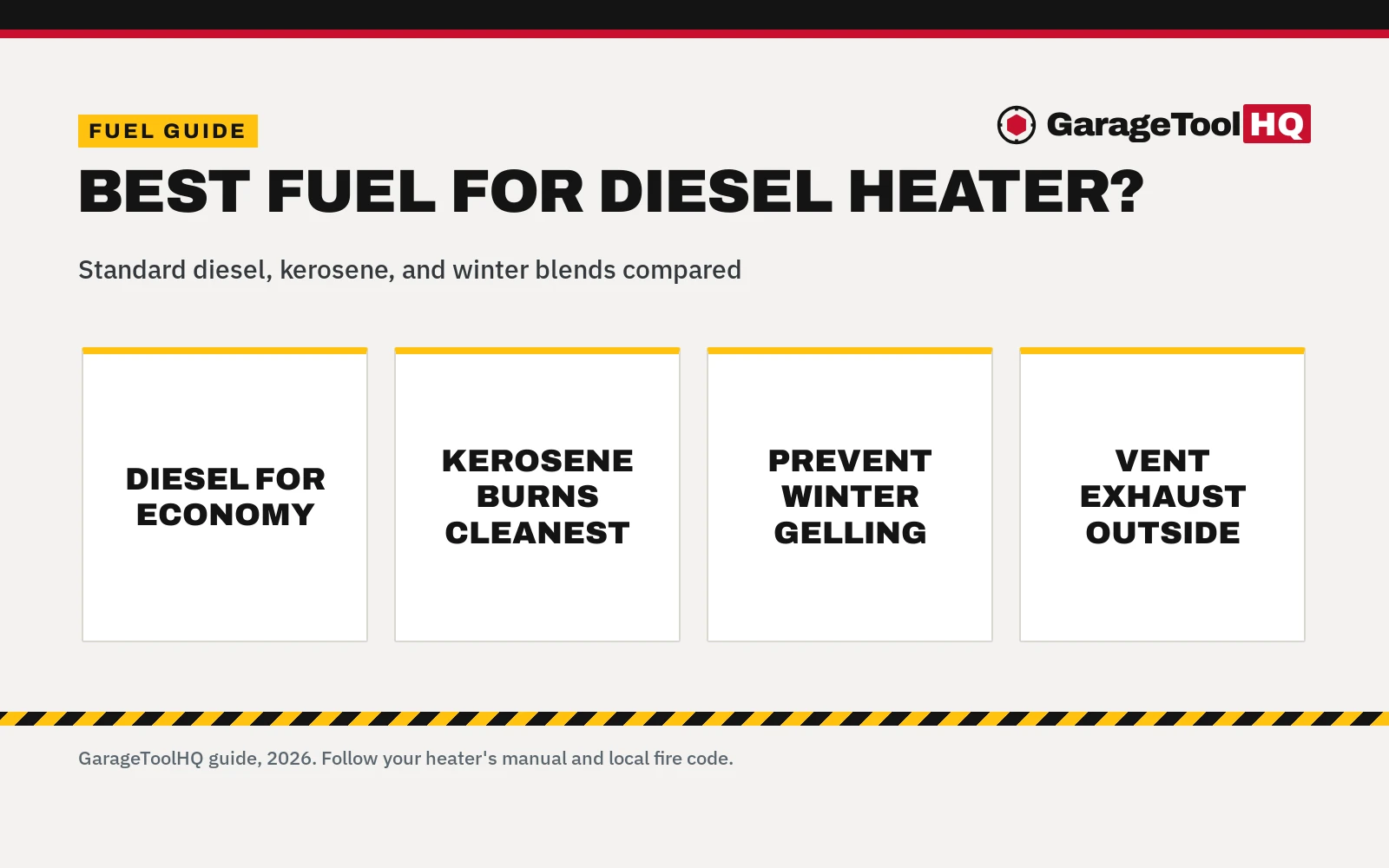
Lying on a creeper on a cold concrete floor while tackling a winter oil change or brake job quickly proves how miserable an unheated workshop can be. Choosing the best fuel for diesel heater operation determines how cleanly the burner fires, how much maintenance you face, and whether your heater starts reliably during freezing weather. Standard pump diesel and clean kerosene are the premier fuel choices. Standard ultra-low sulfur diesel delivers economical, high-output heat for daily garage chores, while pure kerosene offers the cleanest burn with virtually no soot accumulation and complete protection against cold-weather fuel gelling. Many mechanics burn standard diesel during typical winter projects and switch to kerosene or winter-treated fuel when harsh cold snaps arrive.
More options to compare
 Fill-Rite FR1204H 12 V 15 GPM Fuel Transfer PumpCheck price on Amazon
 Fill-Rite FR4204H 12V 20 GPM Fuel Transfer PumpCheck price on Amazon
 Bonbo TU-32-20 Compucheck Fuel System Pressure Test GaugeCheck price on Amazon
GarageToolHQ earns a commission when you buy through links on our product pages, at no extra cost to you. Read our affiliate disclosure.
Below: how combustion chemistry impacts heater reliability, how common fuels compare in cleanliness and flow, and a safe garage setup checklist to prevent soot and fumes.
Best fuel for diesel heater: how different fuels burn and flow
A diesel heater vaporizes liquid fuel inside a combustion chamber lined with a metal mesh screen. An electric ceramic glow pin ignites the vaporized fuel, after which an internal combustion blower maintains a continuous flame against an aluminum heat exchanger. Because these units feature compact burner chambers and fine-metering fuel passages, fuel quality directly affects burner health and operational safety.
In a garage workshop, fuel choice influences key operating factors:
- Carbon soot accumulation. Incomplete combustion coats the glow pin, burner screen, and chamber walls with crusty carbon soot, which restricts airflow and leads to ignition failure. Cleaner fuels burn with minimal residue, keeping the burner chamber clear.
- Cold-weather viscosity and gelling. Diesel fuel naturally contains paraffin wax. In freezing temperatures, this wax crystallizes into a cloudy gel that quickly plugs the fuel filter and starves the pulse pump, causing flameouts or failed cold starts.
- Odor and exhaust emissions. While exhaust must always vent outdoors, unburnt fuel drips or smoky leaks smell terrible inside a garage. Cleaner fuels burn more completely, reducing unpleasant exhaust odors outside.
Fuel options for garage diesel heaters compared
| Fuel Option | Combustion Cleanliness | Cold-Weather Flow | Garage Suitability |
|---|---|---|---|
| Standard Automotive Diesel | High heat energy; moderate soot accumulation during prolonged low-power idling | Gels in freezing weather without anti-gel additive | Excellent for everyday workshop heating above severe freezing |
| Off-Road Dyed Diesel | Identical combustion characteristics and heat output to standard highway diesel | Gels in freezing weather unless winterized | Great budget choice for shop heaters where accessible |
| Pure Kerosene | Burns cleanest with minimal soot deposit on the burner screen and glow pin | Flows freely in deep sub-freezing cold without gelling | Best fuel for clean burning and severe freezing weather |
| Winter-Blend Diesel | Clean combustion; slightly lower energy density than standard diesel | Formulated with cold-flow improvers to prevent filter plugging | Convenient pump fuel for unheated garages during cold snaps |
| Biodiesel Blends | Higher soot tendencies and potential gumming in small fuel passages | Poor cold flow; clouds and gels sooner than petroleum diesel | Not recommended due to residue buildup |
| Used Motor Oil or Vegetable Oil | Heavy carbon deposits, severe smoke, and fouled components | High viscosity damages delicate pulse metering pumps | Unsuitable; causes rapid burner failure |
Standard automotive diesel is the fuel these heaters are engineered to burn. It is readily available at local filling stations, packs dense thermal energy, and provides steady heat. However, burning standard diesel at continuous low-power settings can cause carbon soot to accumulate over time. Running the heater on high heat output periodically burns off light soot accumulations and helps keep the combustion chamber clean.
Off-road diesel (dyed red for tax identification) shares the exact same refining standards as standard clear diesel without highway taxes, making it a practical cost-saving fuel for dedicated shop equipment. It performs identically to pump diesel inside the burner.
Kerosene stands out as the cleanest-burning liquid fuel available for these units. It vaporizes rapidly, resists winter gelling, and leaves minimal carbon residue. While kerosene costs more per gallon than diesel, burning kerosene prevents wax gelling. While running clean fuel or operating at high heat output minimizes soft soot formation, heavily fouled burners with hardened carbon crust still require manual disassembly and screen cleaning rather than relying on fuel choice alone to dissolve thick deposits.
How to set up and run a diesel heater safely: the garage checklist
- Vent exhaust outdoors without exception. Route the metal exhaust pipe through an exterior wall or floor using an insulated pass-through plate. Never discharge exhaust inside an enclosed garage.
- Install a working carbon monoxide alarm. Place a carbon monoxide alarm inside your garage and another in the adjacent living area. If an alarm sounds, shut down the unit and move to fresh air immediately.
- Run rigid fuel lines instead of soft hose. The metering pump operates via rapid electrical pulses. Flexible rubber lines flex and absorb these pulses, causing uneven fuel delivery and flameouts. Install narrow, rigid nylon or hard plastic capillary line rather than soft rubber tubing.
- Angle the fuel pump correctly. Mount the pulse pump with the outlet nozzle tilted upward toward the heater. This incline allows air bubbles to escape into the burner rather than creating vapor locks.
- Route combustion air intake outdoors. Drawing combustion air from outside ensures the combustion chamber remains completely sealed from the garage atmosphere, preventing oxygen depletion and keeping flammable solvent vapors away from the burner.
- Provide clean electrical power. Connect the heater to a dedicated direct-current battery or a quality converter capable of handling the startup current demanded by the ceramic glow pin. Voltage drops during startup cause failed ignition.
- Never cut power while the fan runs. When turning off the heater, allow the controller to finish its automated cool-down cycle. Cutting power prematurely traps extreme heat inside the aluminum casing, which can warp components and melt internal wiring.
- Maintain safe clearances around the burner. Keep cardboard shop storage, rags, solvents, and fuel containers away from hot exhaust tubing and the heater casing.
- Store extra fuel properly. Store spare diesel or kerosene in approved, tightly sealed fuel cans away from heat sources, welding bays, and electrical panels.
Never run a diesel heater with the exhaust pipe discharging inside your garage or shop. Diesel exhaust contains carbon monoxide, particulate soot, and hazardous combustion gases. Route the exhaust through an exterior metal thimble to the outside air, and ensure the exhaust discharge stays clear of doors, windows, and the heater combustion intake.
Never run a fuel-burning heater, generator or engine in a closed garage: carbon monoxide builds up fast and has no smell. Fit a CO alarm, keep clearances to cars and storage, use vented gas heaters installed to code, and put 240V electric heaters on a dedicated circuit. See CPSC carbon monoxide guidance. Read our Safety Disclaimer.
Diesel heater vs electric heat in a garage workshop
Deciding between a diesel heater and an electric garage heater depends on your available electrical service, insulation, and heating priorities:
- Electrical supply demands: High-output electric garage heaters require a dedicated high-amperage circuit installed by a licensed electrician. In contrast, a diesel heater generates heat from liquid fuel combustion and draws electricity only to spin its small internal blower fan, power the pulse pump, and heat the glow pin during ignition. A standard wall outlet with a converter or a dedicated shop battery easily runs the system.
- Heat delivery and air dryness: Diesel heaters blow intense, dry forced air through an aluminum heat exchanger. Because combustion takes place inside a sealed chamber and vents outdoors, combustion moisture exits outside, keeping shop air dry and reducing condensation on steel hand tools and vehicle sheet metal.
- Operating expenses: Liquid fuel can warm an uninsulated garage rapidly without causing spikes on your monthly electric bill. Compare our guide on diesel heater vs electric heater cost and see our breakdown of how much does it cost to heat a garage to evaluate expenses.
Powering a diesel heater: battery health and glow pin draw
While a diesel heater burns liquid fuel to create heat, it relies on direct-current electrical power to manage combustion. During startup, the ceramic glow pin draws substantial current to heat the burner chamber. If wiring is undersized or battery voltage sags under this load, the controller triggers a low-voltage shutdown code and aborts ignition.
Setting up a dedicated diesel heater battery keeps voltage stable. Connecting a smart battery charger maintainer keeps the battery fully conditioned between garage projects. Ensure all direct-current wiring uses thick-gauge conductors with clean, tight terminal connections.
Equally critical is never pulling the plug to shut down the unit. Whether operating a unit with manual push buttons, a diesel heater with remote control, a diesel heater with app control, or a diesel heater with bluetooth connectivity, always use the proper shutdown command so the controller completes its automated cool-down phase. This cycle safely pulls residual heat out of the heat exchanger, preventing board damage.
Frequently Asked Questions
How much fuel does a diesel heater use?
Fuel consumption depends directly on the heating output setting and how frequently the burner fires. When idling on low power to maintain warmth, the pulse pump cycles slowly and draws fuel at a modest rate. Running continuously at maximum heat output increases pump pulse frequency and consumes fuel noticeably faster. Check the fuel chart in your owner manual for precise hourly consumption figures for your specific model.
How long will diesel heater run on a full tank?
Total runtime depends on fuel tank capacity and heat output level. A full tank operating at moderate heat provides steady warmth across hours of garage projects, whereas running continuously at maximum heat output empties the reservoir much sooner. While running at low heat output stretches fuel supplies, running continuously on low power can cause carbon soot to accumulate inside the burner; periodically cycling the heater up to high heat burns off soot deposits. Whether running a compact portable heater or a diesel heater kit 9l setup, monitor your fuel level before starting long shop sessions.
What size is diesel heater fuel line tubing?
Diesel heaters require thin, rigid nylon or hard plastic capillary tubing rather than thick, flexible automotive rubber line. Soft rubber hoses expand and contract with every pump stroke, absorbing the hydraulic pressure pulse from the metering pump and causing erratic fuel delivery or burner flameouts. If your kit includes soft rubber or vinyl fuel hose, replace it with rigid capillary line, and check the manufacturer manual for the exact replacement diameter specified for your pump.
Can you run a diesel heater indoors?
You can heat an enclosed garage or workshop with a diesel heater only when the unit is properly installed with an exterior exhaust system. The combustion chamber is completely sealed from the room, and all exhaust gases must travel through a sealed metal pipe directly to the outdoors. Never operate an unvented diesel heater inside an enclosed building. For detailed installation practices, explore our dedicated guide on operating a diesel heater for indoor use.
How to set up a diesel heater in a home garage?
Mount the heater unit securely on a flat, heat-resistant metal base with the exhaust outlet passing downward through an exterior wall or floor thimble. Keep the exhaust pipe sloped slightly downward to shed condensation outdoors, position the pulse fuel pump at a slight upward angle to purge air bubbles, and connect rigid fuel line away from hot metal. Wire the heater to a stable direct-current power source, prime the fuel line, and confirm all intake and exhaust pipes are clear before starting your initial burn.
Can you run kerosene in a diesel heater?
Yes, pure kerosene is completely compatible with diesel heaters and burns exceptionally cleanly. Kerosene contains fewer heavy petroleum fractions than standard diesel, meaning it creates almost no soot deposits on the ceramic glow pin or internal burner mesh. It also flows smoothly in deep freezing conditions without gelling. While running clean kerosene or operating at high heat output helps minimize soft soot accumulation, heavily fouled burners with hardened carbon crust still require manual disassembly and screen cleaning rather than relying on fuel choice alone to dissolve thick deposits.
Related: our advice on how to keep a garage warm in winter, and our garage upgrades hub.