Scissor Lift Maintenance: Shop Guide for Home Garages
Essential scissor lift maintenance checklist for home garages: hydraulic fluid care, mechanical lock checks, pivot pin lubrication and cylinder inspection.

On this page
Top picks at a glance
As an Amazon Associate we earn from qualifying purchases.
- 1
 6600 lbs Portable Car Lift9.5/10View on Amazon
- 2
 QISHIDA 7000 LBS Portable Car Lift Mid Rise Scissor Lift 110V9.6/10View on Amazon
- 3
 KATOOL Portable Car Lift Mid Rise Scissor Lift 110V Electric9.6/10View on Amazon
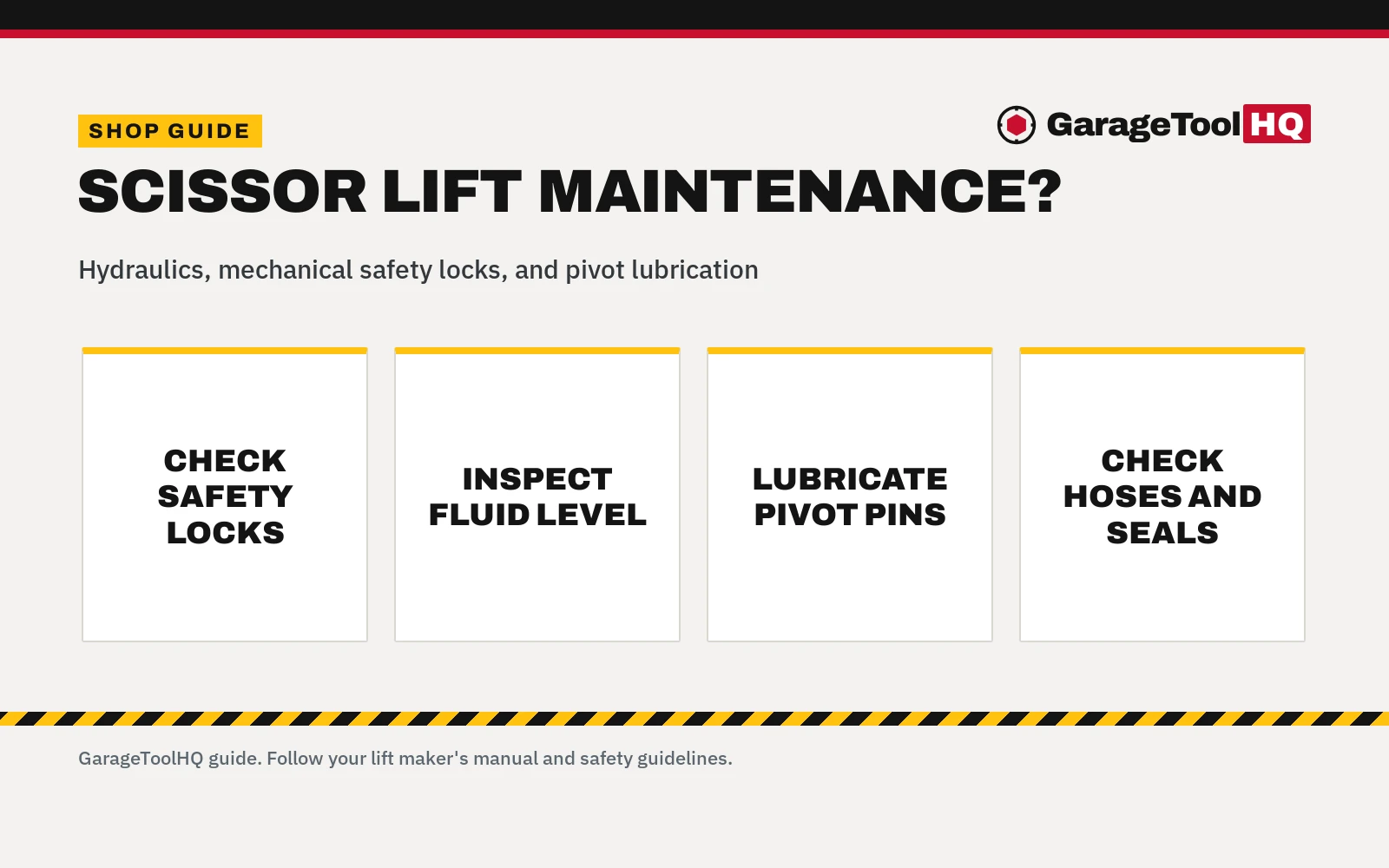
Lifting a vehicle for a brake job, suspension overhaul, or routine tire rotation demands lifting equipment you can rely on every single time. Scissor lift maintenance comes down to regular inspection of mechanical safety locks, routine checking and replenishment of hydraulic fluid, systematic lubrication of scissor pivot pins and roller channels, and careful examination of hydraulic hoses and cylinder seals. Whether you rely on a full-size car lift or a mobile hydraulic lift cart, consistent upkeep prevents sudden hydraulic pressure loss, uneven lifting travel, and mechanical binding. Routine scissor lift system maintenance keeps heavy steel mechanisms functioning smoothly while protecting everyone working in your garage. Never get under a vehicle on a jack alone; always make sure mechanical safety locks are fully engaged before starting any work.
GarageToolHQ earns a commission when you buy through links on our product pages, at no extra cost to you. Read our affiliate disclosure.
Below: where mechanical and hydraulic hazards originate on scissor mechanisms, a breakdown of essential service areas, an inspection checklist to complete before raising any load, and concrete specifications across shop equipment designs.
Scissor lift maintenance: where mechanical and hydraulic risks come from
Unlike standard floor jacks that rely on a single hydraulic ram and a short lifting arm, a scissor lift uses an intersecting X-frame assembly driven by hydraulic cylinders or mechanical screws. Because the scissor geometry changes leverage dramatically throughout its lifting stroke, mechanical stress is highest when the platform is near its lowest position. In a busy home garage, neglecting routine upkeep leads to several distinct hazards:
- Hydraulic pressure loss and cylinder drift. Hydraulic fluid transmits lifting power from the pump unit to the cylinders. Contaminated fluid, degraded internal piston seals, or weeping hose fittings allow fluid to bypass under load, leading to uncommanded lowering or platform settling if mechanical locks are disengaged.
- Pivot pin binding and scissor arm distortion. Every intersection of the scissor assembly pivots on hardened steel pins and bushings. Operating without regular lubrication increases friction, accelerates bushing wear, and causes unequal drag on opposing scissor legs, which can twist or gall the lifting structure.
- Mechanical safety lock failure. Mechanical locking bars and pawls are the primary safety mechanism preventing accidental descent. Accumulated road grime, shop dust, rust, or loose pivot springs can prevent safety pawls from dropping cleanly into lock teeth as the lift ascends.
- Base frame instability and floor distress. Scissor lifts transfer heavy vertical forces onto base frames that roll or slide along floor channels. Cracked, spalled, or uneven concrete concentrates weight on localized frame sections, causing binding and frame misalignment. Always verify that your garage floor satisfies the lift maker’s concrete thickness and strength requirements, as well as the maker’s minimum ceiling clearance.
Scissor lift components and routine service requirements
| Component | Primary Inspection Task | Maintenance Action |
|---|---|---|
| Hydraulic reservoir and fluid | Inspect fluid clarity, volume, and contamination | Top off with specified hydraulic oil; bleed air if movement is jerky |
| Mechanical safety locks | Verify pawl engagement and spring return action | Clean out debris; lubricate lock pivot points; never bypass locks |
| Scissor pivot pins and bushings | Check for binding, excess lateral play, and galling | Apply heavy-duty grease through grease zerks or apply machine oil |
| Base tracks and roller guides | Examine channels for grit, debris, and roller wear | Clear tracks of shop grime; lubricate guide tracks and rollers |
| Hoses, fittings, and cylinders | Inspect for fluid weeping, cracks, and fitting looseness | Wipe clean, tighten fittings, and replace compromised hoses promptly |
The owner’s manual specifies exact fluid grades, lubrication intervals, and fastener torque targets for your specific model. Never substitute random motor oil or transmission fluid for designated hydraulic fluid, and always refer to the manufacturer’s technical documentation when replacing hydraulic seals or structural hardware.
How to maintain a scissor lift safely: the inspection checklist
- Inspect mechanical safety locks before raising any vehicle. Visually verify that safety pawls move freely and that lock bars drop into each locking notch as the lift rises. Never attempt to raise or support a load if safety locks are sticking or damaged.
- Check the hydraulic fluid level with the lift lowered. Lower the scissor mechanism completely before inspecting the fluid reservoir. If fluid appears milky, dark, or foamy, drain the reservoir and refill with clean hydraulic oil specified by the manufacturer.
- Examine hydraulic lines and cylinder rods for fluid leaks. Wipe down the cylinder chrome shafts to remove abrasive dust, and check for oil weeping around cylinder gland seals, hose crimps, and hydraulic fittings. Address weeping joints before putting the lift under load.
- Lubricate all scissor hinge pins and pivot points. Pump fresh chassis grease into all grease fittings along the scissor arms until clean grease appears at the bushing edge. On units with sealed pins, apply penetrating machine oil to pivot joints.
- Clean and lubricate the roller track channels. Scissor legs slide along bottom tracks on steel or polyurethane rollers. Sweep away dirt, metal shavings, and floor debris, then coat the roller tracks with a clean film of lubricant to prevent binding.
- Inspect electrical cords, push-button pendants, and motors. On electric-hydraulic models, examine the power cable and remote control pendant for cracked insulation or damaged wiring. Keep motor cooling fins clear of shop debris.
- Confirm base frame contact and concrete floor stability. Check that base rails sit flat on solid, level concrete without rocking. If the lift uses anchor bolts, confirm that bolts remain tight and that no concrete cracking has developed around anchor holes.
- Verify smooth, synchronized lifting and lowering travel. Raise the unloaded platform to confirm smooth ascent without jerking, hesitation, or unusual squealing. If the lift shudders, follow the maker’s procedure to bleed air from the hydraulic circuit.
- Lower the lift fully onto mechanical locks during service. When raising a vehicle for garage work, raise the platform slightly past the desired lock position, then lower it gently until the mechanical safety locks bear the full weight. Relieve hydraulic pressure so hoses and seals are not held under continuous load.
Hydraulics lift the load, but mechanical safety locks hold it. Never get under a vehicle on a jack alone, and never work beneath a scissor lift unless its mechanical locks are locked in place on solid level ground. Always align lifting blocks with the vehicle owner’s manual lift points before raising the car.
Check the lift's rated capacity against your heaviest vehicle, and its ceiling and concrete requirements (thickness and strength) before you buy. Install it exactly as the manufacturer specifies, use the mechanical locks before you go under, and look for ALI certification on the model. See the Automotive Lift Institute (ALI). Read our Safety Disclaimer.
Scissor lift capacities and design variations
Scissor lifting equipment ranges from compact shop carts to full-size automotive lifts, each requiring maintenance proportional to its load capacity and travel range:
- Compact single-scissor carts: A manual hydraulic cart like the Tera single-scissor lift provides a 330 lbs load capacity and an adjustable height range from 8.3 inches to 28.5 inches. Its single-scissor mechanism requires frequent wheel caster inspection and regular lubrication of the foot-pedal pump linkage.
- High-reach double-scissor carts: Double-scissor designs like the FORGLO hydraulic lift cart raise a 330 lbs load from 10.6 inches to 49.6 inches on 4-inch polyurethane wheels. With multiple intersecting arm joints, double-scissor linkages require regular pivot pin lubrication across multiple joints to prevent binding across elevated reach heights.
- Heavy-duty single-scissor platforms: Medium-duty platform carts like the VEVOR hydraulic lift cart handle up to 500 lbs with a 28.5-inch maximum lift height, requiring strict adherence to rated weight limits to avoid blowing out pump seals.
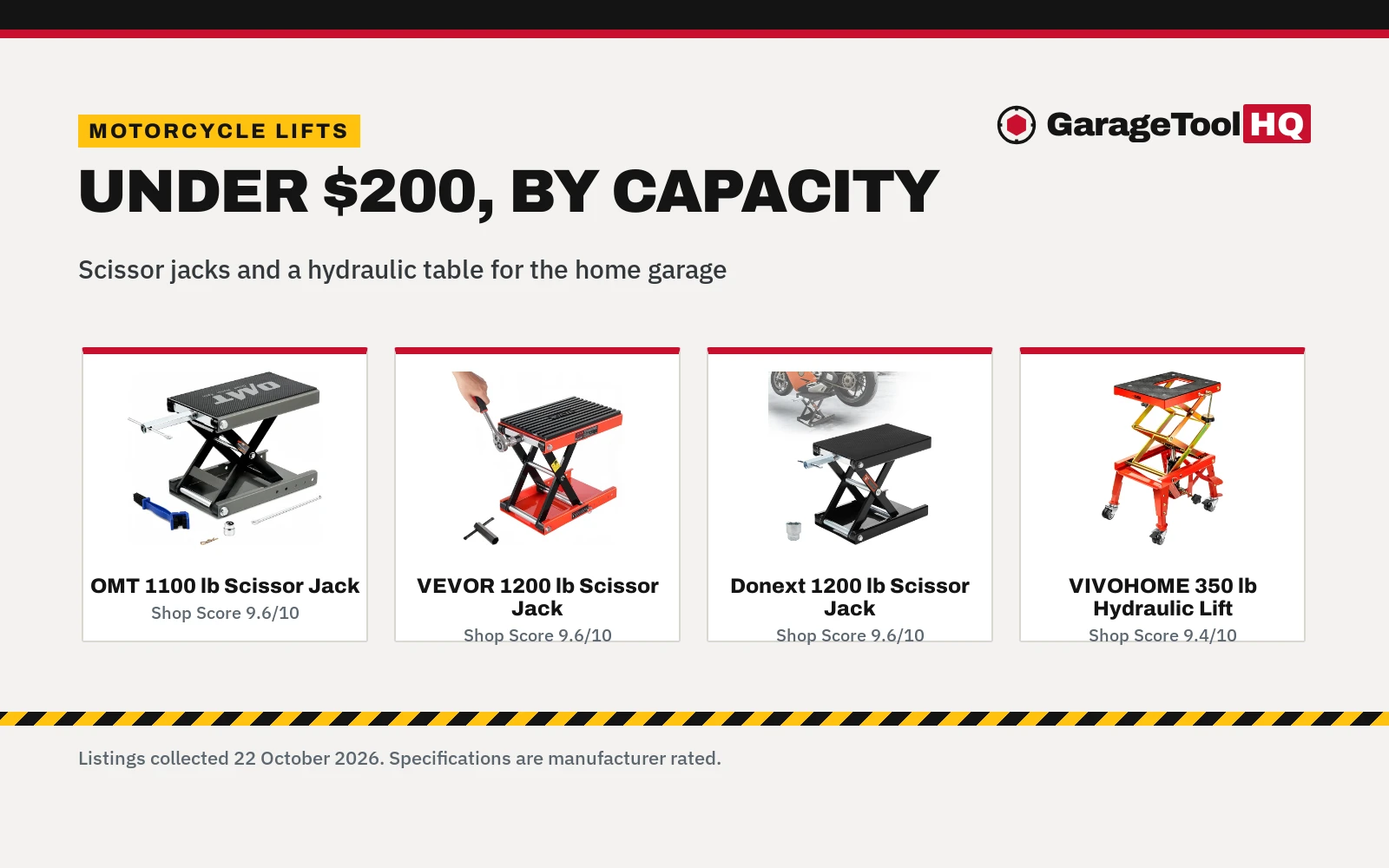
- Motorcycle scissor jacks: Dedicated center hoists like the VEVOR motorcycle scissor lift jack support up to 1100 lbs across a height range from 3.7 inches to 13.8 inches. Equipped with a 6-position safety pin, this steel stand requires keeping the safety pin holes clean and the threaded drive screw coated with clean grease.
If you are deciding between different garage lifting setups, compare configurations in our guide to scissor lift types or read our head-to-head breakdown of QuickJack vs scissor lift systems. When evaluating larger shop equipment, see our top recommendations for the best car lift for home garage spaces and our guide to the best car lift for low ceiling setups.
Garage floor requirements and electrical safety
Lifting safety starts with the concrete slab beneath your equipment. Full-size automotive scissor lifts exert substantial point loads through their base frames. Before setting up or anchoring any vehicle lift, review our dedicated guides on how thick concrete needs to be for a car lift and what ceiling height you need for a car lift. Your garage slab must be level, cured, crack-free, and meet the lift maker’s concrete thickness and compressive strength requirements.
For electric-hydraulic power units, electrical circuit demands require professional installation. Rather than attempting DIY electrical steps, always use a licensed electrician to install dedicated power wiring, inspect breaker sizing, and connect motor circuits safely. When setting up a vehicle on the lift, always locate the vehicle manufacturer’s recommended lift points in the owner’s manual to ensure proper balance. If you need to remove heavy components like an engine or rear axle while the car is raised, always stabilize the vehicle using rated stands on solid level ground to prevent sudden shifts in center of gravity.
Frequently Asked Questions
How often should scissor lift hydraulic fluid be checked or changed?
Inspect the hydraulic fluid level and clarity before any major garage project. If the fluid looks clear and amber, top it off if the level is low. If the fluid appears discolored, dark, or milky from moisture contamination, drain the reservoir, flush the system, and refill with the hydraulic oil grade specified by the lift manufacturer.
What type of lubricant should be applied to scissor lift pivot pins?
Scissor lift pivot joints equipped with grease zerks require heavy-duty automotive chassis grease applied with a grease gun until fresh grease purges past the bushing edge. For open pivot pins, roller channels, and sliding surfaces without grease zerks, apply clean machine oil or a dry silicone spray that lubricates without collecting heavy shop dust.
Why is my scissor lift shuddering or lifting unevenly?
Shuddering, hesitating, or uneven platform travel is almost always caused by air trapped in the hydraulic system or debris blocking the base roller channels. Clear the roller tracks of grit, verify adequate fluid in the reservoir, and bleed air from the hydraulic cylinders according to the procedure in your lift manual.
Can I leave a car elevated on a scissor lift overnight?
Only if the lift is lowered firmly onto its mechanical safety locks so all vehicle weight rests on solid steel locks rather than hydraulic pressure. Never leave a vehicle raised supported solely by hydraulic cylinder pressure, as temperature changes or slight seal weeping can cause the platform to settle.
How do I confirm that the mechanical safety locks are functioning correctly?
As the scissor lift ascends, observe and listen for the distinct mechanical click of the safety pawls dropping into each locking stop. Once you reach the working height, lower the lift gently to verify that both sides engage their respective lock notches evenly. If a locking pawl sticks or binds, clean off accumulated debris and lubricate the pivot spring.
Do automotive scissor lifts require anchoring to the garage floor?
Full-rise and mid-rise car scissor lifts generally require anchoring with approved concrete wedge anchors to prevent frame walk and lateral tipping. Portable scissor carts and motorcycle scissor jacks do not require anchoring, but they must always operate on a flat, level concrete surface without floor cracks or slopes.
Related: how to use a scissor lift, our overview of what ALI certified means for car lifts, the car lift size guide, and our complete car lifts hub.