Infrared vs Forced Air Garage Heater: Differences Explained
How infrared and forced air garage heaters differ in heating method, warm-up speed, air movement and efficiency for home workshops.

On this page
Top picks at a glance
As an Amazon Associate we earn from qualifying purchases.
- 1
 DR. INFRARED HEATER DR-910F 109.7/10View on Amazon
- 2
 BILT HARD 859.7/10View on Amazon
- 3
 DR. INFRARED HEATER DR-PS11024 Salamander Construction9.5/10View on Amazon
- 4
 Dr. Infrared Heater DR-966 240-Volt Hardwired Shop GarageView on Amazon
- 5
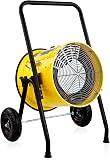 DR. INFRARED HEATER DR-PS11524 Salamander ConstructionView on Amazon
- 6
 Heat Storm Phoenix Infrared Space Heater with Attachable FeetView on Amazon
- 7
 DR. INFRARED HEATER DR218-1500W Greenhouse Garage WorkshopView on Amazon
- 8
 DR. INFRARED HEATER Portable Infrared Indoor and OutdoorView on Amazon
- 9
 DR. INFRARED HEATER NEW Upgraded DR-975 7500-Watt 240-VoltView on Amazon
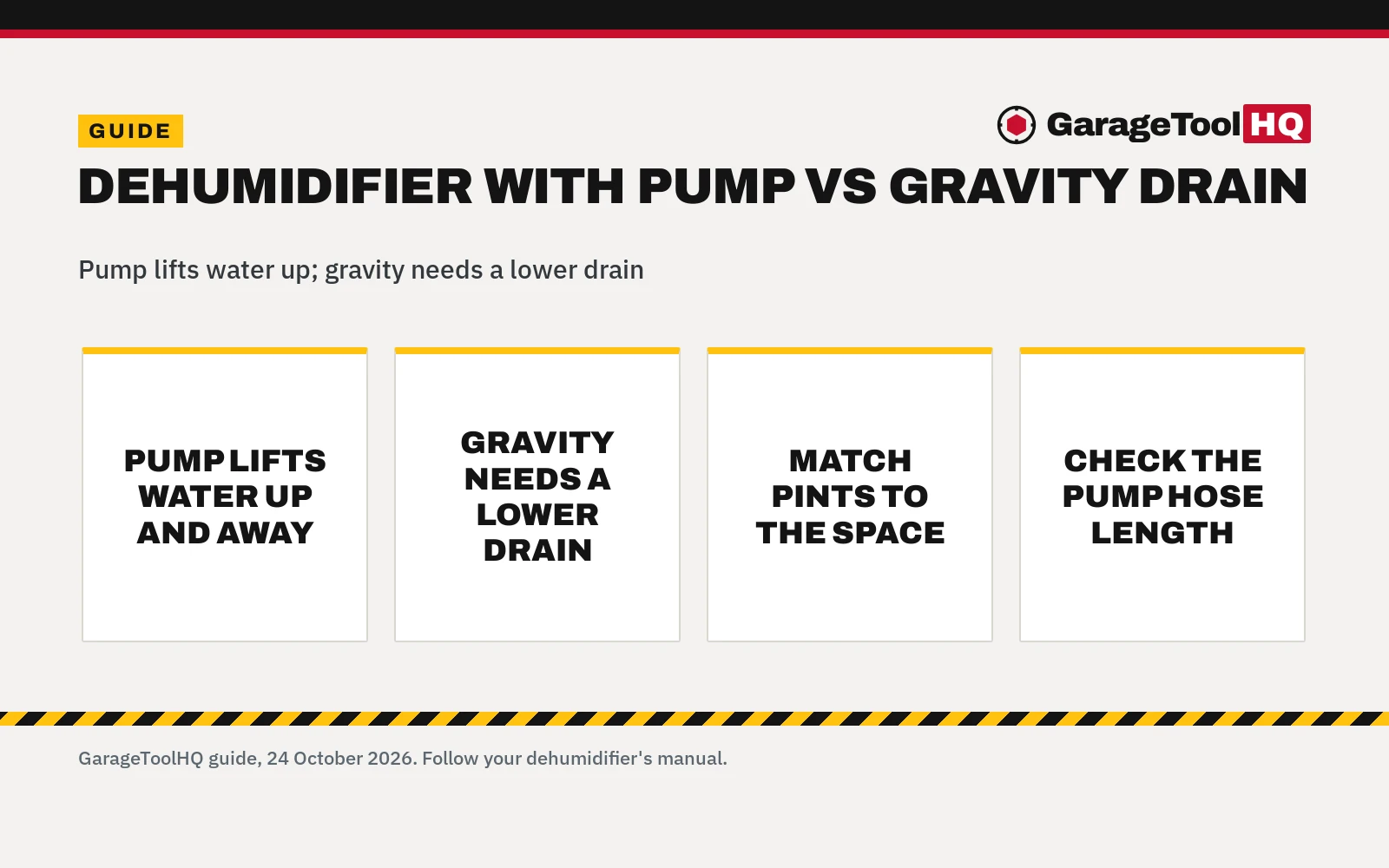
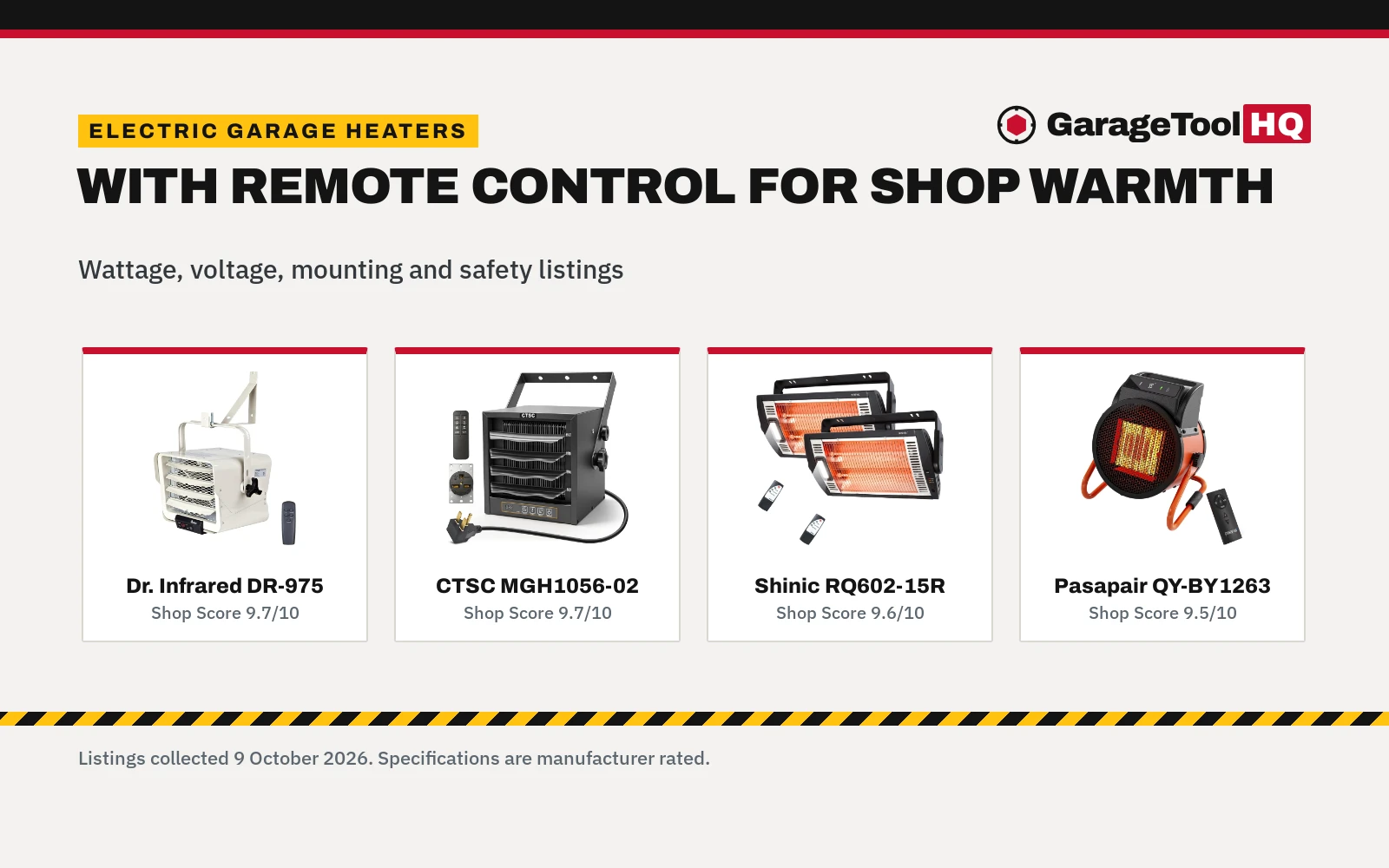
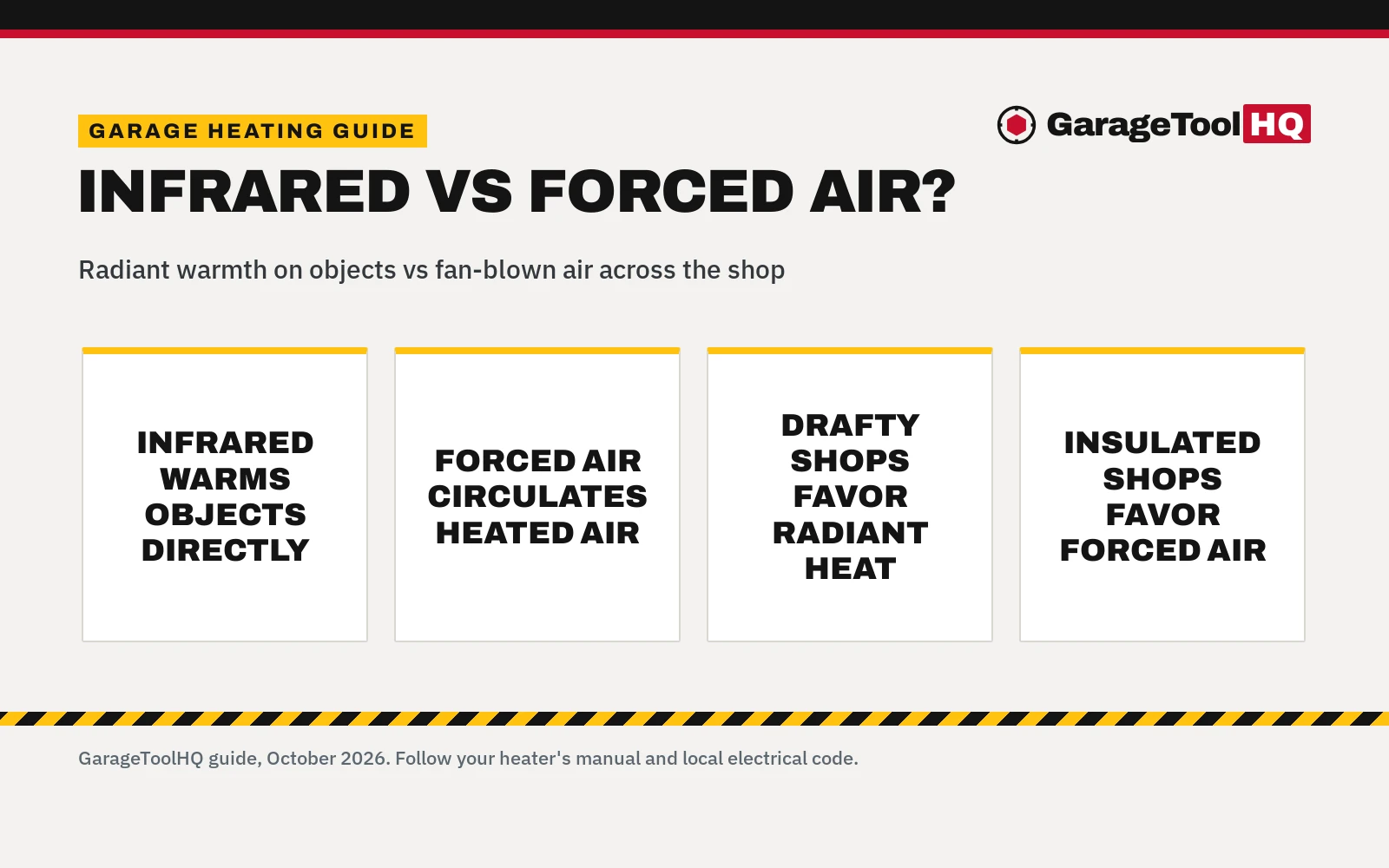
Infrared vs forced air garage heater: which heating system works better for a workshop? Infrared heaters warm people and surfaces directly using radiant energy without heating the air beforehand, while forced air heaters warm the garage by circulating heated air with a blower fan. An infrared heater is the better choice for drafty or uninsulated garages, open bays, and spot heating over a workbench. A forced air heater is the better choice for insulated garages where you want uniform air temperature throughout the entire room.
More options to compare
 Dr. Infrared Heater DR-966 240-Volt Hardwired Shop GarageCheck price on Amazon
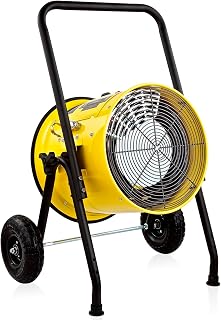 DR. INFRARED HEATER DR-PS11524 Salamander ConstructionCheck price on Amazon
 Heat Storm Phoenix Infrared Space Heater with Attachable FeetCheck price on Amazon
 DR. INFRARED HEATER DR218-1500W Greenhouse Garage WorkshopCheck price on Amazon
 DR. INFRARED HEATER Portable Infrared Indoor and OutdoorCheck price on Amazon
 DR. INFRARED HEATER NEW Upgraded DR-975 7500-Watt 240-VoltCheck price on Amazon
GarageToolHQ earns a commission when you buy through links on our product pages, at no extra cost to you. Read our affiliate disclosure.
Below: how radiant and convection heating differ, how both systems perform across workshop conditions, a comparison table, and key factors to evaluate before choosing a heater.
Infrared vs forced air garage heater: how each heating method works
The difference between infrared and forced air heating comes down to heat transfer. Garage heaters primarily rely on radiant heat transfer, convective heat transfer, or a combination of both to warm a cold workspace.
Radiant infrared heating. Infrared heaters emit electromagnetic radiation that travels through space without warming the air directly. When radiant waves strike a solid object, such as a concrete floor, a steel toolbox, vehicle sheet metal, or your body, the surface absorbs the energy and warms up. Those warmed surfaces then release heat into the surrounding space. Because radiant rays do not rely on moving air, you feel warmth almost immediately after turning the unit on, similar to stepping into direct sunlight.
Convection forced air heating. Forced air garage heaters rely on convection. The unit pulls cooler air from inside the garage across an electric heating element or heat exchanger, and a motorized blower fan pushes the heated air out into the room. As the warm air circulates, it gradually raises the ambient air temperature throughout the building. Because warm air naturally rises, the blower fan uses directional airflow to keep the air mixing and maintain comfortable conditions in the lower working zone.
Comparing heating performance across workshop conditions
| Factor | Infrared Radiant Heater | Forced Air Blower Heater |
|---|---|---|
| Heating mechanism | Radiant waves warm people and objects directly | Blower fan circulates heated air through room |
| Warm-up speed | Immediate warmth on objects in line of sight | Requires time to raise entire room air temperature |
| Performance in drafts | Warmth remains on objects when doors open | Warm air escapes quickly when garage doors open |
| Dust and air movement | No forced blower air blast; minimal dust disturbance on radiant models | Blower fan circulates air, stirring up sawdust, sanding grit, and debris |
| Heat distribution | Focused zone heating in direct beam path | Even ambient room temperature from wall to wall |
| Noise level | Silent on radiant-only models; quiet fan hum on hybrid units | Noticeable sound from electric fan motor and moving airflow |
| Obstacle penetration | Direct radiant warmth requires clear line of sight | Circulating air flows around vehicles and tool cabinets |
An uninsulated building loses heated air rapidly through gaps, thin wall panels, and open doors. In that setting, forced air units continuously consume energy heating air that escapes before you feel comfortable. Infrared units bypass the air, keeping your body and working surfaces warm even while cold air surrounds you.
In a fully insulated garage with sealed overhead doors, a forced air heater delivers uniform comfort. Circulating air flows around vehicles, underneath workbenches, and into storage corners, preventing cold spots that radiant rays cannot reach due to line of sight blockage.
How to choose the right heating system: workshop checklist
- Insulation and draft levels. Uninsulated walls, bare roof rafters, and loose door seals allow warm air to escape quickly. For uninsulated shops or bays where vehicle doors open frequently, radiant heat is the practical option because drafts do not blow radiant waves away. For well-insulated structures, forced air maintains consistent warmth across the entire floor plan.
- Airborne dust and finishing work. Woodworking, drywall sanding, and automotive paint application create fine airborne dust. Forced air blowers keep dust particles circulating, which can ruin clear coats, contaminate wet finishes, and clog equipment. Radiant-only units avoid forced blower air currents, allowing airborne dust to settle rather than keeping it suspended.
- Workspace layout and shadows. Radiant waves travel strictly in straight lines. If you work underneath vehicles or behind large tool cabinets, radiant heat cannot reach you if an obstruction blocks the direct beam path. Forced air warms the ambient air, delivering warmth around every obstacle.
- Session duration. If you use the garage for short, intermittent tasks such as checking fluids, sharpening tools, or retrieving gear, waiting for forced air to warm the entire garage is inefficient. Infrared provides immediate comfort the moment you switch it on. For long weekend projects spanning several hours, forced air keeps the entire building comfortable.
- Ceiling height and mounting clearances. Overhead radiant heaters require generous clearance from combustible materials, vehicle roofs, and working personnel to prevent surface scorching. Low ceilings may make mounting an infrared unit impractical. Forced air units are commonly installed high in a corner and angled downward with directional louvers to distribute air safely.
- Electrical power requirements. High-output electric heaters require substantial electrical service. For example, DR. INFRARED HEATER lists the DR-966 commercial shop heater at 6000 watts on 240 volts, drawing 25 A on a dedicated circuit. ROVSUN lists a ceiling-mounted unit at 6000 watts and 20000 BTU on 240 volts, specifying 10 AWG wiring. Always hire a licensed electrician to evaluate your breaker panel and run dedicated circuits.
Radiant heaters generate high surface temperatures on items placed directly in their radiation zone. Maintain all manufacturer clearances to walls, ceilings, and storage shelves. Never park tall vehicles or place ladders directly underneath an active radiant unit, and keep spray cans, solvents, and fuel containers away from any heating appliance.
Never run a fuel-burning heater, generator or engine in a closed garage: carbon monoxide builds up fast and has no smell. Fit a CO alarm, keep clearances to cars and storage, use vented gas heaters installed to code, and put 240V electric heaters on a dedicated circuit. See CPSC carbon monoxide guidance. Read our Safety Disclaimer.
Sizing considerations for radiant or forced air
Proper heater sizing prevents undersized units from running non-stop or oversized units from cycling erratically. When sizing forced air equipment, calculations depend on garage volume, insulation quality, and the temperature difference between outdoor winter lows and your desired shop comfort level.
Heating capacity varies across equipment categories. For directional radiant heating, DR. INFRARED HEATER lists the DR-239 wall or ceiling mount unit at 3000 watts, producing 10,260 BTU on 240 volts. For bench areas, Heat Storm lists the HS-1500-PHX infrared heater at 1500 watts and 5200 BTU on 120 volts. For whole-garage forced air heating, DR. INFRARED HEATER lists the DR-966 at 6000 watts to cover 600 sq ft, while ROVSUN claims up to 1100 sq ft for its 6000 watts unit. Coverage ratings vary across manufacturer listings for the same wattage, which is why calculating heating requirements for your specific space is essential. For heavy industrial use, DR. INFRARED HEATER lists the portable DR-PS11524 fan-forced salamander heater at 15000 watts on 240 volts with an 80-Amp breaker requirement.
To determine the heat output your building requires before purchasing equipment, review our comprehensive guide on what size garage heater do I need. You can also compare popular models sized for standard residential layouts in our review of the best garage heater for a 2-car garage.
Air turbulence, shop dust and paint applications
A major operational difference between radiant and forced air systems is air turbulence. In an active home garage, air currents directly influence vehicle maintenance, woodworking, and cosmetic repair.
Forced air heaters rely on a blower fan to circulate warmth. While effective for ambient temperature consistency, the blower continuously circulates airborne dust, lint, and floor debris. If you perform woodworking, sanding, or panel preparation, this moving air keeps fine particulate suspended rather than allowing it to settle. When painting car parts or applying clear coats, circulating dust can settle into wet finishes, creating surface blemishes that require corrective compounding.
Radiant-only infrared heaters avoid blower-driven air turbulence. Because heat is projected through radiant waves rather than pushed by a motorized fan, dust on the shop floor is less likely to be stirred up. While heated surfaces eventually create gentle secondary convection as they warm the surrounding air, radiant equipment creates far less air disturbance than high-volume blower fans, making it well suited for detailing bays, paint prep areas, and clean assembly zones. If you prefer radiant warmth for focused work areas, explore dedicated models in our review of the best infrared garage heater, or compare all-around heating options in our guide to the best electric garage heater.
Frequently Asked Questions
Does an infrared garage heater heat the surrounding air?
Infrared heaters do not heat the air directly. They project radiant energy that warms solid objects, including the concrete floor, work surfaces, vehicles, and people. As those objects warm up, they gradually release heat into the surrounding air through secondary convection. However, ambient air temperature rises much slower with radiant units than with fan-forced heaters.
Which heater is better for an uninsulated garage?
An infrared heater is far better suited for an uninsulated or drafty garage. Radiant waves warm surfaces and occupants directly without depending on air temperature. Forced air units struggle in uninsulated spaces because the heated air rises quickly and leaks out through gaps and uninsulated exterior surfaces.
Are forced air garage heaters loud during operation?
Forced air heaters generate sound from the electric motor and the air moving through the louvers. While modern units are designed for residential shops, the noise is noticeable when talking or using bench equipment. Infrared units with no internal fan operate in complete silence.
Can you mount an infrared heater on the ceiling?
Yes, many radiant heaters are engineered specifically for ceiling or upper wall mounting. For example, the DR. INFRARED HEATER DR-239 includes brackets designed for ceiling or wall installation. When mounting any overhead heater, follow manufacturer instructions regarding minimum clearances from ceilings, adjacent walls, and combustible objects.
Do forced air heaters create cold spots in a garage?
Forced air heaters are designed to minimize cold spots by keeping air circulating throughout the building. Conversely, infrared heaters warm only the areas within their line of sight. Objects located outside the radiation beam, or blocked by toolboxes and vehicles, remain cooler until room surfaces warm the surrounding air.
Which heater type offers better energy efficiency in a workshop?
Both electric radiant and electric forced air units convert electrical power into heat at comparable efficiency. Practical efficiency depends on how you use your space. For brief sessions in uninsulated or drafty garages, infrared is more efficient because it warms your working zone immediately without wasting energy heating empty air. For prolonged work across an entire insulated building, forced air provides more uniform whole-room comfort.
Related: what size garage heater do I need, our breakdown on electric vs propane garage heaters, the best garage heater for a 2-car garage, and our garage upgrades hub. Also see our analysis on how much does it cost to heat a garage.