Electric vs Propane Garage Heater: Differences Explained
Electric and propane garage heaters compared for home workshops: heat output, electrical circuits, fuel storage, ventilation requirements, and which jobs each suits.

On this page
Top picks at a glance
As an Amazon Associate we earn from qualifying purchases.
- 1
 Comfort Zone Hard-Wired Ceiling Mount Garage Electric Space9.7/10View on Amazon
- 2
 BILT HARD 859.7/10View on Amazon
- 3
 GASLAND MHA18B Propane heater Outdoor9.6/10View on Amazon
- 4
 Dual Power 15View on Amazon
- 5
 EconoHome Wall Heater Panel with ThermostatView on Amazon
- 6
 blessny 1500W Wall Mounted Electric Heater for Outdoor PatioView on Amazon
- 7
 Newair Electric Garage Heater 240VView on Amazon
- 8
 NewAir NGH160GA00View on Amazon
- 9
 Dura Heat Electric Forced Air HeaterView on Amazon
Verdict: Choose an electric garage heater if you work in an enclosed, well-insulated garage, want clean and odor-free heat without moisture buildup, and have standard 120V outlets or a dedicated 240V circuit available. Choose a propane garage heater if you need rapid, high-BTU warmth to knock down freezing chills in an uninsulated or drafty shop, and you can provide adequate ventilation per manufacturer guidelines.
When deciding between an electric vs propane garage heater, the primary differences come down to thermal output speed, electrical supply requirements, ventilation rules, and moisture control. Both options keep winter workshop projects moving, but they suit completely different garage environments. This comparison breaks down the operational differences between electric and propane heat, followed by four examples from the listings we reviewed.
GarageToolHQ earns a commission when you buy through links on this page, at no extra cost to you. Read our affiliate disclosure.


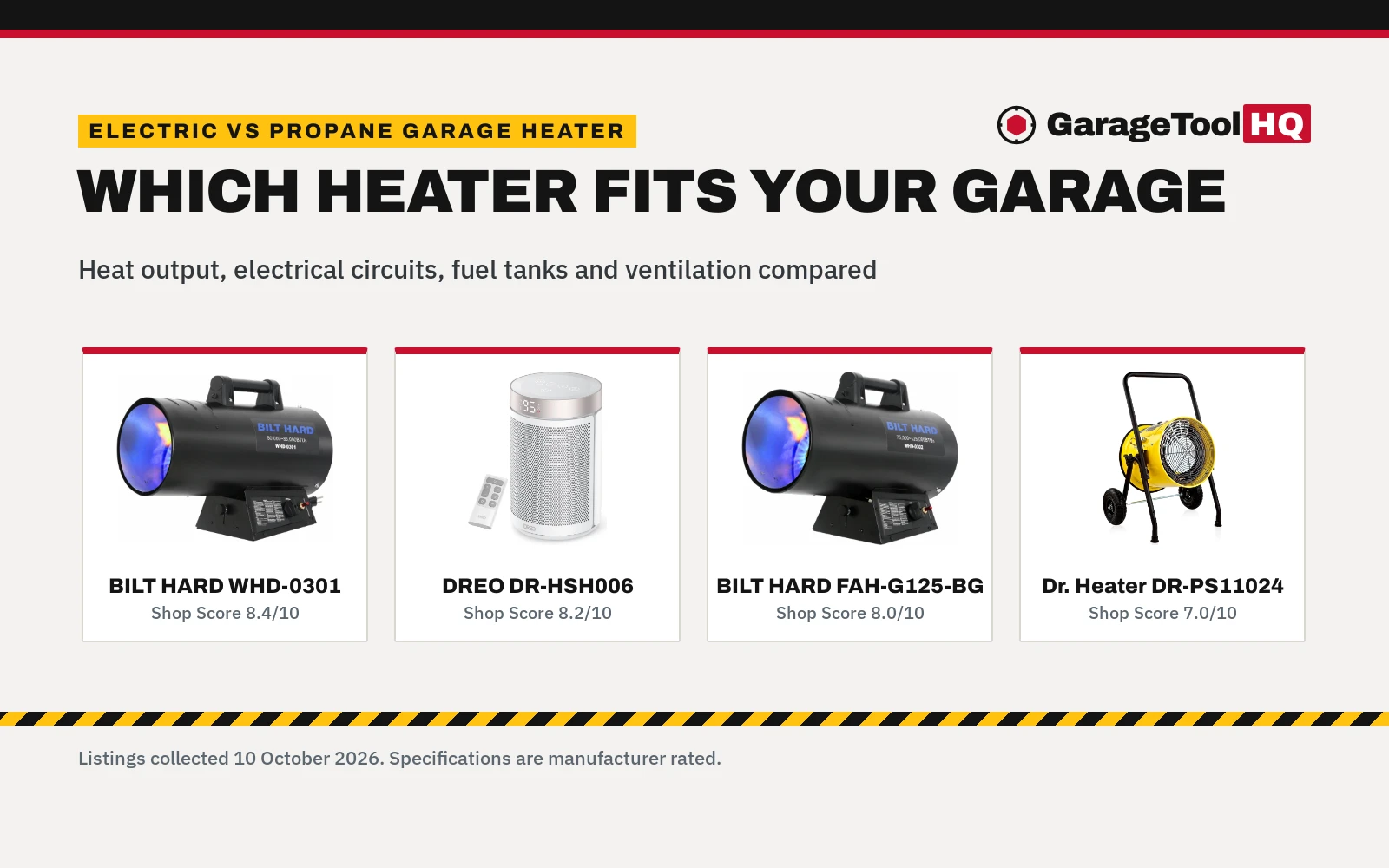
BILT HARD 85,000 BTU Forced Air Propane Heater
An 85,000 BTU forced air propane torpedo heater with 50,000 to 85,000 BTU output, electronic ignition, and CSA certification.
Pros
- Variable output from 50,000 to 85,000 BTU with fan-forced heat distribution
- Up to 8 hours of runtime on low setting with a 20 lb propane tank (stated)
- CSA certified with overheat shutoff and automatic gas cut-off protection
- Compact torpedo design weighing 20 pounds with an adjustable heat angle
Cons
- Requires continuous ventilation and an adequate fresh air supply
- Requires both a propane cylinder and a 120V electrical outlet for the fan
- Spec table lists outdoor usage while title and bullets recommend garage use
- Cylinder not included; requires a 20 lb or larger propane tank

DREO Space Heater, Portable Electric Heaters
A 1500W compact PTC ceramic space heater with digital thermostat, remote control, 34 dB noise rating, and ETL certification.
Pros
- ETL certified with tip-over sensor, overheat protection, and V0 flame retardant materials
- Adjustable thermostat from 41 to 95 degrees F with 1-degree increments
- Quiet operation rated down to 34 dB with a brushless DC motor
- Compact 3-pound tower with carry handle, 12-hour timer, and remote control
Cons
- 1500-watt output is limited to spot heating or small enclosed bench areas
- Requires standard 120V outlet drawing 12.5 amps near other shop tools
- Plastic construction designed primarily for home and office environments
- Heating coverage stated only as a comparative percentage rather than square footage

BILT HARD 125,000 BTU Forced Air Propane Heater
A 125,000 BTU forced air propane torpedo heater with 75,000 to 125,000 BTU output, CSA certification, and electronic ignition.
Pros
- Variable heat output from 75,000 to 125,000 BTU for large garages
- Heats areas up to 3,125 square feet (stated in bullets)
- CSA certified with overheat shutoff and gas leakage auto-cut-off
- Adjustable heat angle with continuous electronic ignition
Cons
- Product weight is omitted from the specification table
- Spec table contains contradictions including Dish form factor and radiant element
- High fuel consumption runs through a 20 lb tank in 3.5 hours on high
- Must be operated with adequate ventilation and a fresh air supply

DR. INFRARED HEATER DR-PS11024 Salamander
A 10,000W 240V forced air electric shop heater with wheeled cart, adjustable thermostat, and hardwired 55A requirement.
Pros
- 10,000-watt heating capacity delivers heavy electric warmth without combustion fumes
- Built-in adjustable thermostat spanning from 37 to 104 degrees F
- Heavy-duty steel frame mounted on a wheeled cart for shop mobility
- Safety intake and output protective grilles on a 69-pound construction chassis
Cons
- Requires a dedicated 240V 55-amp breaker and permanent hardwiring
- Power cord is not included and must be purchased separately
- No safety certifications such as UL or ETL are stated in the listing
- Heavy 69-pound build requires substantial floor footprint
More options to compare
 Dual Power 15Check price on Amazon
 EconoHome Wall Heater Panel with ThermostatCheck price on Amazon
 blessny 1500W Wall Mounted Electric Heater for Outdoor PatioCheck price on Amazon
 Newair Electric Garage Heater 240VCheck price on Amazon
 NewAir NGH160GA00Check price on Amazon
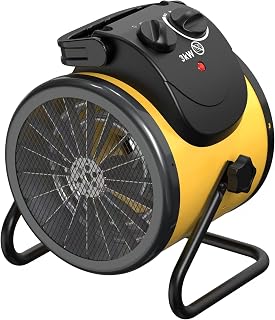 Dura Heat Electric Forced Air HeaterCheck price on Amazon
Side by side
| Electric garage heater | Propane garage heater | Advantage | |
|---|---|---|---|
| Primary energy source | Electricity (120V outlet or 240V dedicated circuit) | Liquid propane cylinder plus 120V for blower fan | Electric (no fuel storage or cylinder refills) |
| Ventilation requirement | None; produces zero combustion exhaust or fumes | Continuous ventilation and CO alarm required | Electric (safe in fully enclosed spaces) |
| Moisture and rust risk | Clean, dry heat with zero moisture added | Combustion releases water vapor into the workspace | Electric (protects tools and machinery from rust) |
| Stated heat output | 1500 watts (DREO) to 10,000 watts (Dr. Infrared example) | 50,000 to 125,000 BTU across the BILT HARD examples | Propane (substantially higher heat volume) |
| Electrical installation | Standard plug or hardwired to a 55A breaker (Dr. Infrared) | Standard 120V outlet to run the continuous ignition and fan | Propane (operates on standard 120V outlets) |
| Example footprint and weight | 3 pounds (DREO tower) to 69 pounds (Dr. Infrared cart) | 20 pounds (BILT HARD 85K) with compact torpedo body | Neither (different form factors across listings) |
| Best workspace use | Enclosed, insulated shops, bench work, odor-free heating | Rapid high-BTU warm-up in drafty or ventilated workspaces | Neither (depends on garage ventilation and insulation) |
Example figures are manufacturer rated, as published on each listing and collected 9 October 2026.
Electric vs propane garage heater: heat output and heating speed
Heat output is where these two heater styles diverge most sharply. Propane torpedo heaters generate intense, high-volume heat by combusting liquid fuel directly in the airflow. Across our reviewed models, the BILT HARD propane heaters produce variable output from 50,000 to 85,000 BTU on the smaller unit and 75,000 to 125,000 BTU on the larger model. That volume of forced-air heat quickly warms up large spaces, with stated coverage reaching up to 2,125 and 3,125 square feet.
Electric heaters provide steady, continuous warmth without flame, but they deliver lower heat volume on typical circuits. A compact 120V model like the DREO tower provides 1500 watts of ceramic heat, which suits personal benchtop spot heating rather than warming an entire cold workspace. Scaling up to serious shop-wide electric warmth requires high-capacity commercial equipment like the Dr. Infrared example, which draws 10,000 watts on 240V power to push heavy industrial warmth across the floor.
Ventilation and safety requirements
Combustion and air exchange mark the most critical operational divide. Propane heaters burn fuel inside the workspace, consuming ambient oxygen while releasing combustion exhaust into the air. Maker instructions require maintaining ventilation per maker recommendations along with installing a functioning carbon monoxide (CO) alarm in the work area. Never run fuel engines or unvented heaters in a closed garage without proper fresh air intake and exhaust ventilation.
Electric garage heaters produce zero combustion gases and consume no oxygen, allowing safe operation in closed, sealed shops. However, high-draw electric heaters require strict electrical safeguards. Sizing info requires calculating circuit amperage and breaker capacity carefully. The 10,000-watt Dr. Infrared model requires a dedicated 55-amp breaker and permanent hardwiring. Homeowners must use a licensed electrician to evaluate panel capacity and run dedicated 240V lines safely.
Electrical supply and wiring
Power availability often dictates which heater you can deploy right away. Propane forced-air torpedo heaters depend on propane for thermal energy, but their internal blowers and continuous ignition systems require electricity. Both BILT HARD propane examples plug directly into standard 120V household outlets to power their fans.
Electric heaters draw all their energy directly from your service panel. Small 120V units like the 1500-watt DREO model draw 12.5 amps from a standard wall receptacle. Running a 12.5-amp heater on a shared circuit alongside other shop tools can trip breakers. Heavy 240V shop heaters require their own dedicated wiring and breaker spaces. For details on planning your circuit, consult our guide on what size breaker for a 240V garage heater.
Moisture and rust risk
A byproduct of burning liquid propane is water vapor. Combustion releases moisture directly into the garage air along with heat. When warm, humid air hits cold steel tools, vehicle fenders, and bare cast-iron machinery beds, condensation forms rapidly. Over time, recurring moisture creates rust risks for delicate tools and workshop equipment.
Electric heaters deliver completely dry warmth. Because no combustion occurs, electric coils and ceramic elements do not add moisture or humidity to the ambient air. For hobbyists storing precision metalworking tools, vintage vehicles, or woodworking machines with bare cast-iron tables, dry electric heat protects equipment from condensation.
Garage size and heating needs
Matching a heater to your workspace depends on ceiling height, insulation quality, and overall floor area. A well-insulated single-car garage retains heat effectively, making an efficient electric heater a convenient, low-maintenance choice. In contrast, an uninsulated two-car garage or detached pole barn loses heat constantly through uninsulated walls and garage doors, where the high BTU punch of a propane torpedo heater is necessary to make the space comfortable. To determine the exact heating capacity your garage demands, consult our guide on what size garage heater do I need.
Choose an electric heater if
- You work in an enclosed, well-insulated garage
- You want clean, dry heat with zero combustion fumes
- You want to avoid condensation and tool rust
- You have standard 120V outlets or a dedicated 240V panel
- You prefer quiet operation at a workbench
Choose a propane heater if
- You need rapid, high-output heating for a large or drafty shop
- Your garage lacks dedicated 240V high-amp electrical wiring
- You can provide adequate ventilation per manufacturer guidelines
- You keep a functioning carbon monoxide alarm in the workspace
- You want portable heat you can move across job sites
Example garage heaters
For additional heating options, explore our reviews of the best electric garage heater models and the best propane garage heater options for home shops.
Estimate the BTU your garage needs from its size, insulation and climate, plus the circuit for electric.
Never run a fuel-burning heater, generator or engine in a closed garage: carbon monoxide builds up fast and has no smell. Fit a CO alarm, keep clearances to cars and storage, use vented gas heaters installed to code, and put 240V electric heaters on a dedicated circuit. See CPSC carbon monoxide guidance. Read our Safety Disclaimer.
Frequently Asked Questions
Is an electric or propane garage heater cheaper to operate?
Operating costs vary depending on local electric utility rates and propane refill pricing. Small 1500-watt electric heaters draw modest power on standard circuits, while 10,000-watt electric models consume substantial power on dedicated 240V lines. Propane heaters consume fuel according to output: the BILT HARD 85,000 BTU unit runs 8 hours on low and 5.5 hours on high from a 20 lb tank, while the 125,000 BTU model runs 3.5 hours on high. For a step-by-step formula to calculate operating expenses, see our guide on how much does it cost to heat a garage.
Can you run a propane heater in an enclosed garage?
Never run unvented heaters or fuel engines in a closed garage without proper ventilation. Fuel heaters consume oxygen and produce combustion exhaust including carbon monoxide. Always maintain ventilation per maker specifications and install a functioning carbon monoxide (CO) alarm in your workspace. For detailed safety considerations, review is it safe to use a propane heater in a garage.
Do electric garage heaters require a dedicated 240V circuit?
Small space heaters, like the 1500-watt DREO model, plug into a standard 120V household receptacle. Large shop heaters, like the 10,000-watt Dr. Infrared unit, require a 240V single-phase circuit and a 55-amp breaker. Sizing info must match your panel, and you should always use a licensed electrician to install high-draw 240V lines safely.
Does a propane garage heater cause tool rust?
Yes, liquid propane combustion produces water vapor as a byproduct. When this moisture meets cold metal surfaces like table saw tops, hand tools, or car panels, condensation can form. Electric heaters produce completely dry heat without humidity, avoiding rust concerns.
Which heater type is quieter in a workshop?
Electric ceramic and radiant heaters are significantly quieter. The DREO electric heater lists a noise level of 34 dB. Propane torpedo heaters use high-velocity forced-air blowers and active gas combustion, generating noticeable background sound even when equipped with quiet burner features.
Related: our comparison of garage heater gas vs electric, our roundup of the best garage heaters, and our garage upgrades hub.