Garage Heater Gas vs Electric: Which One Should You Buy?
How gas and electric garage heaters compare on heating output, venting, wiring, safety and running costs so you can choose the right system for your workspace.

On this page
Top picks at a glance
As an Amazon Associate we earn from qualifying purchases.
- 1
 GASLAND MHA18B Propane heater Outdoor9.6/10View on Amazon
- 2
 Comfort Zone Hard-Wired Ceiling Mount Garage Electric Space9.7/10View on Amazon
- 3
 Propane Heater Indoor and Outdoor9.4/10View on Amazon
- 4
 ProCom Heating Natural Gas Ventless Infrared Plaque HeaterView on Amazon
- 5
 Modine HD45AS0111Natural Gas Hot Dawg Garage Heater 45View on Amazon
- 6
 ProCom Heating Natural Gas Ventless Blue Flame Heater WithView on Amazon
Garage heater gas vs electric: which one should you buy? Gas heaters deliver higher heat output for large, drafty spaces, while electric heaters eliminate combustion exhaust and fuel piping. A vented gas unit heater quickly warms uninsulated shops if you have a gas line or exterior propane supply. An electric heater offers clean warmth without flues or fuel tanks. Both work well when sized to your shop.
More options to compare
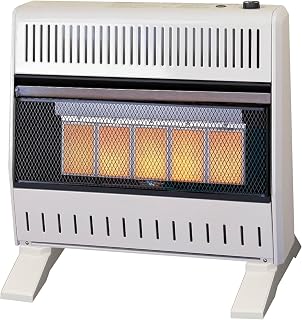 ProCom Heating Natural Gas Ventless Infrared Plaque HeaterCheck price on Amazon
 Modine HD45AS0111Natural Gas Hot Dawg Garage Heater 45Check price on Amazon
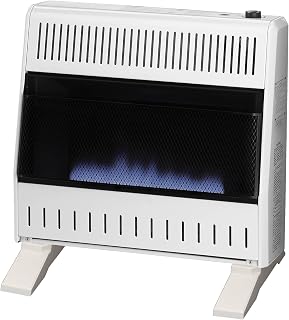 ProCom Heating Natural Gas Ventless Blue Flame Heater WithCheck price on Amazon
GarageToolHQ earns a commission when you buy through links on our product pages, at no extra cost to you. Read our affiliate disclosure.
Below: comparing heat delivery, installation, safety and operating costs, plus a checklist to choose the right heater.
Garage heater gas vs electric: key differences at a glance
Gas heaters burn fuel to generate large volumes of heat rapidly, while electric heaters use heating elements or ceramic plates for steady warmth. Core differences include:
- Heating output: Gas heaters warm cold concrete shops quickly. Electric units provide steady warmth, but raising temperatures takes longer.
- Venting: Permanent gas unit heaters require an exterior exhaust flue. Electric heaters produce zero combustion exhaust and need no venting.
- Installation: Gas units require fuel lines and flues. Electric heaters need adequate panel capacity; hardwired units require a dedicated circuit installed by a licensed electrician.
- Moisture: Unvented fuel burning releases water vapor onto tools. Electric heaters produce heat without combustion, introducing zero moisture.
How gas and electric garage heaters compare across shop categories
| Category | Gas garage heaters | Electric garage heaters |
|---|---|---|
| Heating capacity | High maximum output; unit heaters list 45,000 BTU (Modine) up to 125,000 BTU (Mr. Heater) | Outputs vary by circuit; plug-in units like Brightown list 1500W (covering 200 sq. ft.), while larger models cite electric garage heater 11000 btu output |
| Venting | Flue pipe outside for permanent units; fresh air for portable models | No venting required; zero indoor emissions |
| Power and fuel | Natural gas line or exterior propane (Mr. Heater includes LP conversion kit); 115 volts blower fan (Modine lists 115 volts) | Standard 120v outlet (Brightown lists 12.5 A) or dedicated high-capacity circuit |
| Moisture | Produces water vapor; vented flues exhaust moisture outdoors | Zero combustion moisture on tools and vehicles |
| Safety shutoffs | Flame failure shutoff, power exhaust, carbon monoxide alarm required | Overheat protection, tip-over switches on portable units, no open flames |
Always verify the maker’s rating. Permanent vented gas unit heaters exhaust outside, while unvented portable heaters require fresh-air openings and must never run in a closed garage. Electric units range from 120v plug-in heaters to hardwired workshop models.
How to choose between gas and electric heat: the shop checklist
- Assess garage size and insulation. High-output gas heaters, like the Modine HD45AS0111 rated at 45,000 BTU, recover lost warmth quickly in drafty garages. Insulated spaces maintain heat efficiently with electric heaters.
- Check electrical capacity. A 120v model, like the Brightown 1500W wall heater drawing 12.5 A, plugs into a standard receptacle. Larger electric workshop heaters require dedicated circuits installed by a licensed electrician.
- Verify fuel supply. Natural gas requires a supply pipe into the garage. If using propane, store cylinders outdoors per local fire codes.
- Plan exhaust venting. Permanent gas heaters require a dedicated vent pipe through a wall or roof. Never operate unvented fuel heaters in a closed garage.
- Install safety alarms. Always install a carbon monoxide alarm when heating with gas. Look for flame failure valves on fuel heaters and certified overheat protection on electric units.
- Protect tools from rust. Unvented combustion releases moisture that condenses on cold steel. Choose a vented gas heater or an electric heater to keep air dry.
- Maintain clearances. Keep all heaters away from stored fuel, solvent vapors and combustible materials per manufacturer specifications.
Combustion consumes oxygen and releases carbon monoxide. Never run an unvented gas or propane heater with garage doors closed, never run fuel engines indoors, and always maintain required ventilation.
Never run a fuel-burning heater, generator or engine in a closed garage: carbon monoxide builds up fast and has no smell. Fit a CO alarm, keep clearances to cars and storage, use vented gas heaters installed to code, and put 240V electric heaters on a dedicated circuit. See CPSC carbon monoxide guidance. Read our Safety Disclaimer.
Heating capacity, sizing and real-world performance
Matching heater output to your space prevents underheating or fuel waste. Gas output is rated in British Thermal Units (BTU), while electric heat is rated in watts (W) or BTU:
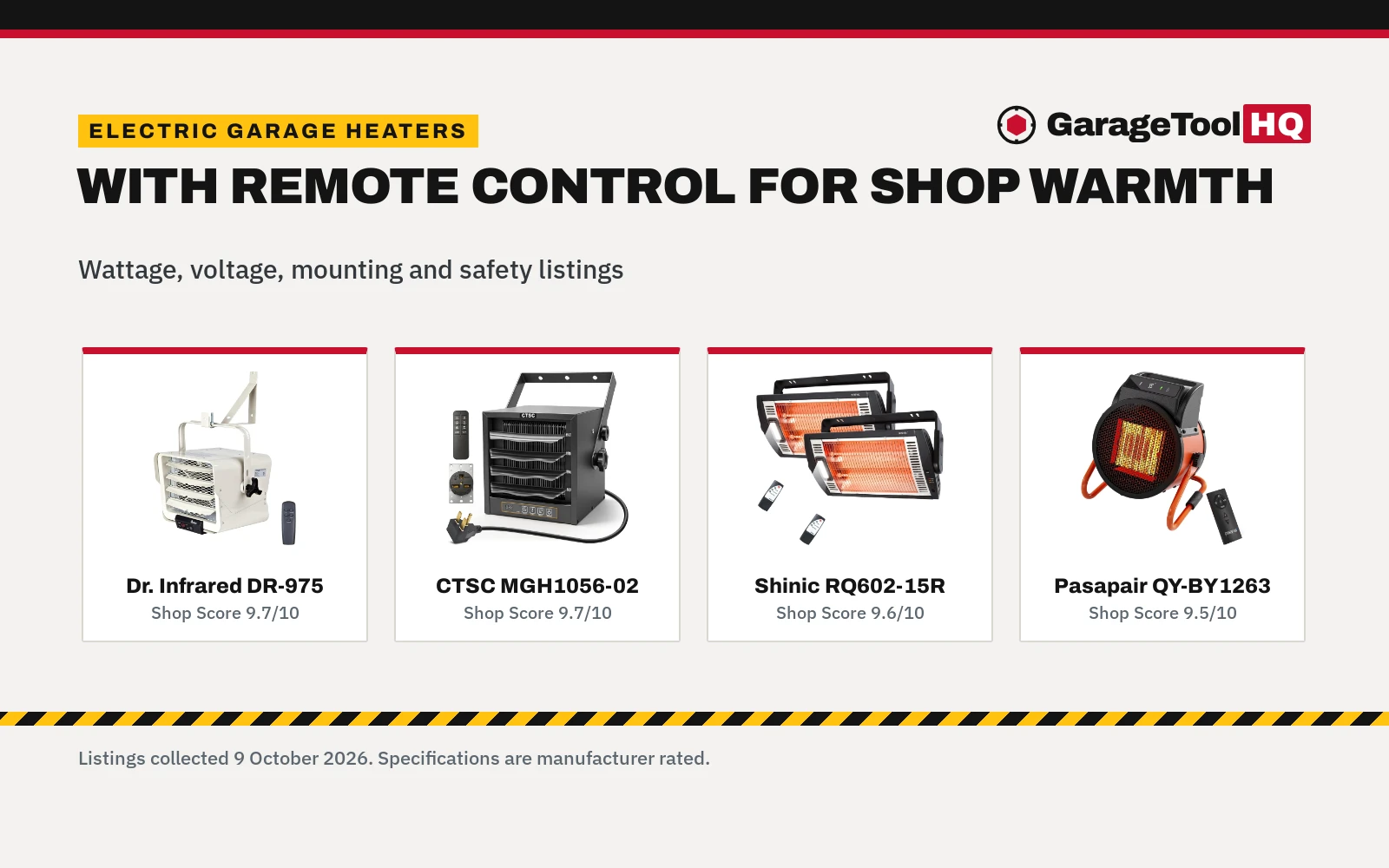
- Small work areas: An electric wall unit like the Brightown 1500W heater (offering 1000W and 600W modes) heats 200 sq. ft. on 120 volts. For portable spot heating, an electric garage heater with fan or portable units citing electric garage heater 11000 btu output warm individual work areas. For high ceiling mounts, an electric garage heater with remote control simplifies adjustments.
- Mid-size workshops: An overhead radiant natural gas heater, like the Heatstar MH25NG, delivers 25,000 BTU for 500 to 600 square feet. For fan-forced circulation, Modine lists 45,000 BTU with 80-Percent efficiency covering 700 Sq Ft on 115 volts for its HD45AS0111 unit. By contrast, ventless natural gas models from ProCom publish 30,000 BTU covering 1400 sq. ft. for living areas, but lack the exterior flues needed for closed garages. Targeted unit heaters include the Mr. Heater 50, Mr. Heater 80, or compact Mr. Heater 30.
- Large multi-bay garages: Ceiling-mounted gas heaters like Mr. Heater MHU125 provide 125,000 BTU (with a 50,000 BTU listing variant) covering 2000 square feet. High-output torpedo heaters from GASLAND and BILT HARD list 75,000 to 125,000 BTU covering 3,100 to 3,125 sq ft (GASLAND lists 5 hours on low from a 20 lb propane tank), but being unvented, they are rated for open job sites rather than closed garages. Similarly, Benass lists a double tank-top portable heater with 22,000 BTU, 26,000 BTU and 30,000 BTU settings covering 800 sq/ft for up to 20 hours on low from a 20-pound tank, but its outdoor rating prohibits indoor garage use.
For exact requirements, read our guide on what size garage heater do I need and review the electric garage heater size guide. Also compare models in the best garage heater for a 2-car garage and our roundup of the best garage heaters.
Electrical hookups, gas piping and workshop safety rules
Safe garage heating requires following proper utility guidelines:
Electrical circuits. Household 120v outlets power smaller units, like the Brightown 1500W electric garage heater with plug drawing 12.5 A. Larger workshop heaters require dedicated branch circuits. Review our circuit breaker sizing guide and always hire a licensed electrician to install dedicated heater wiring.
Gas piping and venting. Permanent natural gas heaters require rigid piping with a shutoff valve and an exterior flue pipe. For portable propane heaters, check connections with soapy water before lighting; bubbles reveal leaks. Store spare propane cylinders outdoors upright away from openings.
Battery charging. Charging lead-acid batteries releases flammable hydrogen gas. Keep charging areas ventilated, position batteries away from heaters, and use a regulated battery charger maintainer to limit gassing.
Frequently Asked Questions
Is a gas or electric garage heater cheaper to operate?
Operating cost depends on local utility rates and heating frequency. Natural gas usually costs less per heat unit in cold climates with frequent use. Electric heaters provide high efficiency, but electric rates can make heating uninsulated garages expensive. Estimate expenses with our guide on how much does it cost to heat a garage.
What size electric heater for 600 sq ft garage?
Heating a 600 sq ft garage depends on insulation and climate. A single compact 120v heater is insufficient, as the Brightown 1500W unit lists coverage for 200 sq. ft. Heatstar lists a 25,000 BTU natural gas heater for 500 to 600 square feet, while units citing electric garage heater 11000 btu output offer supplemental warmth. Heating a full 600 sq ft space with electric power requires a hardwired unit; see our electric garage heater size guide.
Can I leave an electric garage heater running unattended?
Hardwired electric heaters with thermostats and certified overheat protection can safely maintain freeze protection unattended. However, never leave portable space heaters running unattended, and always close fuel cylinder valves when leaving.
Do I need a licensed electrician to install an electric garage heater?
Compact 120v heaters plug into standard outlets, but hardwired shop heaters require dedicated high-capacity circuits. Always hire a licensed electrician to install dedicated heater circuits safely.
Why do unvented propane heaters cause moisture on garage tools?
Burning fuel produces water vapor. In unvented heaters, this moisture enters shop air and condenses on cold tools and vehicles, causing rust. Vented gas heaters and electric heaters avoid indoor combustion moisture.
Is gas or electric heat safer for a home garage?
Electric heaters produce no combustion exhaust, eliminating carbon monoxide and flame hazards. Vented gas unit heaters are also very safe when installed to code. Unvented portable gas heaters carry greater risk and require open ventilation and carbon monoxide alarms. See our review on whether it is safe to use a propane heater in a garage.
Related: garage heater sizing by BTU, the best garage heater for a 2-car garage, our garage upgrades hub, the best electric garage heater picks, and propane heater garage safety.