Diesel Heater Alternative: Which One Should You Buy?
Find the right diesel heater alternative for your workspace: comparing electric garage heaters, vented propane units, and radiant heaters for warmth, setup, and safety.

On this page
Top picks at a glance
As an Amazon Associate we earn from qualifying purchases.
- 1
 LF Bros 5KW Diesel Heater9.5/10View on Amazon
- 2
 VEVOR 8KW Diesel Heater with Bluetooth App Control For9.5/10View on Amazon
- 3
 VEVOR Diesel Heater9.5/10View on Amazon
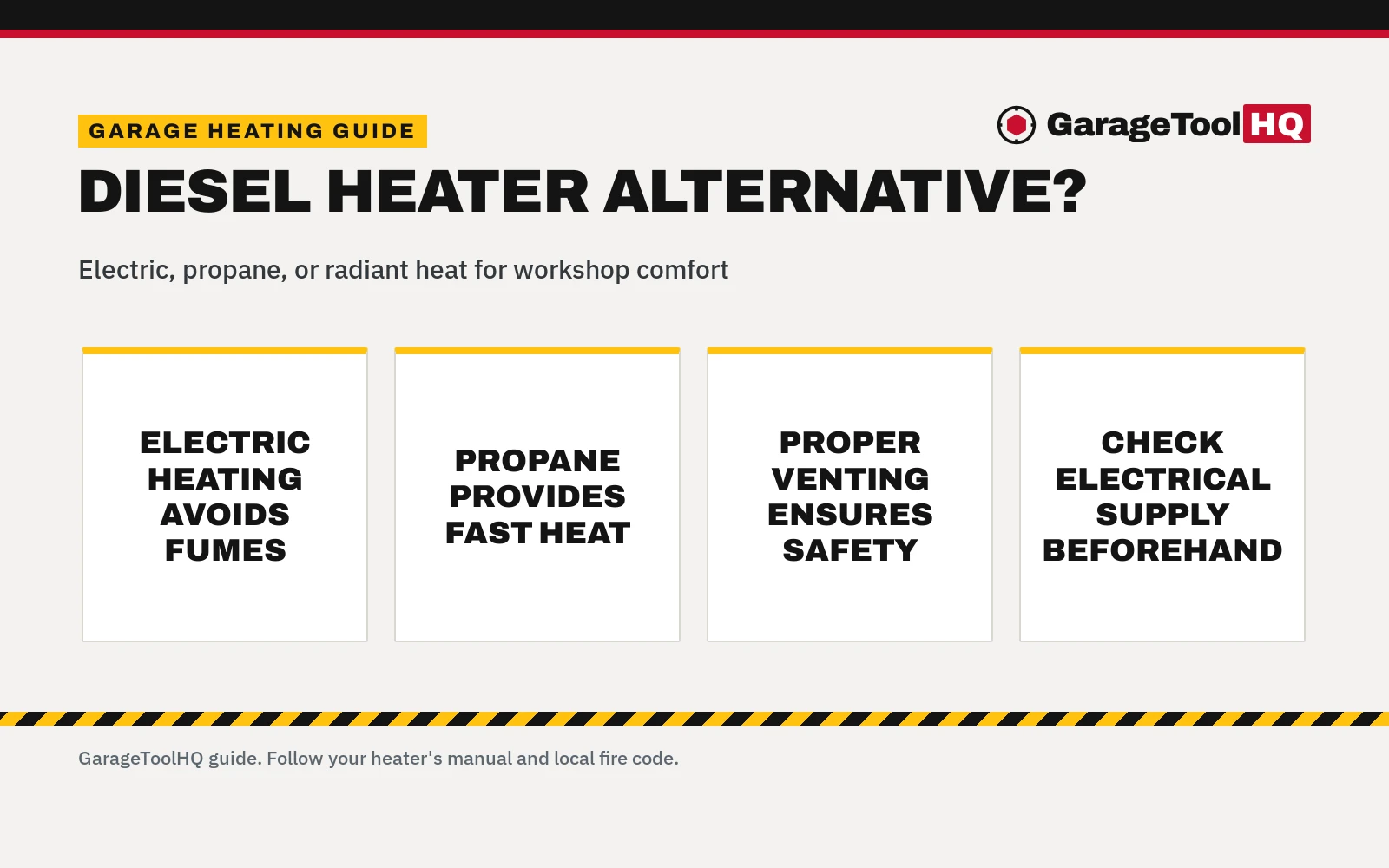
When you are lying on cold concrete doing a winter brake job or changing transmission fluid in an unheated shop, finding a practical diesel heater alternative comes down to how you want to manage power, fuel, and exhaust. While portable diesel units provide intense heat, they typically require routing exhaust piping through an exterior wall or opening, handling smelly fuel cans, and managing low-voltage direct-current power supplies. A hardwired electric garage heater provides clean, fumeless warmth without exhaust penetrations, making it the most seamless replacement if your electrical panel has adequate capacity. For workshops without heavy electrical service, vented propane unit heaters deliver high heating performance while keeping combustion exhaust safely outside.
GarageToolHQ earns a commission when you buy through links on our product pages, at no extra cost to you. Read our affiliate disclosure.
Below: why garage mechanics look for alternatives to diesel units, how electric and gas heating options compare, a step-by-step selection checklist, and essential safety rules for your workshop.
Diesel heater alternative options: why garage owners look beyond diesel
Portable diesel heaters have gained attention for warming work sheds and vehicle shelters, but setting up such equipment inside a residential garage introduces distinct drawbacks. A diesel heater relies on a sealed fuel combustion chamber and heat exchanger that pulls in combustion air, burns fuel, and blows exhaust through a metal tailpipe. In an enclosed garage where you store vehicles, tools, and paint supplies, that combustion cycle creates several major headaches:
- Exhaust pipe routing and structure penetrations. A diesel heater produces dangerous combustion exhaust that must vent outside. Running an exhaust pipe through an exterior garage wall requires cutting through siding, installing heat-resistant wall thimbles, and ensuring hot exhaust pipes remain isolated from wooden wall studs. Loose exhaust pipe clamps or cracked flexible tubing can allow exhaust fumes to seep directly into your workspace.
- Fuel storage, smell, and soot accumulation. Diesel fuel has a strong, persistent odor that clings to clothing, drywall, and shop fabrics. Spilling fuel while filling an internal tank creates slippery shop floor hazards. Furthermore, during cold startup and shutdown cycles, diesel burners often produce a cloud of unburned fuel vapor and soot that settles on clean vehicle paint and bench equipment.
- Electrical power conversion hurdles. Although diesel heaters burn liquid fuel for heat, their internal glow plugs, draft fans, and electronic controller boards depend on continuous low-voltage direct-current electricity. Running a diesel unit in a standard garage requires either an alternating-current to direct-current power supply converter or a dedicated automotive battery connected to a charger. If power is interrupted during operation, the heater cannot run its essential cooling cycle to purge residual heat, risking internal component overheating and damage.
- Burner chamber maintenance and servicing. Combustion chambers foul with carbon deposits over time, especially when run on low heat settings. Clearing burner carbon requires disassembling the heater case, replacing internal atomizing screens, and scraping burner tubes. Mechanics who want immediate winter warmth often prefer heating equipment that requires no seasonal burner rebuilds.
Comparing each diesel heater alternative for garage workshops
| Heater Type | Venting and Exhaust | Typical Garage Application |
|---|---|---|
| Hardwired electric garage heater (ceiling or wall mount) | No exhaust gases; requires no venting pipes or building penetrations | Permanent, clean workshop heating for spaces with adequate electrical panel service |
| Vented propane or natural gas unit heater | Flue pipe carries combustion exhaust directly through the wall or roof to the outside | High heating output for entire workshop spaces where gas supply lines or propane tanks are available |
| Portable infrared radiant heater (electric or propane) | Electric models produce no emissions; fuel models require open fresh-air ventilation | Spot heating directly over a workbench, vehicle bay, or drafty workspace where heating the entire air volume is impractical |
| Indoor-rated portable convection heater | Unvented; relies on clean-burning fuel, oxygen depletion sensors, and open fresh-air sources | Temporary supplemental warmth for short repair tasks in well-ventilated garage spaces |
The layout of your garage, your willingness to cut exhaust holes through exterior siding, and the spare capacity in your main electrical breaker panel dictate which option fits best. An electric unit eliminates fuel storage entirely, whereas vented gas heaters suit workshops where cold winter temperatures overwhelm standard household electrical supplies.
How to choose a diesel heater alternative: the garage checklist
- Evaluate your electrical panel capacity. Before choosing an electric garage heater, inspect your main electrical service panel. High-output electric heaters require dedicated heavy-duty circuits installed with proper wire gauge and breaker sizing. If your panel lacks spare breaker positions, consult a licensed electrician or consider a gas-fueled alternative.
- Determine your tolerance for exterior wall penetrations. If you lease your garage or prefer not to cut flue openings through exterior walls or roofing, eliminate heaters that require flues. Electric heaters require no flue penetrations.
- Match heat distribution to your garage insulation. Forced-air heaters push warm air across the shop volume, making them most effective in insulated garages with weatherstripped doors. If your building has uninsulated walls or drafty roll-up doors, an infrared radiant heater warms your workspace and tools directly without losing energy trying to heat drafty air.
- Assess liquid fuel storage and indoor odor concerns. If you want to eliminate messy fuel funnels, flammable fuel cans, and diesel odors from your garage, choose electric heating. Eliminating fuel containers also frees up floor space and reduces vapor hazards around grinding and welding tasks.
- Install a working carbon monoxide alarm. If you select any fuel-burning alternative, mount an audible carbon monoxide alarm on the garage wall and another in the living space adjacent to the entrance door. Verify alarm sounder operation before cold weather arrives.
- Maintain clearance around combustible shop supplies. All garage heating units require clear physical buffer zones away from workbenches, solvent rags, motor oil containers, brake cleaner cans, and vehicle tires. Follow the clearance distances specified in the manufacturer manual.
- Select appropriate thermostat controls. Permanently installed electric heaters and vented gas units often support wall thermostats, allowing you to maintain a minimum temperature to prevent detailing supplies and fluids from freezing. However, portable fuel heaters must never run unattended or be left operating while you sleep or leave the property.
Never run a vehicle engine, a generator, or any gas-powered equipment inside a garage, even with the overhead door open. Outdoor-rated heaters, charcoal grills, and camp stoves must never be used indoors under any circumstances.
Never run a fuel-burning heater, generator or engine in a closed garage: carbon monoxide builds up fast and has no smell. Fit a CO alarm, keep clearances to cars and storage, use vented gas heaters installed to code, and put 240V electric heaters on a dedicated circuit. See CPSC carbon monoxide guidance. Read our Safety Disclaimer.
Electric garage heaters vs fuel-burning alternatives
When weighing a clean electric setup against fuel-powered equipment for your workshop, evaluate these operational differences:
- Combustion byproducts: Electric heaters generate warmth through resistive elements and produce no carbon monoxide, no noxious fumes, and no indoor moisture. Properly vented gas and propane heaters exhaust their combustion gases outdoors through a sealed flue pipe. Unvented portable heaters discharge all combustion products, including water vapor, directly into the shop atmosphere.
- Moisture and tool corrosion: Burning hydrocarbons produces water vapor as a natural byproduct of combustion. In an unvented or poorly vented space, that humidity condenses rapidly on cold cast-iron table saws, hand tool trays, and bare steel automotive frames, promoting surface rust. Electric heat adds no combustion moisture to the air, helping protect bare steel tools and vehicle panels from condensation.
- Installation requirements: Permanent electric garage heaters require dedicated electrical branch circuits. Because improper wire sizing creates fire hazards, always have a licensed electrician handle high-voltage wiring, breaker installation, and disconnect switches. Vented fuel units require approved gas supply lines, dedicated venting flues through walls or ceilings, and adherence to local mechanical codes.
- Convenience and daily maintenance: An electric heater operates instantly with a wall switch or remote thermostat. You never have to visit a filling station for fuel, prime a fuel pump, unclog a fuel filter, or monitor fuel tank levels in the middle of an evening tire rotation.
To determine how much heating capacity your workshop requires, explore our comprehensive guide on what size garage heater do I need. If you want to compare specific hardwired and ceiling-mounted models, browse our evaluation of the best electric garage heater options or review our side-by-side analysis of electric vs propane garage heaters.
Battery charging and workshop heating safety
Winter vehicle maintenance frequently involves reviving sluggish automotive batteries or maintaining seasonal vehicles with battery tenders. Flooded lead-acid batteries emit flammable hydrogen gas during rapid charging cycles. Because hydrogen rises and ignites easily, open-flame heaters or portable fuel burners must never sit near a battery charging bench.
Always maintain physical separation between battery charging stations and heating equipment. When maintaining parked vehicles, use a dedicated battery charger maintainer that monitors charge state and reduces charging current automatically once the battery reaches full charge. Ensure your garage has adequate general air circulation, and never disconnect live charger clamps near a recently charged battery where an electric arc could ignite vented gases.
Frequently Asked Questions
What is the cleanest diesel heater alternative for a home garage?
A hardwired electric garage heater is the cleanest option. Electric heaters produce no combustion exhaust, no moisture vapor, and no fuel odors. They mount securely to ceiling joists or wall studs, keeping floor space clear while eliminating the need to cut exhaust holes through exterior walls.
Why do mechanics replace diesel heaters with electric units?
Mechanics switch away from diesel heaters primarily to eliminate fuel handling, smelly exhaust fumes, and burner maintenance. Diesel heaters also require complicated low-voltage direct-current wiring setups or separate automotive batteries, whereas hardwired electric units run directly off your building electrical service with simple thermostat control.
Can a propane heater serve as a practical diesel heater alternative?
Yes, especially in workshops where electrical service is limited. A vented propane unit heater provides robust heating capacity and vents all combustion exhaust safely outside. If you use a portable indoor-rated propane heater, always ensure you provide the fresh-air ventilation opening required by the manufacturer and keep a carbon monoxide alarm active in the room.
Is a diesel heater alternative safer to operate indoors?
Hardwired electric heaters are inherently safer indoors because they involve no open flame, no liquid fuel storage, and no risk of carbon monoxide poisoning. Vented fuel heaters are also safe when professionally installed to code with proper flue venting, whereas portable unvented heaters require strict adherence to ventilation rules.
Do alternative garage heaters cause moisture and tool rust?
Electric heaters do not produce moisture, helping keep workshop humidity low and protecting tools from condensation. Unvented fuel heaters, however, release water vapor into the room during combustion, which can cause surface rust on cast iron table tops and hand tools unless fresh air ventilation is provided.
How does powering an alternative heater compare to running a diesel heater on a car battery?
A diesel heater requires a steady low-voltage battery or direct-current power supply to run its glow plug, draft fan, and fuel pump, requiring frequent battery recharging or converter wiring. In contrast, alternative electric and gas garage heaters operate from your building alternating-current electrical service, using dedicated branch circuits or standard outlets, eliminating the need to maintain auxiliary vehicle batteries.
Related: garage heater sizing, our garage upgrades hub, the electric vs propane garage heater comparison, and our guide to diesel heater vs electric heater cost. Also see our breakdown on how much it costs to heat a garage.