Floor Jack Types: Complete Guide for Home Garages
How standard, low-profile, aluminum, trolley, and bottle jacks differ in lifting range, chassis weight, and garage safety setup.

On this page
Top picks at a glance
As an Amazon Associate we earn from qualifying purchases.
- 1
 AV Steel Low Profile Floor Jack 3 Ton9.7/10View on Amazon
- 2
 Jack Boss 3 Ton Low Profile9.7/10View on Amazon
- 3
 AV Steel 3 Ton Floor Jack9.7/10View on Amazon
When you roll a creeper under a project car for a Saturday brake job or tire rotation, you need lifting gear that fits your vehicle frame. The main floor jack types include standard steel service jacks, low-profile floor jacks, lightweight aluminum or hybrid jacks, compact trolley jacks, and high-lift truck jacks. Each design uses hydraulic pressure to raise a vehicle corner or axle, differing in saddle clearance, maximum lifting height, chassis weight, and frame strength.
GarageToolHQ earns a commission when you buy through links on our product pages, at no extra cost to you. Read our affiliate disclosure.
Below: how each floor jack design operates, a direct comparison of lifting specifications and chassis weights from published listings, a safety checklist for vehicle lifting, and how to match a jack to your garage setup.
Floor jack types: how standard, low-profile, and aluminum designs differ
A hydraulic floor jack converts mechanical handle strokes into hydraulic pressure to lift vehicles smoothly. Chassis geometry, pump mechanisms, and construction materials determine which jobs each tool handles well in a home garage:
- Standard steel service jacks. Built with heavy steel side plates, wide front wheels, and rear swivel casters. The Blackhawk B6350 provides a 3.5 ton (7,000 lb) lift capacity on an 85 pounds steel chassis, featuring a 4 inch saddle and a 5.5 inches minimum height for sedans and light trucks on solid concrete.
- Low-profile floor jacks. Low-profile arms slide deep beneath low pinch welds. The TONDA low-profile floor jack provides a 3.35 inches minimum height and 14.57 inches maximum lift with a 2.5 ton (5,000 lbs) capacity. The BIG RED low-profile service jack delivers a 4 ton (8,000 lb) capacity with a 3-7/8 inches minimum height up to a 20 inches maximum lifting height on a 100.8 pounds steel frame.
- Aluminum and hybrid racing jacks. These replace heavy steel panels with aluminum to save weight. The SATA hybrid floor jack combines aluminum side plates with steel supports for a 1.5 ton (3,300 lb) capacity at 29.8 pounds, lifting from 3-1/2 inches to 14 inches. Its dual-piston pump is stated to reduce handle effort by 40 percent and cut lifting time in half.
- Compact trolley jacks. Portable units with shorter frames and carrying handles. The BIG RED 2.5 ton hydraulic trolley jack weighs 27.7 pounds with a 3.3 inches to 14.9 inches range, while the Pro-LifT PL2920 2 ton trolley jack weighs 30 pounds with a 3-5/8 inches to 13-3/8 inches range for basic maintenance.
- High-lift truck and SUV floor jacks. Lifted trucks and large utility vehicles need extra upward stroke. The AUTOWN 3 ton floor jack offers a 7.1 inches minimum height and reaches up to a 20.9 inches maximum lifting height for a 6,600 lbs capacity to clear tall tire sidewalls.
- Hydraulic bottle jacks. Compact upright cylinders that provide high tonnage. The VEVOR air hydraulic bottle jack delivers a 20 ton (40000 lb, or 44,092 lbs) capacity with a 10.4 inches to 19.7 inches lifting range. Their tall starting stance prevents fitting under standard car pinch welds, requiring firm support.
Floor jack types compared by design, reach, and garage use
| Jack Type | Chassis and Weight | Lifting Range | Typical Garage Job |
|---|---|---|---|
| Standard Steel Service Jack | Heavy steel, 85 pounds (Blackhawk B6350) | 5.5 inches min, 3.5 ton (7,000 lb) | Shop maintenance on sedans and trucks on concrete |
| Low-Profile Floor Jack | Steel frame, 100.8 pounds (BIG RED) or carbon steel (TONDA) | 3.35 inches (TONDA) to 3-7/8 inches min, up to 20 inches, 2.5 ton to 4 ton | Sports cars, lowered vehicles, and deep subframe points |
| Aluminum and Hybrid Jack | Aluminum and steel, 29.8 pounds (SATA) | 3-1/2 inches to 14 inches, 1.5 ton (3,300 lb) | Mobile calls, track days, and moving between stalls |
| Compact Trolley Jack | Alloy steel, 27.7 pounds (BIG RED) to 30 pounds (Pro-LifT) | 3.3 inches to 14.9 inches (BIG RED) or 3-5/8 inches to 13-3/8 inches (Pro-LifT), 2 ton to 2.5 ton | Emergency tire swaps and routine pad replacement |
| High-Clearance Truck Jack | Alloy steel, 3 ton (6,600 lbs) (AUTOWN) | 7.1 inches min to 20.9 inches max | High-clearance pickups, SUVs, and lifted suspensions |
| Hydraulic Bottle Jack | Welded steel cylinder, 20 ton (40000 lb) (VEVOR) | 10.4 inches min to 19.7 inches max | Solid-axle lifting on heavy trucks and trailers |
For tonnage sizing, check our guide on what size floor jack do I need, or see our top picks for the best low-profile floor jacks.
How to use a floor jack safely: the garage checklist
- Park on solid, level concrete. Park on flat concrete, shift to park (or reverse for manuals), and set the parking brake.
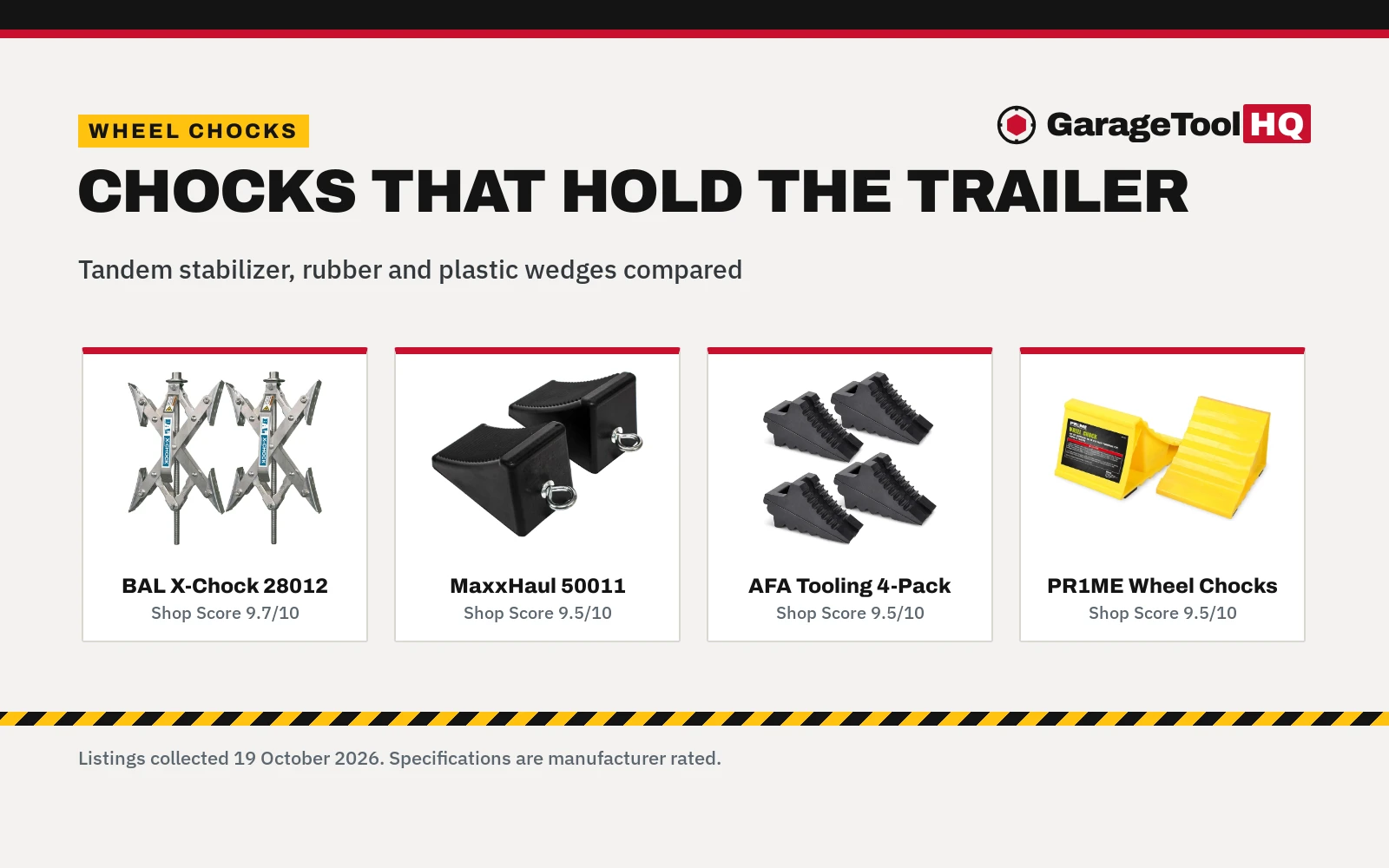
- Chock remaining wheels. Place chocks against tires staying on pavement. See our guide on how to use wheel chocks.
- Verify weight and rating. Ensure jack capacity matches axle load. A 2 ton (4,000 lbs) or 3 ton (6,000 lb) jack handles passenger sedans and crossovers.
- Locate factory lift points. Consult the owner’s manual for reinforced pinch welds or frame rails. Never lift on oil pans or sheet metal.
- Align the saddle squarely. Center the saddle cup under the lift point so wheels can roll smoothly as the arm arcs upward.
- Pump smoothly and monitor contact. Turn the release valve clockwise to close, then pump steady strokes. Dual-piston designs raise the arm rapidly.
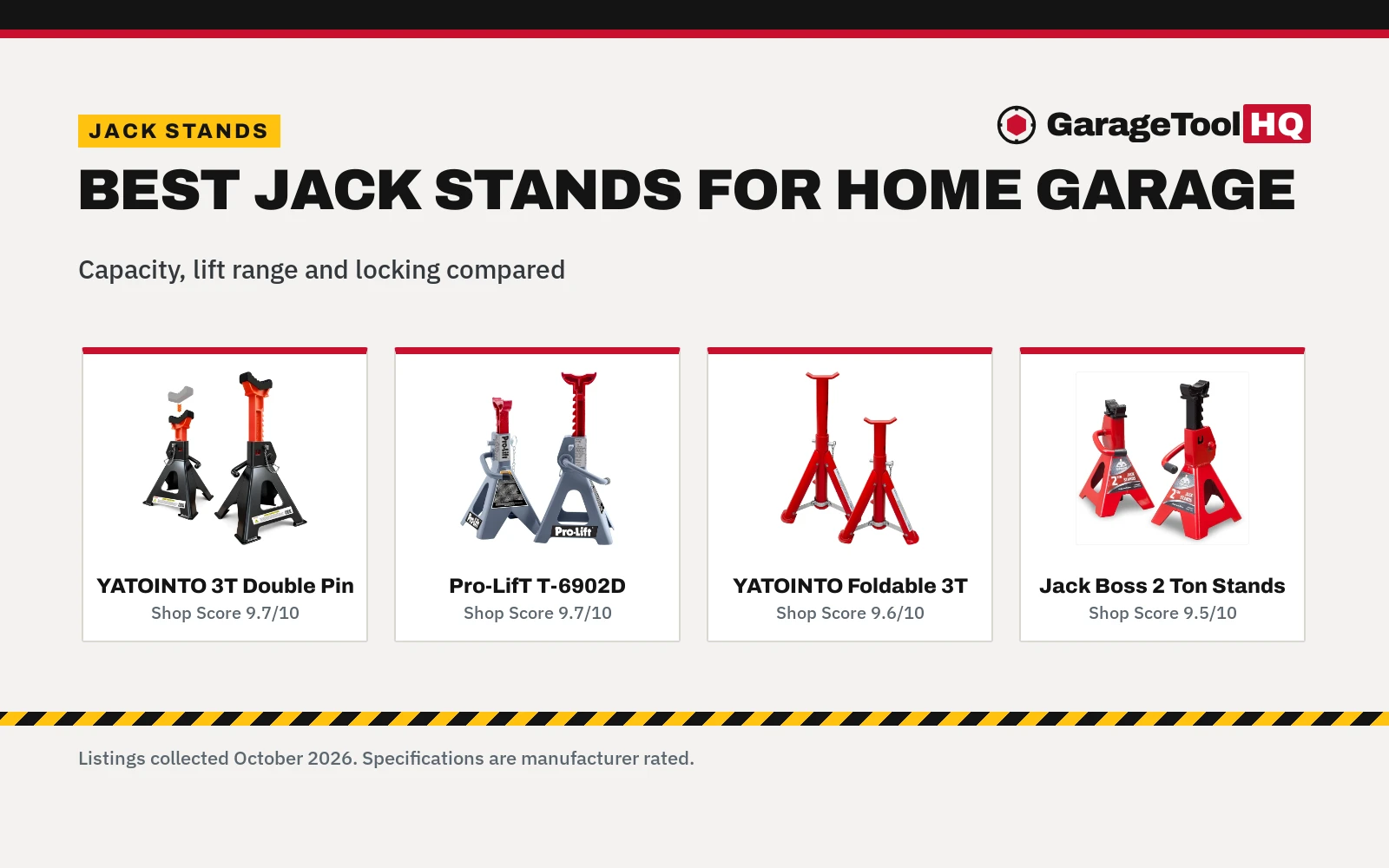
- Position rated jack stands immediately. Slide rated stands under factory support points adjacent to the saddle and lock support pins securely.
- Lower onto the stands slowly. Turn the release valve counter-clockwise to settle vehicle weight onto the stands on solid concrete.
- Nudge vehicle to confirm stability. Push against the vehicle bumper with your hands before working to verify stands are solid.
A hydraulic floor jack is designed solely to raise a vehicle, never to support it while you work. Immediately after lifting, lower the load onto appropriately rated jack stands resting on a solid, level concrete floor before placing any part of your body underneath.
A jack is for lifting, not holding. Never work under a vehicle supported only by a jack: set it on rated jack stands, on solid, level ground, at the manufacturer's lift points, chock the wheels, and give the car a firm shake before you go under. Read our Safety Disclaimer.
Steel vs aluminum floor jacks
Evaluate these practical garage tradeoffs when choosing between materials:
- Weight and mobility: Full-size steel jacks like the ARCAN 3 ton (76.8 pounds), Blackhawk 3.5 ton (85 pounds), and BIG RED 4 ton (100.8 pounds) are heavy shop tools. Compact steel trolley jacks weigh less (27.7 pounds for BIG RED, 30 pounds for Pro-LifT). Aluminum hybrid models like the SATA 1.5 ton weigh 29.8 pounds for easy transport.
- Durability: Heavy steel plates resist twisting on uneven shop floors. Aluminum saves weight but requires careful alignment on smooth concrete.
- Lifting capacity: Steel models span 2 ton (4,000 lbs), 3 ton (6,000 lb), and 4 ton (8,000 lb) ratings. Aluminum hybrids typically offer 1.5 ton (3,300 lb) to 3 ton capacities for sedans.
- Garage storage: If parked beneath a bench, steel delivers dependable value. If transported to help neighbors, aluminum saves your back.
Read our steel vs aluminum floor jack comparison, explore lightweight picks in our best aluminum floor jack guide, or browse versatile models in our best floor jack for cars roundup.
Hydraulic maintenance and purging air from the cylinder
During shipping or storage, air bubbles can enter hydraulic passages, making the handle feel spongy or preventing the ram from reaching its maximum lifting height.
To purge air, follow the manufacturer procedure. As outlined in Pro-LifT PL2920 instructions, insert the provided handle into the handle sleeve and pump 6 to 8 full strokes. This bypasses air pockets back into the reservoir, restoring full pressure.
Keep the ram and saddle clean of grit. Models like the ARCAN A20003 use protective wiper seals to guard internal packings. Store your jack with the lifting arm fully lowered. If pressure drops, see our guides on how to bleed a floor jack and why is my floor jack not lifting.
Frequently Asked Questions
What are the main floor jack types?
Primary floor jack types include standard steel service jacks, low-profile jacks, aluminum hybrids, compact trolley jacks, high-lift truck jacks, and vertical bottle jacks. Low-profile jacks feature clearance down to 3.35 inches (TONDA) or 3-7/8 inches (BIG RED), while aluminum models like the SATA weigh 29.8 pounds for portability.
What is the difference between a floor jack and a trolley jack?
Trolley jacks are compact, portable units like the Pro-LifT PL2920 (30 pounds, 3-5/8 inches to 13-3/8 inches range). Full-size service jacks have longer frames, weigh 76.8 pounds (ARCAN) to 100.8 pounds (BIG RED), and reach up to 20 inches.
Do I need a low-profile floor jack for standard passenger cars?
If factory clearance is low, a standard jack starting around 5.5 inches (Blackhawk B6350) may catch on bodywork. A low-profile jack starting at 3.35 inches (TONDA) or 3-7/8 inches (BIG RED) slides under low pinch welds cleanly.
Can a bottle jack replace a floor jack for home garage maintenance?
Generally no for passenger cars. Vertical bottle jacks like the VEVOR 20 ton start tall at 10.4 inches, preventing them from fitting beneath standard car frames, and their narrow base is best suited for solid truck axles.
What size floor jack do I need for a family SUV or light truck?
A 2 ton (4,000 lbs), 2.5 ton (5,000 lbs), or 3 ton (6,000 lb) jack safely lifts one corner or axle. For tall vehicles, pick a jack reaching 20 inches to 20.9 inches (BIG RED 4 ton or AUTOWN 3 ton) so tires clear the floor.
Why are house floor jacks different from automotive floor jacks?
House jacks, like VEVOR basement posts rated for 18000 lbs across a 53 to 93 inches range, are stationary mechanical screw posts for building beams. They contain no hydraulic fluid and must never lift vehicles.
Related: what size floor jack do I need, our guide to the best low-profile floor jack, the jacks and stands hub, best jack stands, and our how to use a floor jack safely guide. Also see our steel vs aluminum floor jack comparison.