How Much Is a Propane Heater? What to Know
What to know about propane heater costs for a garage: heater styles, tank sizes, fuel burn rates, heating output, and ventilation requirements.

On this page
Top picks at a glance
As an Amazon Associate we earn from qualifying purchases.
- 1
 Mr. Heater 99.7/10View on Amazon
- 2
 ProCom Heating Liquid Propane Ventless Blue Flame Heater With9.7/10View on Amazon
- 3
 Mr. Heater 809.7/10View on Amazon
- 4
 BILT HARD 125View on Amazon
- 5
 Mr Heater 125View on Amazon
- 6
 Mr. Heater 9View on Amazon
- 7
 Mr. Heater Original 540-Degree 45View on Amazon
- 8
 Mr. Heater 30View on Amazon
- 9
 Mr. Heater 20View on Amazon
Working through a winter brake job or oil change on a freezing garage floor is miserable, and cold air makes every tool feel stiffer. How much is a propane heater? The total expense depends on equipment design, heating output, cylinder size, and ongoing fuel consumption rather than just the initial purchase. A compact radiant cabinet heater provides an accessible starting point for spot heating, while high-output forced-air torpedo heaters carry larger fuel demands and higher airflow needs to warm expansive workspaces. Factoring in your workspace volume, insulation, and fuel burn ensures you choose a setup that heats effectively without wasting fuel.
More options to compare
 BILT HARD 125Check price on Amazon
 Mr Heater 125Check price on Amazon
 Mr. Heater 9Check price on Amazon
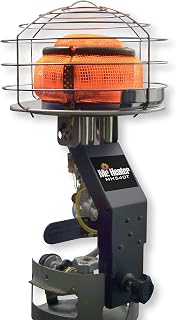 Mr. Heater Original 540-Degree 45Check price on Amazon
 Mr. Heater 30Check price on Amazon
 Mr. Heater 20Check price on Amazon
GarageToolHQ earns a commission when you buy through links on our product pages, at no extra cost to you. Read our affiliate disclosure.
Below: what shapes the overall cost of heating a workspace with propane, how different heater designs compare on fuel use and heat capacity, and how to calculate your heating budget step by step.
How much is a propane heater? What drives the total expense
Evaluating the expense of propane heat requires looking beyond the carton price. Operating a fuel heater in a garage involves equipment, gas storage, connection hardware, and recurring fuel refills. Several key factors dictate your total investment:
- Heater design and BTU rating. British Thermal Units (BTU) measure heat output. Compact radiant cabinet heaters from thermomate deliver 6,000, 12,000, or 18,000 BTU for smaller spaces. Mid-range forced-air heaters from GASLAND produce 30,000 to 60,000 BTU, while heavy-duty torpedo heaters from BILT HARD offer 75,000 to 125,000 BTU and InoKraft delivers 125,000 BTU for wide areas.
- Propane cylinder capacity. Portable heaters require a dedicated fuel supply. Models from GASLAND, thermomate, BILT HARD, InoKraft, and VEVOR operate with a standard 20 lb propane cylinder. Convection heaters from Reddy Heater can connect to a 40 lb cylinder for longer burn cycles. Cylinder deposits or purchase costs and recurring refills form an ongoing expense.
- Hourly fuel consumption. Running costs correspond directly to burn rate. On a low 6,000 BTU setting, the thermomate radiant cabinet heater provides up to 69 hours of operation from a 20 lb cylinder. In contrast, high-output forced-air models burn fuel faster: the BILT HARD torpedo heater runs 5.5 hours on low and 3.5 hours on high from a 20 lb cylinder, while VEVOR lists 3.5 to 4.5 hours on a 20 lb tank for a 125000 BTU unit.
- Regulators, hoses, and electrical hookups. Delivering gas safely requires a matched regulator and gas line. Models from GASLAND, InoKraft, and Mr. Heater include a 10 ft hose and regulator assembly, while Reddy Heater supplies an 11 ft hose. Fan-driven forced-air blowers also need power: GASLAND requires a 115 volts supply drawing 2 A, while BILT HARD and VEVOR connect to a standard 120 volts outlet.
Propane heater types and equipment tiers
Propane heaters fall into distinct categories designed for specific heating demands, layouts, and airflow conditions:
| Heater Category (Reference Model) | Heat Output Rating | Propane Tank and Connections | Recommended Workspace Fit |
|---|---|---|---|
| Portable radiant cabinet heater (thermomate PHF18B) | 6,000, 12,000, or 18,000 BTU | Internal 20 lb tank housing with locking casters | Spot heating ventilated spaces up to 450 sq ft; never in sealed rooms |
| Portable forced-air barrel heater (GASLAND FH06FB) | 30,000 to 60,000 BTU | 20 lb cylinder with 10 ft hose and regulator | Ventilated workshops and garages up to 1,500 sq ft |
| High-output torpedo heater (BILT HARD WHD-0302-B) | 75,000 to 125,000 BTU | 20 lb tank or larger, requires 120 volts outlet | Large drafty garages and barns up to 3,125 sq ft |
| Convection tower heater (Reddy Heater LPC80) | 50,000 to 80,000 BTU | 20 lb or 40 lb cylinder with 11 ft hose | Open high-ceiling workshops up to 2,000 sq ft |
| Ventless blue flame wall heater (ProCom MNSD300TGA) | 30,000 BTU | External supply line, includes wall mount bracket | Insulated residential garages up to 1,000 sq ft |
Radiant cabinet heaters warm objects directly through infrared energy rather than blowing air, making them quiet and efficient for bench work. Forced-air units use an electric fan to circulate heat rapidly across large spaces. Convection heaters provide 360-degree upward circulation without electricity, while wall-mounted blue flame units warm room air like central heating.
How to calculate your propane heating budget: step by step
- Determine your heating capacity requirement. Calculate garage volume and insulation quality. An insulated garage bay can stay comfortable with moderate output, such as the 18,000 BTU rating of the thermomate cabinet heater covering up to 450 sq ft. Larger spaces demand higher capacity: GASLAND rates a 60,000 BTU forced-air model for up to 1,500 sq ft, while InoKraft rates a 125,000 BTU unit for up to 3,200 sq ft. Undersizing a heater leaves your workspace cold, while an oversized unit burns through a propane tank rapidly.
- Factor in propane cylinder acquisition. Most portable heaters require a separate propane cylinder. Units from GASLAND, thermomate, BILT HARD, and VEVOR operate on a standard 20 lb propane cylinder, while high-output convection units like Reddy Heater accommodate a 40 lb cylinder. Factor in cylinder purchase or deposit fees alongside refill costs.
- Verify included connection hardware. Confirm what fittings come in the box. The GASLAND forced-air heater includes a 10 ft hose and regulator assembly, Mr. Heater includes a 10 ft hose with regulator, and Reddy Heater includes an 11 ft hose and regulator. If hardware is missing, buying certified lines separately adds to startup costs.
- Assess electrical outlet availability. Many fan-forced torpedo heaters depend on electrical power. The GASLAND unit operates on a 115 volts circuit pulling 2 A, while BILT HARD and VEVOR forced-air units require a standard 120 volts receptacle.
- Calculate seasonal fuel consumption. On low output, a thermomate radiant heater achieves up to 69 hours of operation from a 20 lb cylinder. High-output units consume gas considerably faster: BILT HARD lists 5.5 hours on low and 3.5 hours on high from a 20 lb cylinder, while VEVOR lists 7 to 11 hours on a 20 lb cylinder for its 60000 BTU heater and 3.5 to 4.5 hours for its 125000 BTU model.
- Invest in mandatory safety equipment. A carbon monoxide alarm is essential whenever fuel burns. Look for certified safety mechanisms on the heater, such as the CSA certification, oxygen depletion safety (ODS) pilot, and tip-over shutoff on the thermomate unit, or the overheat auto-shutoff and thermo-electric safety valves on GASLAND, InoKraft, and BILT HARD models.
- Account for fresh-air ventilation. Unvented propane combustion consumes oxygen and releases moisture. Operating an unvented unit requires maintaining a dedicated fresh-air opening, such as a cracked vehicle door or open window, in accordance with the manual.
Combustion consumes oxygen and produces carbon monoxide along with water vapor. Never run an unvented propane heater inside an enclosed garage without the fresh-air opening specified by the manufacturer, and always keep a working carbon monoxide alarm nearby.
Never run a fuel-burning heater, generator or engine in a closed garage: carbon monoxide builds up fast and has no smell. Fit a CO alarm, keep clearances to cars and storage, use vented gas heaters installed to code, and put 240V electric heaters on a dedicated circuit. See CPSC carbon monoxide guidance. Read our Safety Disclaimer.
Propane vs electric garage heaters: long-term expenses
Choosing between propane and electric garage heating involves balancing upfront equipment expenses against ongoing utility bills and installation complexity:
- Installation and electrical upgrades. Portable propane heaters require no permanent installation, operating wherever you connect a cylinder. In contrast, powerful electric garage heaters typically require a dedicated high-voltage circuit wired by a licensed electrician, adding substantial professional installation costs.
- Heating speed and thermal delivery. High-output propane heaters raise ambient shop temperatures rapidly. The InoKraft 125,000 BTU forced-air heater can raise temperatures across large workspaces in as little as 5 minutes. Electric heaters provide steady warmth but raise temperatures more gradually in cold garages.
- Operating utility expenses. Propane costs depend on local tank refill and exchange pricing, while electric heating costs depend on regional kilowatt-hour electricity rates.
- Moisture and ventilation management. Electric heaters produce clean warmth that creates no combustion moisture and no carbon monoxide, requiring no fresh-air ventilation. Unvented propane heaters release moisture that can condense on cold tools, vehicle panels, and concrete floors, requiring ventilation that exchanges warmed air for cold outdoor air.
To determine how many BTU your space requires before purchasing heating equipment, consult our guide to what size garage heater you need. For direct model comparisons, explore our top picks for propane garage heaters and our review of propane gas heaters for indoor use.
Propane cylinder storage and cold-weather performance
Managing fuel safely and maintaining reliable heat in freezing winter conditions introduces practical garage considerations that influence your overall heating experience:
Local fire codes in most municipalities restrict storing propane cylinders inside residential buildings, including garages. Keep cylinders stored upright outdoors in a secure, well-ventilated location away from doors, windows, and air intakes, following local fire regulations and heater operating instructions.
Extreme cold affects propane tank pressure. As temperatures drop, liquid propane vaporizes more slowly. Running a high-capacity heater like a 125,000 BTU torpedo unit on a small 20 lb cylinder in sub-freezing temperatures can cause tank frosting and reduced flame performance. For high-output heating in severe winter weather, connecting to a larger 40 lb cylinder, as supported by Reddy Heater, provides greater surface area to maintain adequate vapor pressure.
When performing vehicle maintenance in a heated garage, keep open flames separated from battery servicing areas. Charging lead-acid vehicle batteries releases hydrogen gas, which is highly flammable. Maintain generous clearance between any open propane flame and charging batteries, ensure proper ventilation, and use a dedicated battery charger maintainer designed to prevent overcharging and minimize gassing.
Frequently Asked Questions
How long does a 20 lb propane tank last on a garage heater?
Run time depends on heat output rating and operating setting. On a low 6,000 BTU setting, the thermomate radiant cabinet heater can run for up to 69 hours on a single 20 lb cylinder. Higher-output forced-air heaters deplete fuel much faster: the GASLAND 60,000 BTU heater provides approximately 12 hours of run time on a 20 lb tank, while the BILT HARD torpedo heater runs 5.5 hours on low and 3.5 hours on high on a 20 lb cylinder.
What size propane heater is needed for a garage?
Sizing depends on square footage, ceiling height, and insulation. A standard residential garage bay up to 450 sq ft can be kept comfortable with an 18,000 BTU heater like the thermomate cabinet model. Larger workshops and multi-bay garages up to 1,500 sq ft are well served by a 60,000 BTU forced-air unit like the GASLAND heater. For expansive workshops up to 3,125 sq ft or 3,200 sq ft, high-output torpedo models from BILT HARD or InoKraft delivering 125,000 BTU provide rapid heating.
Is a propane heater cheaper to run than an electric garage heater?
Operating expense depends on local electricity rates compared to regional propane refill costs. Propane heaters generally deliver far greater heating output without requiring an expensive electrical panel upgrade, but you must factor in the recurring expense of propane tank refills and the heat lost through required fresh-air ventilation.
Can an unvented propane heater be used in an attached garage?
Unvented propane heaters require extra precautions in attached garages because combustion produces carbon monoxide, moisture, and odors that can seep into living spaces. If operating an indoor-rated portable propane heater in an attached garage, keep the adjoining house door tightly closed, maintain the fresh-air opening specified in the heater’s manual, and install carbon monoxide alarms in both the garage and the adjoining interior hallway.
Do propane garage heaters require an electrical outlet?
Radiant cabinet heaters like the thermomate and convection tower heaters like the Reddy Heater operate entirely off gas pressure using manual or piezo ignition, requiring no electricity. Forced-air torpedo heaters, including models from GASLAND operating on 115 volts and BILT HARD or VEVOR operating on 120 volts, require an electrical outlet to power the internal fan that distributes heat across the room.
Related: garage heater sizing by BTU, our guide to propane garage heaters, our overview of garage upgrades, and the cost to heat a garage. Also see electric vs propane garage heaters and is it safe to use a propane heater in a garage.