How to Use a Car Dolly Safely
A step-by-step guide to rolling a car onto a dolly, locking the casters and moving it safely around the garage.

On this page
Top picks at a glance
As an Amazon Associate I earn from qualifying purchases.
- 1
 TUFFIOM Car Dolly Set of 49.7/10View on Amazon
- 2
 VEVOR Car Wheel Dolly9.6/10View on Amazon
- 3
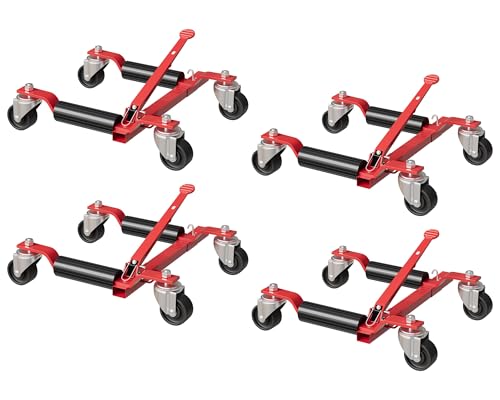 Car Wheel Dolly Jack Set of 49.6/10View on Amazon
A car that will not start, or a project car with the engine out, still has to move around the garage, and that is where knowing how to use a car dolly pays off. A car dolly is a low steel platform on casters that cradles a tyre, and with a dolly under each tyre the car can roll in any direction, so a dead car can slide sideways into a bay or turn around in a tight garage without being pushed along its normal path. Used the right way, with the load rating respected and the brakes set, it turns a heavy shove into a controlled roll.
GarageToolHQ earns a commission when you buy through links on our product pages, at no extra cost to you. Read our affiliate disclosure.
Below: what a car dolly does, the step-by-step method, how to pick a dolly with the right capacity and casters, and the mistakes that cause trouble.
How to Use a Car Dolly: What a Dolly Does
A car dolly sits under a tyre and carries that corner of the car on its own small wheels. With dollies under the tyres, the car can roll sideways and turn in place instead of only rolling forwards and backwards, which is the whole point when a garage has no room to push a car in a straight line. Dollies suit cars that need moving for storage, restoration work, a tyre change or a wash bay shuffle, and they also help in showrooms and body shops where cars move between bays without starting the engine.
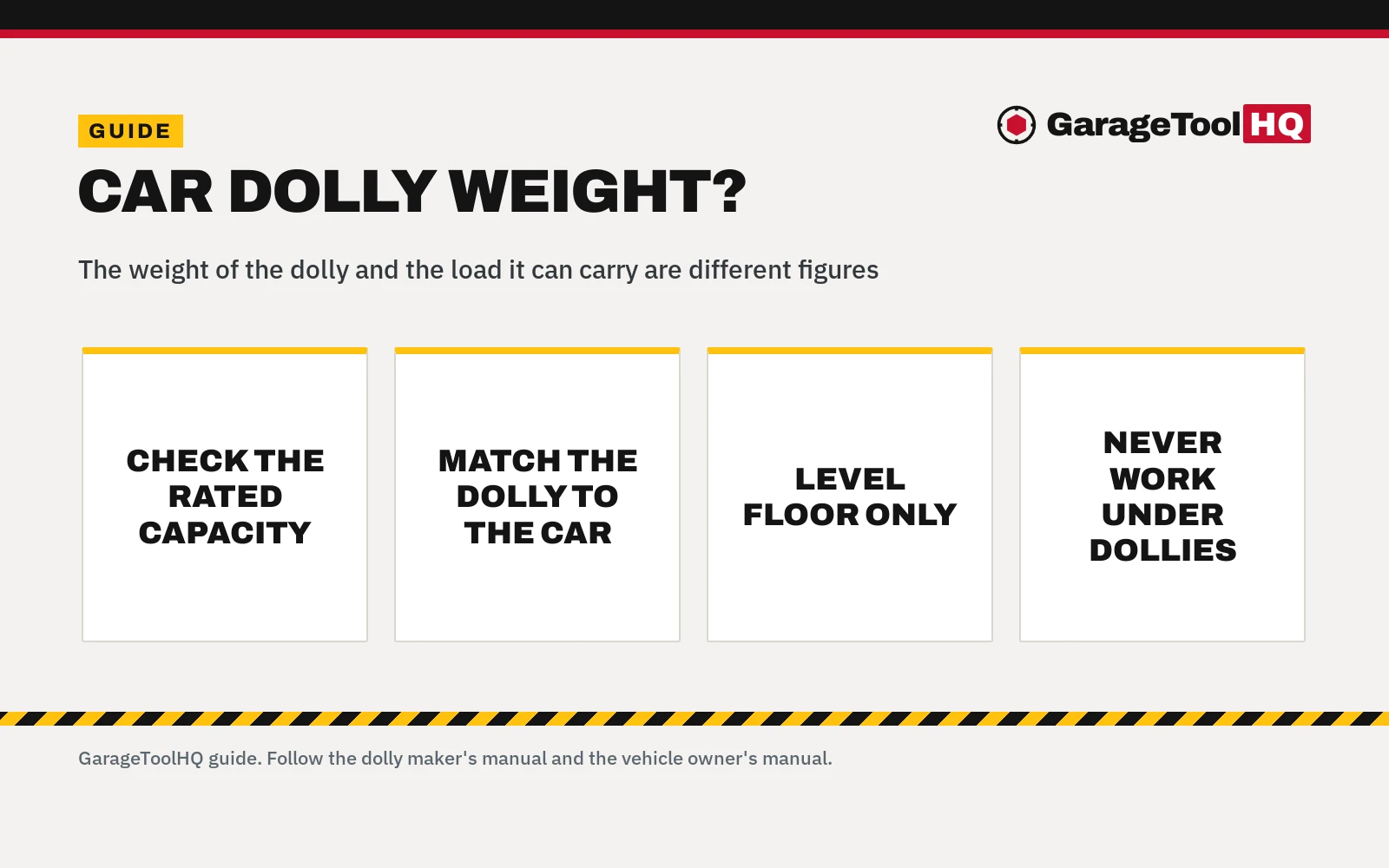
Each dolly carries a share of the car’s weight, so the rating matters more than the size of the platform. A dolly rated below the weight on that corner can bend or drop the car, so check the rating on the listing against the weight the dolly has to carry and stay inside it. The platform should cradle the tyre so the tyre cannot slip off sideways, and the casters should roll freely when the dolly is empty and lock firmly when the car is parked on it.
How to Use a Car Dolly Step by Step
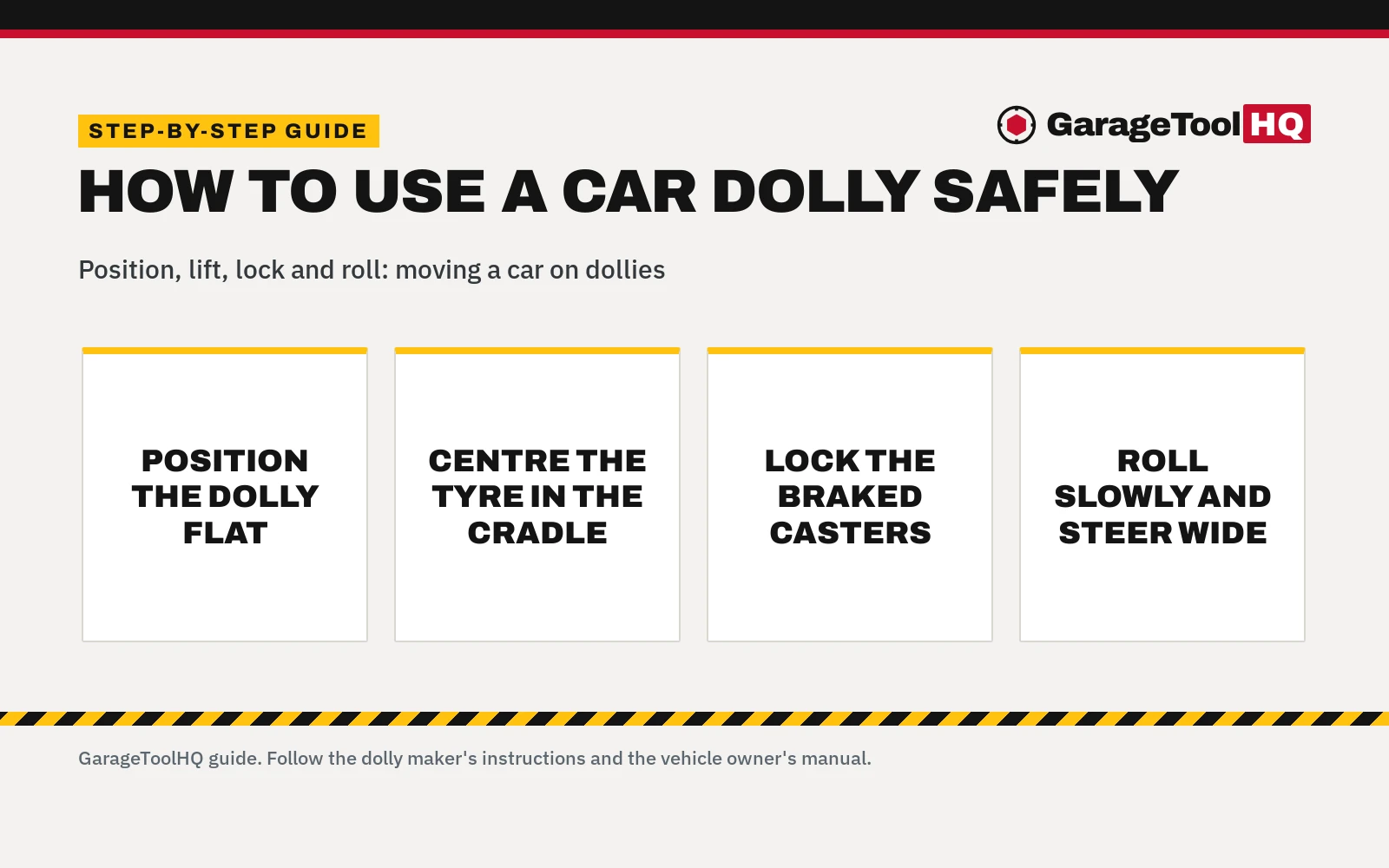
Work on flat, solid ground with the car in park or in gear and the parking brake set. Clear the path before lifting a corner, and keep hands clear of the casters and the platform edge through the whole job.
- Check the rating. Read the load rating on the dolly and confirm it covers the weight on that corner of the car. The listing states the rating, so go by the listing, not by a guess.
- Set the parking brake and chock the tyres staying on the ground. The car must not move while a corner is in the air.
- Raise the corner with a jack at the lift point in the owner’s manual. Never get under a vehicle supported only by a jack. Lower the car onto rated stands on solid, level ground if any work under the car is planned. The guide to how many jack stands you need explains the setup.
- Slide the dolly under the tyre. Centre the tyre in the concave platform so the tread sits in the cradle.
- Lower the car onto the dolly. Bring the jack down slowly and let the tyre settle into the cradle. Check the tyre is centred before removing the jack.
- Lock the braked casters. Set the brake on each braked caster before stepping away from the car. A dolly with the brakes off can roll on a slope or a smooth floor.
- Push slowly from the body of the car, not from the dolly. Steer by pushing the car, keep hands clear of the casters, and stop to re-centre the tyre if the dolly shifts.
- Reverse the steps to unload. Set the brakes, jack the corner up, slide the dolly out, lower the car to the ground and remove the chocks.
Dollies and jacks hold a car up for moving, not for working underneath. Use rated stands on solid, level ground, at the lift points in the owner’s manual, for any job under the car.
Picking a Car Dolly: Capacity, Casters and Brakes
Capacity comes before anything else. The Sulythw car wheel dolly set lists a 3000-pound capacity for the set of 2, which the listing states as 1,500 pounds per dolly, so match that figure to the weight each dolly has to carry. The maker also lists a 2-year warranty for the set.
Casters decide how the dolly moves and how it stops. The Sulythw set uses 2-inch casters, with four ball-bearing casters on each dolly and brakes on two of them, so the dolly rolls on smooth concrete and holds still when the brakes are set. A concave platform cradles the tyre and keeps it centred, which matters more than a flat plate when the car is pushed sideways. The listing states the dollies suit cars, trucks, trailers, motorcycles and boats, so the same design covers more than a daily driver.
Before ordering, check the tyre fits the cradle and the rating covers the corner weight, and confirm the floor where the car will roll is flat and solid. A dolly that fits the tyre and the load, with brakes that hold, is the dolly that does the job without drama.
Mistakes That Cause Trouble
- Skipping the rating check. A dolly loaded past its rating can bend, drop the tyre or jam a caster.
- Working on a slope or loose ground. Dollies need flat, solid ground. A slope lets a braked dolly creep, and loose ground stops the casters from rolling.
- Leaving the brakes off. A car on dollies with the brakes off can roll when leaned on or bumped.
- Pushing too fast. A fast push can shift the tyre off the cradle or send the dolly into a wall or another car.
- Getting under the car on a jack. Dollies and jacks hold a car up for moving, not for working underneath. Use rated stands on solid, level ground for any job under the car.
Check the lift's rated capacity against your heaviest vehicle, and its ceiling and concrete requirements (thickness and strength) before you buy. Install it exactly as the manufacturer specifies, use the mechanical locks before you go under, and look for ALI certification on the model. See the Automotive Lift Institute (ALI). Read our Safety Disclaimer.
FAQ: garage tools
Can I use a car dolly on any tyre?
A dolly works when the tyre fits the cradle and the load stays inside the rating. Check the tyre against the platform and the weight on that corner against the rating in the listing before lifting the car.
How many dollies do I need to move a car?
A set of 2 dollies lifts two tyres, which suits moving a car sideways or turning it in a tight space. For a car that has to roll freely in any direction, a dolly under each tyre is the usual setup.
Can I leave a car on dollies for storage?
Dollies suit short moves and workshop shuffles. For storage, park the car on solid ground with the tyres at the pressure in the owner’s manual and the parking brake set, and move the car now and then so the tyres do not sit in the same spot.
Can I use a car dolly on a slope?
No. Use dollies only on flat, solid ground. A slope can overcome the caster brakes and let the car roll, so find level ground before lifting a corner.
Do car dollies damage tyres?
A dolly with a concave cradle spreads the load across the tread, and a tyre centred in the cradle stays put while the car rolls. Check the tyre for wear and the cradle for dirt or grit before each move, and re-centre the tyre if the dolly shifts.
Related: wheel dolly picks, car dolly sets with big wheels, the guide to how many jack stands you need and car ramps and lifts.