What Is Bottle Jack? How It Works and Safe Setup Guide
A complete garage guide explaining what a bottle jack is, how its vertical hydraulic mechanism lifts heavy vehicles, and essential safety rules for home shops.

On this page
Top picks at a glance
As an Amazon Associate we earn from qualifying purchases.
- 1
 Powerbuilt 3 Ton9.7/10View on Amazon
- 2
 POWERBUILT 3 Ton All-in-One Hydraulic Bottle Jack and9.7/10View on Amazon
- 3
 BIG RED T91003B Torin Hydraulic Welded Bottle Jack9.7/10View on Amazon
- 4
 VEVOR Hydraulic Bottle JackView on Amazon
- 5
 Powerbuilt 2 Ton UniJack Combination Hydraulic Bottle Jack /View on Amazon
- 6
 BIG RED T90403B Torin Hydraulic Welded Bottle JackView on Amazon
- 7
 Pro-Lift Hydraulic Bottle JackView on Amazon
- 8
 Pro-Lift B-S12D Hydraulic Bottle JackView on Amazon
- 9
 BIG RED T91203B Torin Hydraulic Welded Bottle JackView on Amazon
When you need to lift the solid rear axle of a pickup truck for a brake job, replace a trailer leaf spring, or change a flat tire on a loaded utility trailer, a rolling trolley jack can be too bulky to carry along. That is where a compact vertical cylinder excels. So, what is bottle jack? A bottle jack is a portable hydraulic lift built around a vertical cylinder shaped like a beverage bottle. It uses an internal fluid reservoir, a small hand-operated pump, and hydraulic multiplication to push a heavy steel ram straight upward. It delivers high lifting capacity in a compact frame that stores easily in a truck toolbox or garage corner, though it requires a flat, firm surface and dedicated jack stands before any work begins.
More options to compare
 VEVOR Hydraulic Bottle JackCheck price on Amazon
 Powerbuilt 2 Ton UniJack Combination Hydraulic Bottle Jack /Check price on Amazon
 BIG RED T90403B Torin Hydraulic Welded Bottle JackCheck price on Amazon
 Pro-Lift Hydraulic Bottle JackCheck price on Amazon
 Pro-Lift B-S12D Hydraulic Bottle JackCheck price on Amazon
 BIG RED T91203B Torin Hydraulic Welded Bottle JackCheck price on Amazon
GarageToolHQ earns a commission when you buy through links on our product pages, at no extra cost to you. Read our affiliate disclosure.
Below: how the vertical hydraulic mechanism operates, how manual and air-assisted versions compare, a shop safety checklist, and when to choose a bottle jack over a rolling floor jack.
What is bottle jack? Vertical hydraulic lifting explained
To understand what a bottle jack is and how it produces high lifting force from manual effort, consider basic hydraulic principles. Liquid inside a closed system cannot be compressed. When force is applied to a small area of fluid, that pressure transmits equally in all directions. A bottle jack uses this mechanical leverage by connecting a narrow pump piston to a much wider lifting ram.
When you stroke the operating lever, several internal components work together:
- The fluid reservoir: The outer steel casing serves as the oil reservoir. Surrounding the inner cylinder with fluid keeps the tool compact and self-contained.
- The pump piston and check valves: Lifting the pump handle draws hydraulic oil from the reservoir through an intake valve. Pushing the handle down forces oil past a discharge valve into the main cylinder, preventing backward flow.
- The main hydraulic ram: As oil enters the high-pressure cylinder, it forces the heavy steel ram upward. Because the surface area of the ram is substantially larger than the pump piston, lifting force multiplies proportionately.
- The extension screw: A threaded collar inside the top of the ram extends outward when turned counterclockwise, bridging the initial gap between the retracted jack and the vehicle chassis.
- The release valve: A manual needle valve at the base controls oil return. Keeping it closed holds pressure under the ram. Opening it bleeds oil back into the reservoir, allowing the ram to lower smoothly.
This design gives the bottle jack an exceptional power-to-size ratio. Unlike complex mechanical gear sets or rolling floor jacks with long linkage arms, the vertical cylinder concentrates all force directly beneath the load.
Types of bottle jacks and how they compare
| Style | Lifting mechanism | Power source | Best garage use |
|---|---|---|---|
| Manual hydraulic bottle jack | Hand-pumped piston and vertical ram | Manual handle | Solid axle lifting, emergency tire changes, farm gear |
| Air-hydraulic bottle jack | Combined air motor and manual pump | Shop air line or manual handle | Heavy truck bays, commercial vehicles, repetitive lifting |
| Low-profile bottle jack | Shortened vertical cylinder body | Manual handle | Low-clearance machinery, tight chassis points |
Bottle jacks vary in lifting capacity, height range, and operating methods. For general garage maintenance, standard manual models offer great capacity in a light body. For example, AFF lists a manual bottle jack rated at 6 ton capacity with an 8 inches minimum height. BIG RED lists a 10 ton model rated for 20,000 lb with an item weight of 10.4 pounds. For heavier vehicles, BIG RED lists a 12 ton bottle jack rated for 24,000 lb featuring a 9 inches minimum height, an 18 inches maximum lifting height, an alloy steel welded structure, and a 1-year warranty, weighing 13.2 pounds.
When lifting demands increase further, air-hydraulic models connect to shop air lines to remove manual pumping effort. For instance, VEVOR lists an air hydraulic bottle jack delivering 20 ton capacity (44,092 lbs) with a 10.4 inches minimum height, a 19.7 inches maximum lifting height, and a 2.6 in screw extension. VEVOR also lists a manual hydraulic bottle jack rated at 20 ton capacity (44,092 lbs) weighing 16.1 pounds. These listings demonstrate how a compact tool easily hoists heavy vehicle axles when used properly.
How to use a bottle jack safely: the shop checklist
- Inspect the jack body. Check around the base, pump piston, and ram seal for oil leaks. Verify that the release valve opens and closes smoothly.
- Park on a hard, flat surface. Always set up on solid concrete or level pavement. Never use a bottle jack on loose dirt, gravel, or sloped ground.
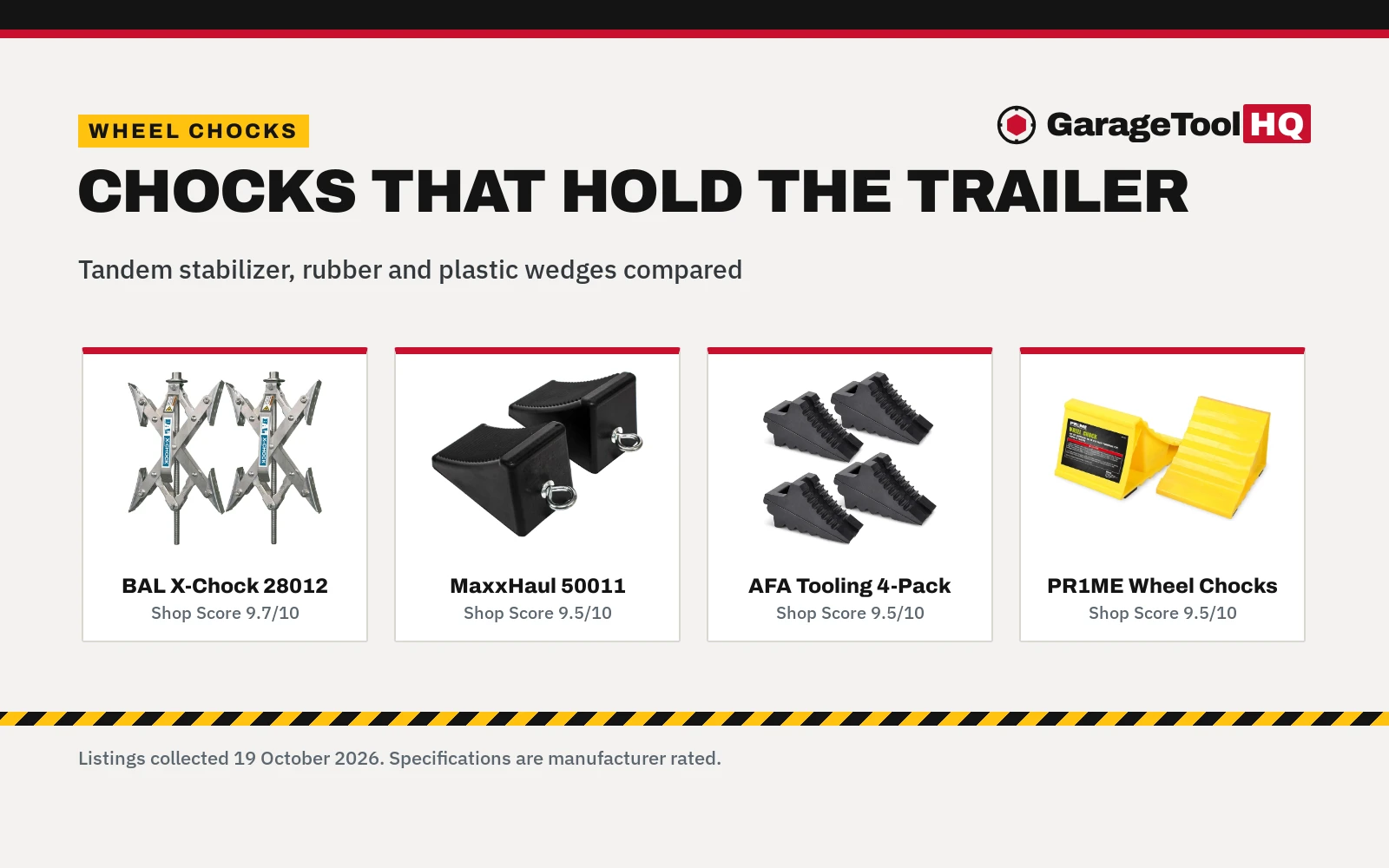
- Chock the remaining tires. Set the parking brake and place durable wheel chocks against tires staying on the ground. Review proper placement in our guide on how to use wheel chocks.
- Locate factory lift points. Consult the vehicle manual before positioning the saddle. Use solid axle tubes or structural frame rails. Never place the saddle on thin floor pans or rocker pinch welds.
- Extend the screw collar. Turn the threaded extension screw upward until the grooved saddle meets the lift point to save pumping stroke.
- Close the release valve. Turn the release valve clockwise with the handle until snug. Do not overtighten.
- Pump smoothly to lift. Stroke the pump handle evenly. Watch the vehicle to confirm the ram stays vertical and the saddle does not slip.
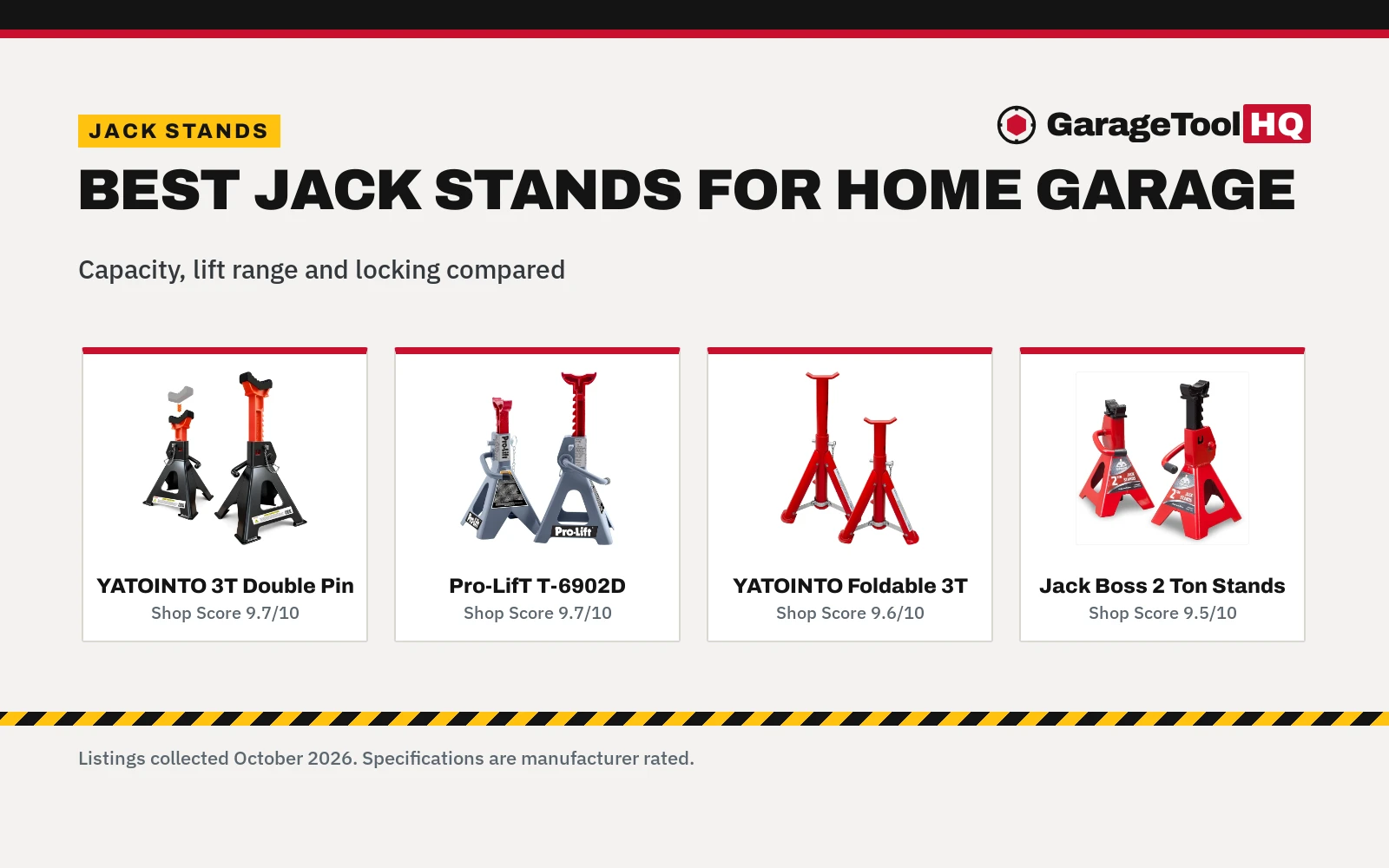
- Set jack stands immediately. Once the tire clears the ground, place sturdy jack stands beneath solid frame points or axle tubes.
- Lower the load onto the stands. Turn the release valve counterclockwise slowly to settle the vehicle onto the stands. Confirm the stands carry the weight before beginning work.
Never crawl beneath any vehicle held up only by hydraulic pressure. Internal seals can fail and valves can seep without warning. Once raised, always transfer the vehicle weight onto rated jack stands resting on solid, level ground before removing a tire or starting service.
A jack is for lifting, not holding. Never work under a vehicle supported only by a jack: set it on rated jack stands, on solid, level ground, at the manufacturer's lift points, chock the wheels, and give the car a firm shake before you go under. Read our Safety Disclaimer.
Floor jack vs bottle jack: which belongs in your garage?
When outfitting a home shop, mechanics frequently ask why use bottle jack models when rolling floor jacks exist. Both tools use hydraulics, but their layouts serve different needs. Knowing why use a bottle jack comes down to clearance, portability, and capacity:
- Starting clearance: Floor jacks feature a low-profile rolling chassis that slides under passenger cars. Standard bottle jacks sit taller, making them ideal for pickups, SUVs, and trailers with high ground clearance.
- Lifting range: A rolling floor jack uses a long lifting arm that swings through an arc for wide travel. A bottle jack pushes straight up with a shorter hydraulic stroke, relying on a screw collar to take up starting gap space.
- Capacity per pound: Bottle jacks pack immense tonnage into a small body. A compact bottle jack easily achieves heavy truck ratings at a fraction of the bulk of a heavy steel floor jack.
- Portability and storage: Floor jacks consume shop floor space and are awkward to transport. A bottle jack stores upright in a small corner or truck toolbox.
- Lifting path: As a floor jack raises a load, its wheels roll forward to stay aligned under the lifting point. A bottle jack has a fixed base that cannot roll; the load must rise straight vertically.
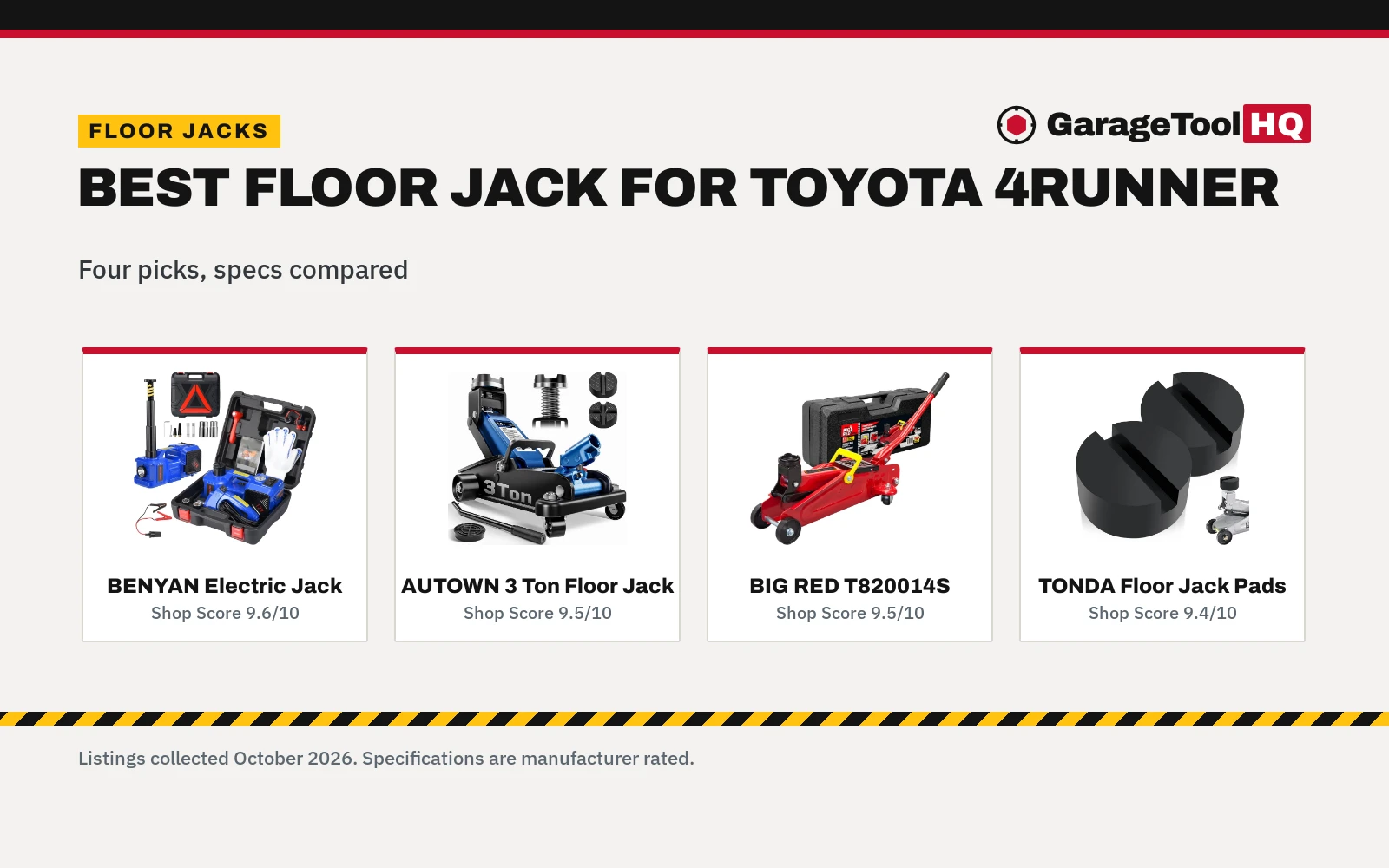
For a detailed head-to-head comparison, read our guide on floor jack vs bottle jack. For heavy vehicles, explore top picks in our guide to the best heavy duty floor jack.
Solid contact points prevent body damage and tipping
Because a bottle jack has a small circular saddle, weight is concentrated onto a narrow contact area. Placing that small steel saddle against thin sheet metal floorboards or unibody pinch welds can crush seams or puncture panels. Always align the saddle with solid structural members, such as an axle housing, a frame crossmember, or a reinforced lift point from the owner’s manual.
Base stability is equally vital. The narrow footprint of a bottle jack means lateral motion can cause tipping. Never place a bottle jack on soft dirt, hot asphalt, or an uneven slope. Never stack loose wooden blocks or bricks beneath a bottle jack to gain height, as makeshift cribbing can slip under load. Instead, pair your setup with heavy-duty jack stands for trucks and review our guide on how to use a floor jack safely.
Frequently Asked Questions
Are bottle jacks good for home garage maintenance?
Yes, bottle jacks are dependable tools for truck owners, trailer haulers, and DIY mechanics working on solid axles, suspension parts, or heavy equipment. Their small footprint makes them easy to store, and their vertical hydraulic design delivers immense lifting force. However, are bottle jacks versatile enough for low passenger cars? Usually not, because their tall retracted height cannot slide under low rocker panels.
Why use bottle jack instead of a trolley jack?
Mechanics choose a bottle jack when they need high tonnage capacity in a tight space or need a portable lift for roadside emergencies. Bottle jacks provide high load ratings at a fraction of the weight and bulk of a rolling trolley jack. They excel at lifting truck axles directly at the spring perch, where you only need enough vertical travel to clear a flat tire.
What is a bottle of jack compared to a shop bottle jack?
In everyday slang, what is a bottle of jack typically refers to a bottle of whiskey or liquor. In an automotive workshop, a bottle jack is strictly an industrial hydraulic lifting mechanism named for its vertical, bottle-shaped cylinder. Keep celebratory beverages stored away until all tools are put away, the vehicle is lowered, and shop work is finished.
Can a bottle jack be used horizontally?
Most standard bottle jacks only operate upright. The internal pickup tube relies on gravity to draw oil from the reservoir; tilting the jack on its side causes the pump to draw air instead of fluid, preventing lifting action. Some specialized industrial models allow horizontal pushing, but the maker must state horizontal capability explicitly.
Can you use a bottle jack on a sloped driveway?
No. Using a bottle jack on a sloped surface creates a severe tipping risk. Because the ram pushes straight up and the base cannot roll, any angle in the vehicle suspension can cause the saddle to slip or the base to kick out. Always lift vehicles on flat concrete with the wheels securely chocked.
How do you lower a bottle jack smoothly?
To lower a bottle jack without jarring the load, place the notched handle onto the release valve screw. Turn the valve counterclockwise very slowly. Opening the valve too fast drops the vehicle abruptly. Once the vehicle rests securely on jack stands, the valve can be opened further to retract the ram completely.
Related: our guide to the best bottle jack for trucks, what size jack stands do I need, car ramps vs jack stands, and our jacks and stands hub.