Propane vs Natural Gas Heater: Which One Should You Buy?
Comparing propane and natural gas garage heaters: fuel supply, installation needs, heat output, operating costs, and safety rules to pick the right option for your workspace.

On this page
Top picks at a glance
As an Amazon Associate we earn from qualifying purchases.
- 1
 Mr. Heater 99.7/10View on Amazon
- 2
 Mr. Heater 809.7/10View on Amazon
- 3
 Mr. Heater 509.6/10View on Amazon
- 4
 XtremepowerUS 30View on Amazon
- 5
 BILT HARD 125View on Amazon
- 6
 30000 BTU Double Tank Top Propane HeaterView on Amazon
- 7
 Mr. Heater 125View on Amazon
- 8
 Avenger Portable Outdoor Propane Cabinet HeaterView on Amazon
- 9
 Mr. Heater 9View on Amazon
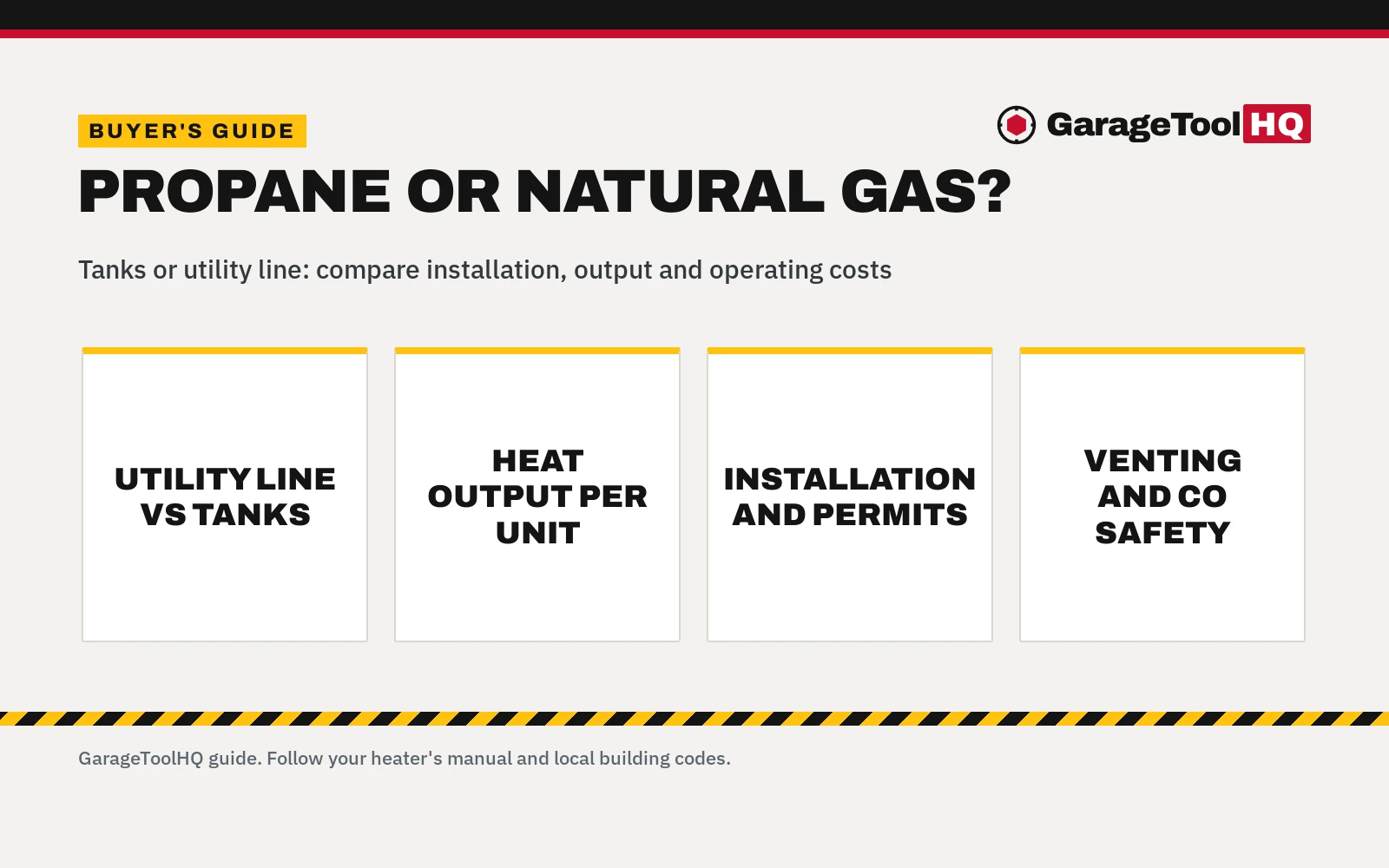
Propane vs natural gas heater: which option works best for your garage? Natural gas is typically the more convenient option if your building already connects to a municipal gas line, providing continuous fuel without tanks to exchange or refill. Propane is the practical choice when no gas utility line exists or when portable heat is required, operating from refillable cylinders or bulk tanks without the expense of trenching underground pipe. Both fuels produce clean, reliable heat in modern garage equipment, but their delivery methods, installation demands, and operating logistics differ substantially.
More options to compare
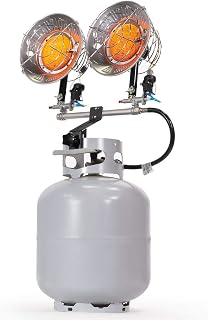 XtremepowerUS 30Check price on Amazon
 BILT HARD 125Check price on Amazon
 30000 BTU Double Tank Top Propane HeaterCheck price on Amazon
 Mr. Heater 125Check price on Amazon
 Avenger Portable Outdoor Propane Cabinet HeaterCheck price on Amazon
 Mr. Heater 9Check price on Amazon
GarageToolHQ earns a commission when you buy through links on our product pages, at no extra cost to you. Read our affiliate disclosure.
Below: how propane and natural gas compare on fuel supply, heat delivery, venting requirements, installation permits, and seasonal operating costs, followed by answers to common garage heating questions.
Propane vs natural gas heater: core differences in fuel delivery and operation
Choosing between propane and natural gas starts with how each fuel reaches your heating equipment and how it behaves inside the combustion chamber:
- Fuel delivery and storage. Natural gas arrives continuously through underground utility lines directly from the municipal provider. There are no tanks to transport, check, or refill. Propane is delivered as a compressed liquid stored under pressure in portable cylinders or large outdoor storage vessels.
- Portability and equipment mobility. Indoor-rated portable propane heaters can operate as standalone units in detached workshops far from utility lines. Natural gas heaters require a fixed connection to rigid black iron or stainless pipe, making them permanent installations.
- Combustion characteristics. Propane is denser than natural gas and delivers higher heat energy per unit volume during combustion. Natural gas operates at lower delivery pressure and is lighter than air, meaning unburned gas rises, while propane vapor is heavier than air and settles near floor level if a leak occurs.
- Supply reliability. Natural gas provides a continuous fuel supply that never runs out during winter storms, provided the utility service remains active. Propane requires monitoring cylinder levels so your workspace does not lose heat when temperatures drop.
Propane vs natural gas garage heaters compared
| Feature | Propane Heaters | Natural Gas Heaters |
|---|---|---|
| Fuel supply | Portable cylinders (such as a 20 lb cylinder) or outdoor bulk tanks | Continuous municipal utility pipe connected to home meter |
| Installation mobility | Indoor-rated portable radiant units or permanent vented wall and ceiling mounts | Fixed wall-mount or ceiling-hung unit heaters connected to rigid pipe |
| Heat energy content | Higher heat content per unit volume; requires smaller burner orifices | Lower heat content per unit volume; requires larger burner orifices |
| Fuel delivery logistics | Requires exchanging or refilling tanks at local supply stations | Continuous flow with monthly billing from your gas utility |
| Initial setup requirements | Regulator and hose connection; minimal infrastructure for portable models | Rigid gas piping, isolation valves, professional permits, and inspections |
| Dual-fuel compatibility | Select dual-fuel heaters operate on either fuel with built-in selection controls | Select dual-fuel heaters operate on either fuel with built-in selection controls |
| Vapor behavior during leaks | Heavier than air; leaked gas pools low near shop floors and drain sumps | Lighter than air; leaked gas rises toward ceiling vents and rafters |
The layout of your garage and the presence of existing utility lines dictate which fuel makes practical sense. If your home already burns natural gas for domestic heat or water heating, extending a pipe to the garage is often the most economical long-term path.
Heat output and equipment ratings in home garages
Both fuels power a wide range of garage heating appliances, from compact spot heaters to high-capacity unit heaters designed for multi-bay shops. Reference figures from published equipment listings illustrate typical performance across categories:
- Dual-fuel radiant heaters. Mr. Heater lists its vent-free radiant heater (model MHVFDF30RTT) with an output rating of 30,000 BTU per hour to heat spaces up to 1,000 sq ft. This dual-fuel unit operates on either natural gas or propane, utilizing a built-in thermostat and low-oxygen safety shut-off system.
- Portable radiant heaters. Mr. Heater lists its Big Buddy portable heater (model MH18B) with heat settings of 4,000, 9,000, and 18,000 BTU, covering up to 450 sq ft. The listing states it operates on a 1 lb cylinder or two 20 lb propane tanks using an optional hose assembly.
- Forced-air torpedo heaters. BILT HARD lists a portable forced-air heater delivering 75,000 to 125,000 BTU to heat up to 3,125 sq ft. The listing states it operates on a 20 lb cylinder, specifying outdoor use in well-ventilated work areas rather than enclosed indoor spaces.
- Outdoor tank-top burners. XtremepowerUS lists a dual-burner radiant heater delivering up to 30,000 BTU across an area of 750 sq ft, designed to mount directly to a 20 lb propane cylinder for outdoor and ventilated job site heating.
- Water heating equipment. Gas water heaters illustrate similar fuel delivery principles. Camplux lists a portable outdoor propane water heater delivering 1.58 GPM at 41,000 BTU. For indoor installations, VELPAX lists a tankless propane water heater delivering 4.74 GPM at 68,000 BTU with standard 1/2 inch NPT connections.
Installation, pipe sizing, and utility hookups
Installing a natural gas garage heater requires permanent plumbing work. A dedicated gas supply line must run from your gas meter or domestic manifold to the heater location in the garage. This line must incorporate an accessible manual shut-off valve, a sediment trap (drip leg), and a certified appliance regulator. Because undersized pipe starves the heater of fuel and creates combustion problems, sizing must account for total BTU demand and pipe length. Always hire a licensed professional gas fitter and obtain local building permits for natural gas line additions.
Propane installations vary by heater design. Indoor-rated portable heaters connect directly to a 20 lb cylinder using a factory-supplied regulator and flexible hose assembly. Permanent propane unit heaters require an exterior supply pipe running from an outdoor cylinder or bulk tank through the garage wall to the appliance, governed by local fire codes regarding cylinder placement.
Never connect a dedicated propane heater directly to a natural gas line, or a dedicated natural gas heater to a propane tank, without a manufacturer-approved conversion kit. (Certified dual-fuel heaters incorporate internal selectors designed for both fuels). Propane operates under higher manifold pressure and requires smaller burner orifices. Feeding propane through an unmodified natural gas orifice causes severe overfiring, heavy soot formation, and dangerous carbon monoxide release.
Never run a fuel-burning heater, generator or engine in a closed garage: carbon monoxide builds up fast and has no smell. Fit a CO alarm, keep clearances to cars and storage, use vented gas heaters installed to code, and put 240V electric heaters on a dedicated circuit. See CPSC carbon monoxide guidance. Read our Safety Disclaimer.
Venting requirements, carbon monoxide, and garage safety
Combustion safety is paramount regardless of which fuel you choose. Burning either fuel consumes room oxygen and produces combustion byproducts, including carbon monoxide (CO) and water vapor:
- Vented unit heaters. Sealed-combustion or power-vented unit heaters pull combustion air from outside and vent exhaust gases outdoors through a dedicated flue pipe. Vented heaters keep exhaust gases and excess moisture completely out of your workspace, allowing you to work with garage doors closed.
- Unvented heaters. Vent-free heaters discharge combustion moisture and exhaust into the garage. Never operate an unvented fuel heater in an enclosed, unventilated space. Always maintain the fresh air opening specified in the manufacturer’s manual.
- Carbon monoxide monitoring. Mount a working carbon monoxide alarm in your garage and an additional alarm inside the home adjacent to the entrance door. An alarm provides the primary warning against dangerous gas accumulation.
- Clearance and chemical safety. Maintain required manufacturer clearances from walls, ceilings, workbenches, and vehicles. Garages frequently hold flammable vapors from gasoline, paint, and solvent cans. Keep flammable materials far away from open flames, and never operate fuel heaters while applying finishes or cleaning parts with solvents.
- Battery charging precautions. Flooded vehicle batteries release hydrogen gas during charging cycles, which can ignite near burner pilot flames. Maintain physical distance between battery charging stations and gas heating equipment.
Operating costs and sizing your garage heater
Operating costs depend on your local utility gas rates compared with regional propane delivery and cylinder refill prices. Natural gas is billed per therm or hundred cubic feet (CCF), providing predictable heating expenses through your regular utility bill. Propane is purchased by the gallon or through cylinder exchange programs, where retail markups and delivery fees influence your overall heating budget.
Before purchasing equipment, calculate the heat demand of your building based on floor area, ceiling height, and insulation quality. Review our guide on what size garage heater you need to determine the necessary BTU rating for your square footage. To estimate your seasonal heating budget, review our breakdown on how much does it cost to heat a garage. If you are comparing fuel sources against electrical alternatives, read our guide on garage heater gas vs electric, or explore overhead models in our comparison of the best garage heater for a 2-car garage.
Frequently Asked Questions
Can a natural gas heater use propane?
Only if the appliance is specifically rated as dual-fuel or converted using a manufacturer-supplied conversion kit. Propane operates at higher manifold pressure and requires smaller burner orifices than natural gas. Connecting propane directly to an unmodified natural gas heater will deliver too much fuel, causing dangerous flame flare-ups, sooting, and elevated carbon monoxide production.
Can you convert a propane heater to natural gas?
Certain stationary garage heaters support field conversion using factory kits containing larger burner orifices, adjusted gas regulators, and replacement pilot burner assemblies. Portable tank-top heaters and small portable radiant heaters cannot be converted and must run exclusively on the fuel specified on their factory rating plate.
Do propane and natural gas heaters require outdoor venting?
Permanent garage unit heaters should be vented through an approved exhaust flue to the outdoors. While indoor-rated vent-free heaters equipped with an oxygen depletion sensor can operate without a chimney, they require a continuous fresh air opening as specified in the manual and must never run unattended in a closed garage.
What size gas line does a propane water heater need?
Inlet connection sizes vary by unit capacity. For example, VELPAX lists standard 1/2 inch NPT connections on its 68,000 BTU indoor tankless water heater. However, the supply pipe running from your propane regulator to the heater depends on total BTU demand, distance, and pipe material, which a licensed gas professional determines using local fuel gas piping charts.
Which fuel costs less to run over a full winter?
Where an active utility gas connection already exists, natural gas typically provides lower ongoing operating costs per heating unit than bottled propane because pipeline fuel avoids cylinder delivery and retail exchange markups. However, if your garage lacks an existing gas line, the upfront expense of trenching pipe, adding meters, and obtaining permits can outweigh annual fuel savings, making propane cylinders the more economical choice for occasional heating.
Related: garage heater sizing by BTU, our guide to the best garage heater for a 2-car garage, safety rules for propane heaters in a garage, propane gas heaters for indoor use, comparing gas vs electric garage heaters, and our garage upgrades hub.