Air Compressor Size for Impact Wrench: How to Match Air Supply to the Tool
Match air delivery, tank capacity and hose setup to the impact wrench air demand so lug nuts and rusted bolts come off without waiting on the compressor.

On this page
Top picks at a glance
As an Amazon Associate I earn from qualifying purchases.
- 1
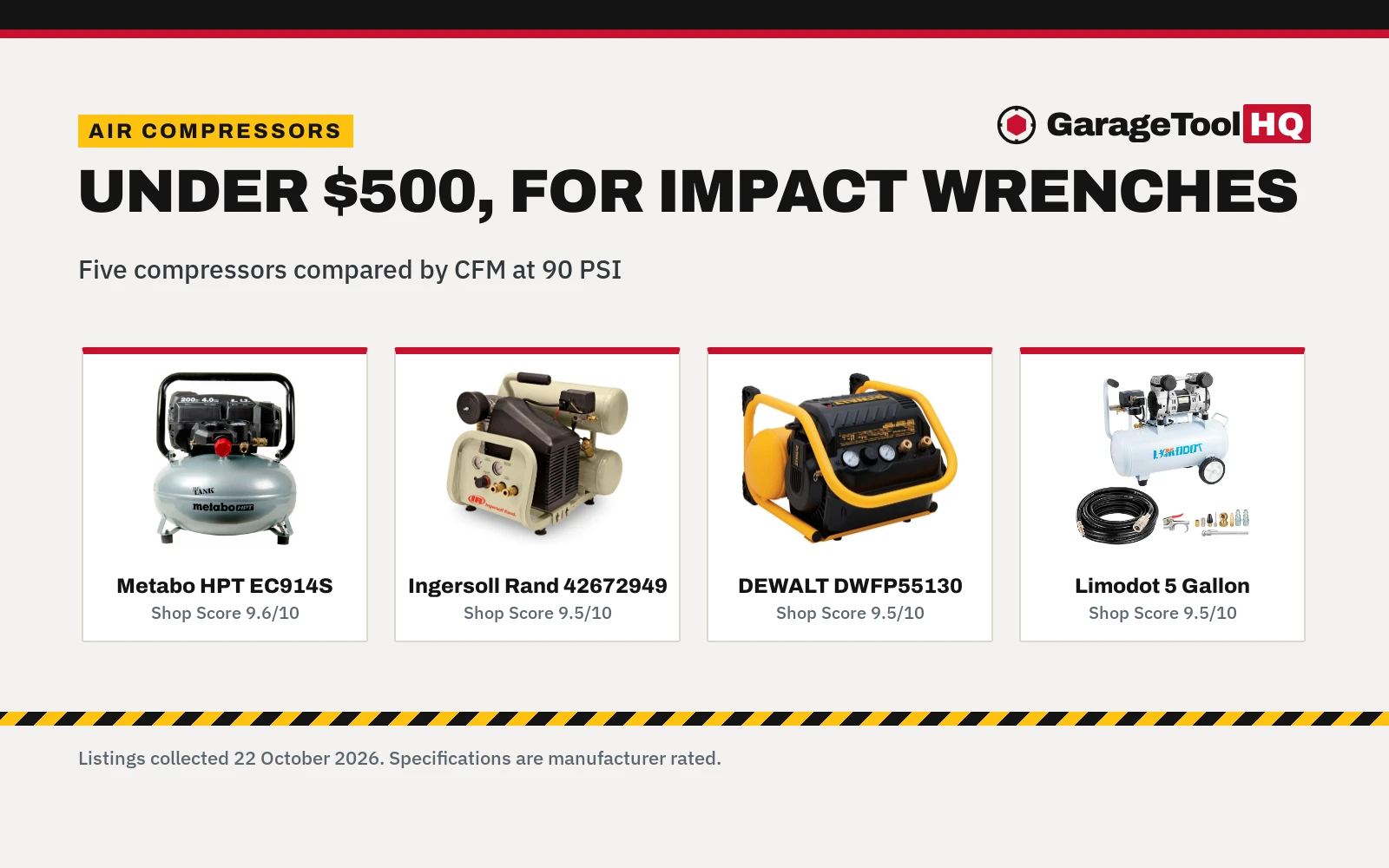
 Metabo HPT Portable Pancake Air Compressor9.6/10View on Amazon
- 2
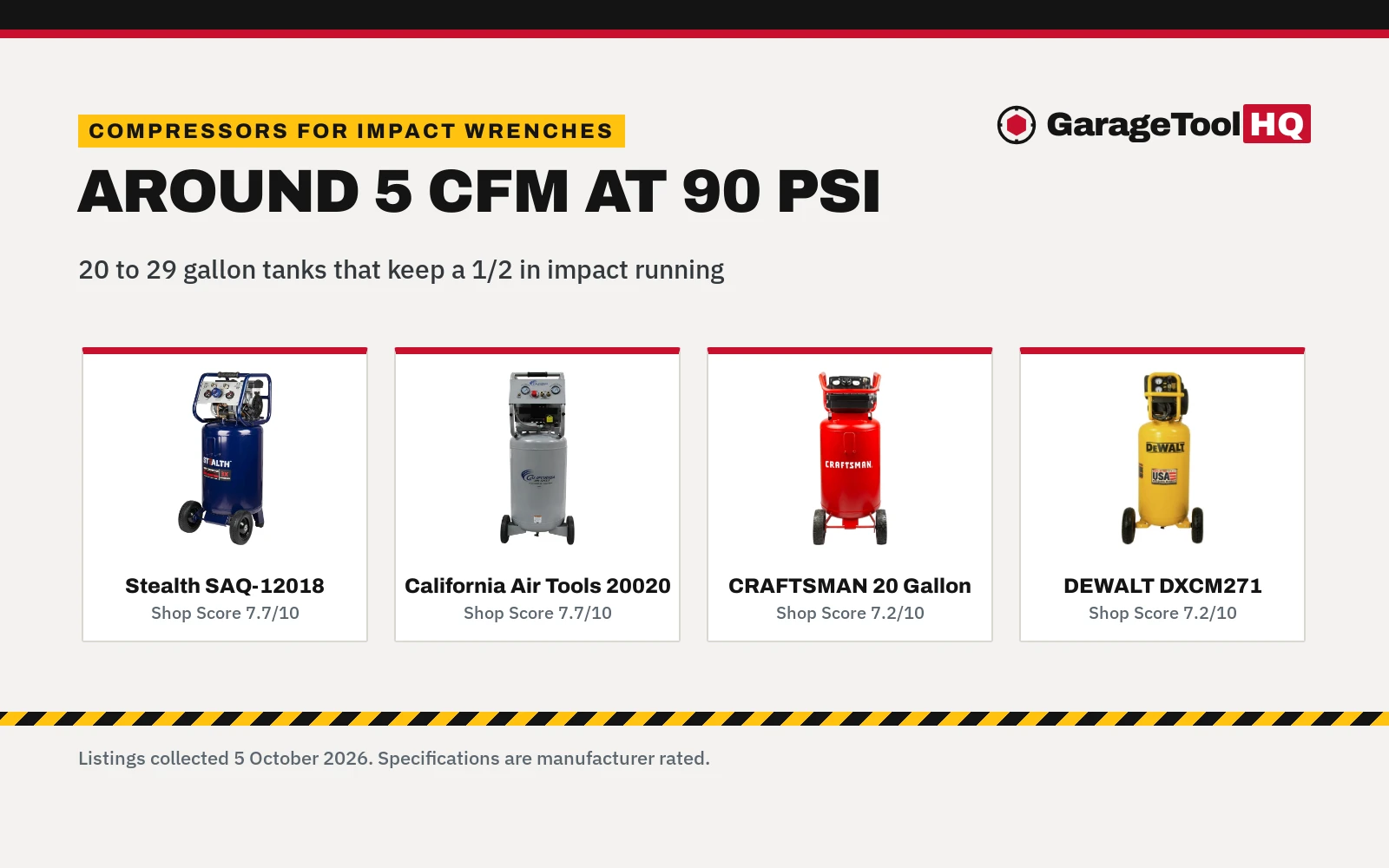
 Stealth 20 Gallon Ultra Quiet Air Compressor9.6/10View on Amazon
- 3
 California Air Tools 20020 2.0 HP Ultra Quiet and Oil-Free9.6/10View on Amazon
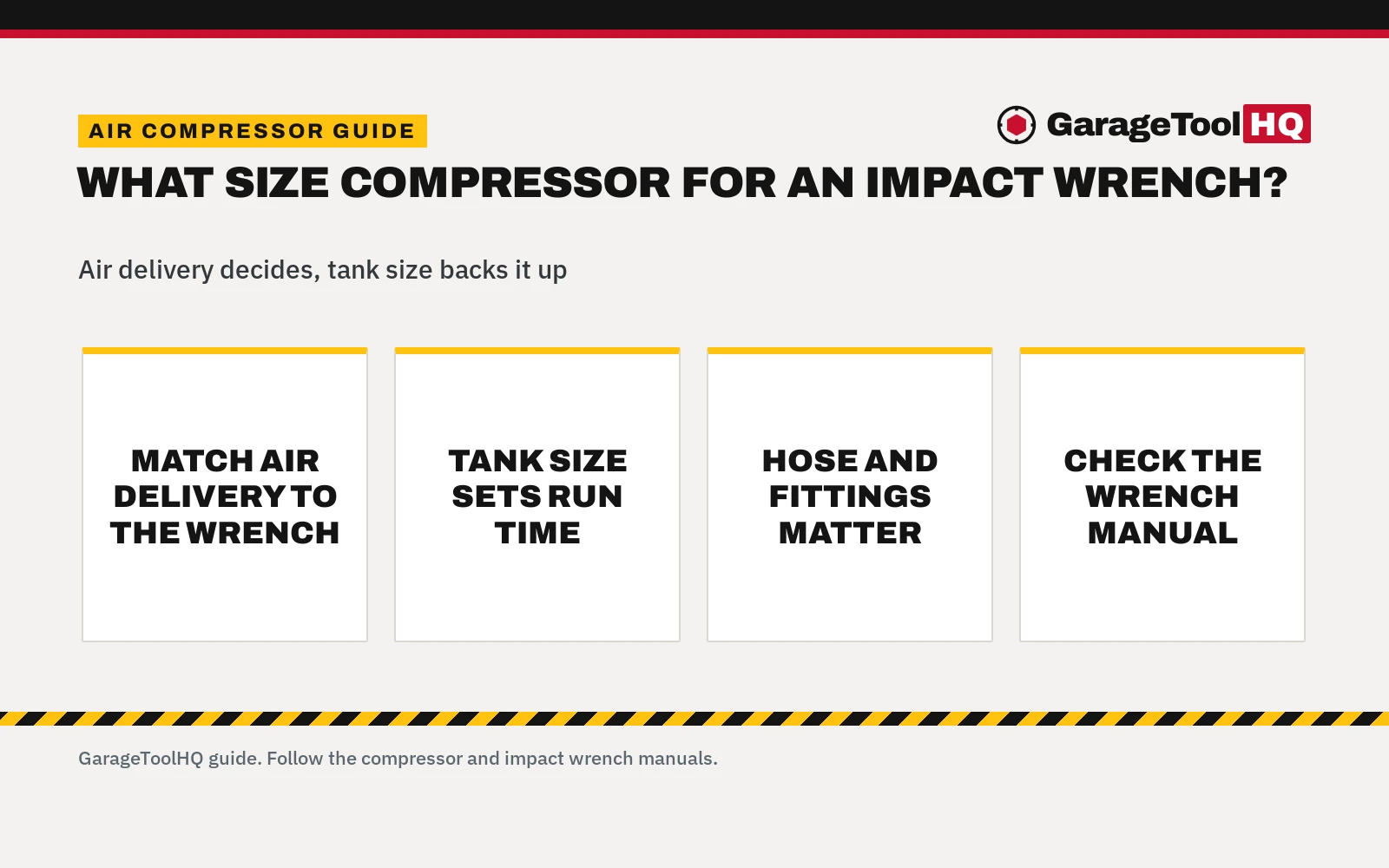
Air compressor size for impact wrench work is set by air delivery, not by tank size alone. An impact wrench needs a steady supply of air at the pressure its maker calls for. A compressor that cannot keep up with the wrench over the job, pump and tank together, will leave the wrench weak on tight fasteners, while generous delivery and a useful reserve keep it hitting hard.
GarageToolHQ earns a commission when you buy through links on our product pages, at no extra cost to you. Read our affiliate disclosure.
Below: how to read the air demand of an impact wrench, what air delivery and tank size each do, and a sizing checklist.
Air Compressor Size for Impact Wrench: What the Wrench Needs
Every impact wrench has an air demand set by its maker, listed in the manual or on the wrench itself as air consumption at a stated pressure. That demand is the starting point: the pump and tank together have to supply that air at that pressure over the work cycle, or pressure will sag in sustained use and the wrench will not reach the torque the maker rates it for. Note whether the demand is stated for steady running or for short bursts.
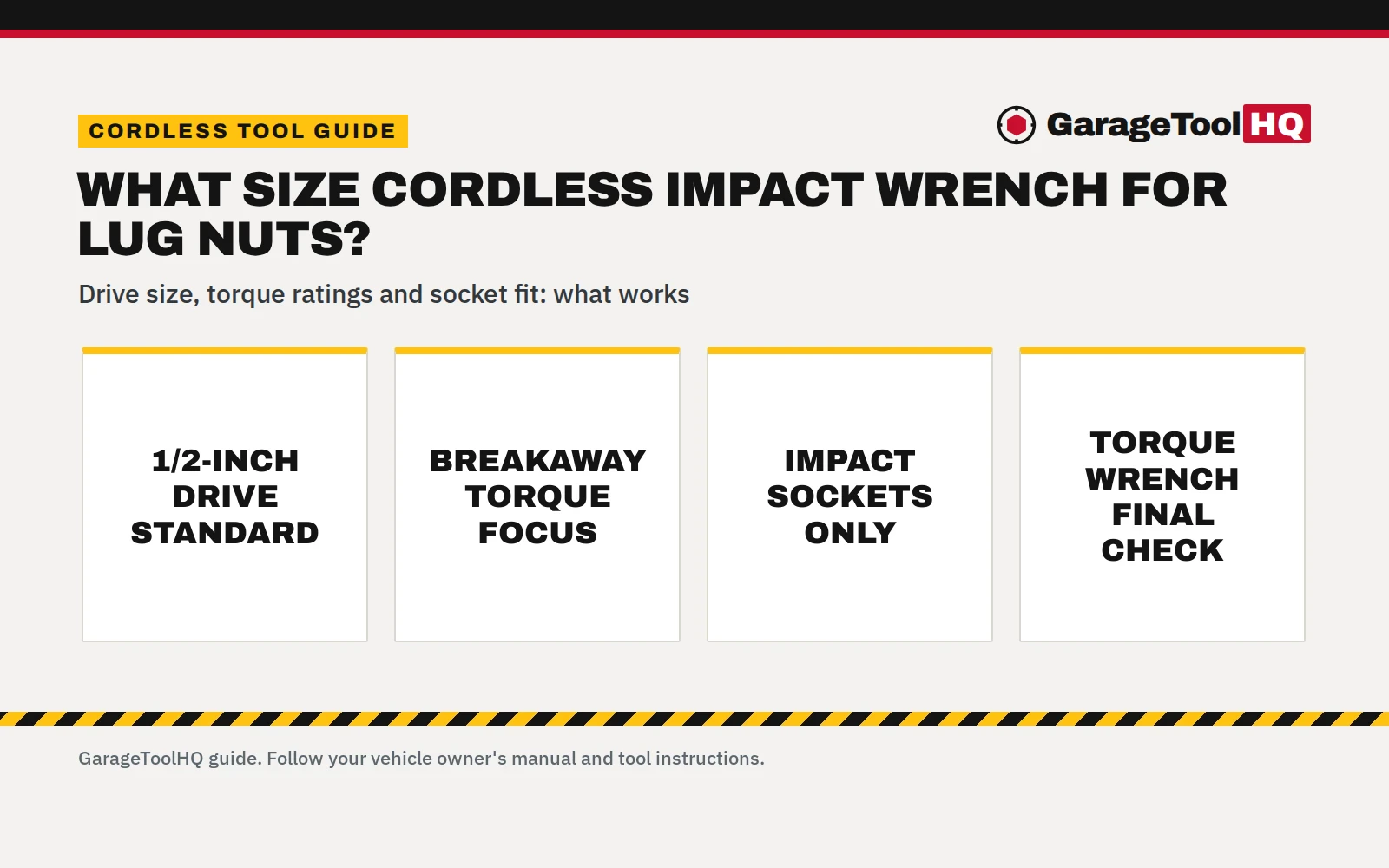
Impact wrenches also make a distinction the buyer should know. Working torque is the torque the wrench sustains while it runs, and breakaway torque is the higher peak it reaches to crack a tight fastener loose. A compressor sized only for light running may spin lug nuts off a car that was serviced recently, then struggle on a rusted suspension bolt that needs the wrench at full strength. Size for the hardest job the wrench will see, not the easiest. Drive size alone does not set air use, so compare the stated consumption figures rather than drive size. The guide to the types of impact wrench explains drive sizes and power.
Air Delivery Matters More Than Tank Size
Air delivery is the volume of air the compressor pump can supply while it runs, stated in CFM at a stated pressure. It is the figure that decides whether the wrench keeps full power. Tank size is only a reserve: it stores air the pump has already made, and it empties while the wrench runs. A large tank with a small pump gives a strong start and then a long wait.
Compare delivery figures at the same pressure the wrench needs. A delivery figure stated at a lower pressure does not describe what the compressor can do at the pressure the wrench runs at. Delivery stated as displacement, the volume the pump moves before losses, is a different figure from delivered air, and the delivered figure is the one that feeds the wrench.
When delivery falls short, the signs show up fast. The wrench slows, torque drops, and the compressor runs without pause while pressure falls. The work turns into short bursts with waits in between. A compressor with delivery above the wrench demand holds pressure through the job. See the guide to air compressor capacity for more on how delivery and tank size work together.
| Job | What the compressor needs | What to watch |
|---|---|---|
| Tire rotation and lug nuts | Steady delivery for short bursts | Recovery between wheels |
| Brake work and suspension bolts | Delivery that holds through longer bursts | Pressure sag on tight fasteners |
| Rusted or seized fasteners | Delivery and reserve together | Wrench strength fading mid-job |
Tank Size and Recovery Time
The tank sets how long the wrench can run on stored air before the pump has to catch up. A bigger tank holds more reserve, so the wrench gets more trigger time before pressure falls to the point where the pump cuts in. That matters most for burst work, where the wrench runs in short pulls and the tank refills between them.
Recovery time is the other half of the picture: the time the pump needs to refill the tank after the wrench has drawn it down. A compressor with a large tank and a small pump can take a long while to recover. The air compressor fill time calculator shows how tank size and pump delivery shape that wait.
Hose, Fittings and Pressure Settings
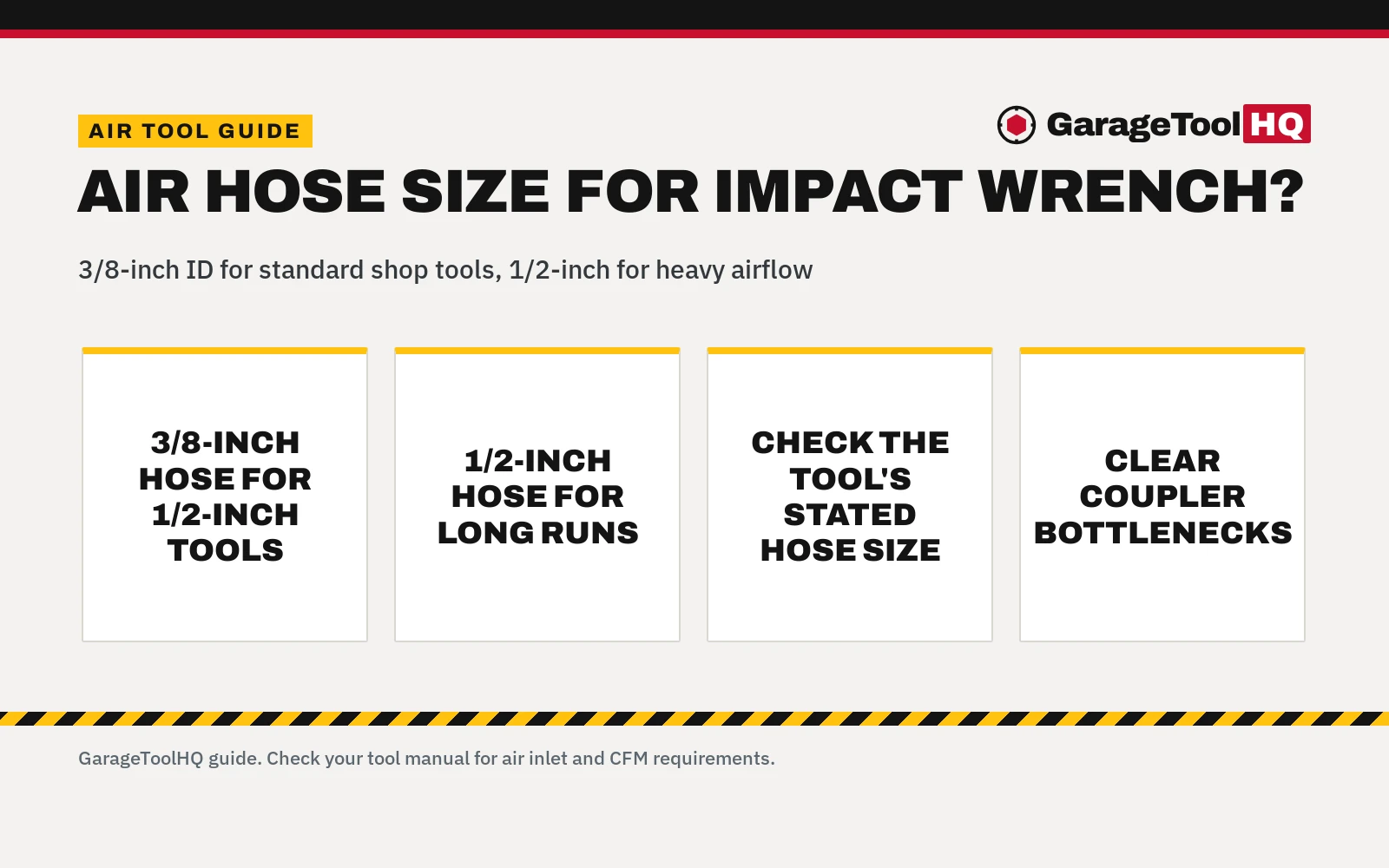
The hose and fittings between the compressor and the wrench can starve a good pairing. A narrow hose or a very long hose restricts airflow, so the wrench sees less air than the compressor delivers. A hose with a generous bore and a length that fits the workspace keeps the air moving. The guide to the types of air hoses covers materials and the uses each suits, and the guide to air compressor coupler types explains the fittings that connect hose to tool.
Set the regulator to the pressure the wrench maker calls for, and no higher. More pressure than the wrench is rated for can raise output, but it puts the tool and the hose beyond their rating and wears them faster. When the wrench feels weak, the cause is often air starvation from a narrow hose, a restrictive coupler or a regulator set low.
How to Size a Compressor for an Impact Wrench: The Checklist
- Read the wrench manual. Note the air demand and the pressure it is stated at, and whether the figure is for steady running or short bursts.
- Match delivery at that pressure. The compressor delivery figure has to meet or beat the wrench demand at the same pressure.
- Size the tank for the job. Burst work like tire rotation leans on the tank, while steady work leans on the pump.
- Check the hose and couplers. A generous bore, a length that reaches the work, and full-flow couplers keep the air reaching the wrench.
- Set the regulator to the wrench pressure. Use the pressure the maker calls for, and leave it there.
- Plan the power supply. A larger compressor may need a dedicated circuit, so have a licensed electrician fit the supply.
- Leave room for the next tool. When the garage will also run a ratchet or a blow gun, size for the hungriest tool on the list.
Compressed air can injure skin and eyes, so wear eye protection and never point an air nozzle or an open hose at skin. Drain the tank after use, keep the safety valve clear, and follow the compressor and wrench manuals.
Drain the tank after use so water does not rust it from the inside, never exceed the tool's rated pressure, wear eye protection, and run 240V units on the circuit the manual calls for. Do not run a gas engine compressor in a closed garage. Read our Safety Disclaimer.
Portable or Stationary: Which Shape Fits the Garage
Portable compressors roll to the driveway, pack away between jobs and suit a garage where the wrench moves from car to car. Stationary compressors stay plumbed in place and often hold a larger reserve, and suit a garage with a fixed work bay. The shape does not change the sizing rule: delivery at the wrench pressure still decides whether the pairing works, and the tank still sets the reserve. A portable unit that meets the wrench demand is the right call for tire rotation and light suspension work, and the picks in the guide to the best portable air compressor for a home garage show what that class offers. Measure the floor space, the power supply and the hose run before buying, and read the air compressors hub for the wider range of guides on the site.
FAQ: garage tools
Can a small portable compressor run an impact wrench?
It can, when its delivery at the wrench pressure meets the wrench demand and the work comes in short bursts with time for the tank to refill. A small portable unit will struggle with long sessions or repeated fasteners, where the tank cannot refill between bursts.
What happens when the compressor is too small for the wrench?
The wrench loses torque, pressure falls while the wrench runs, and the pump runs without pause. Tight fasteners stay tight, and the job turns into short pulls with waits between them. The fix is delivery that meets the wrench demand at its pressure, not a larger tank alone.
Does a bigger tank make up for low air delivery?
Only for very short bursts. A bigger tank gives more trigger time before pressure falls, but the pump still has to refill it. For steady work the pump decides the outcome, and no tank size makes up for a pump that cannot keep up with the wrench.
What hose size works with an impact wrench?
Use a hose with a bore that matches what the wrench maker calls for, in a length that reaches the work without excess coils lying on the floor. A narrow or very long hose restricts airflow and leaves the wrench weak even when the compressor is big enough. Full-flow couplers help too.
Do I need an air dryer or filter for an impact wrench?
A filter and water separator in the line trap grit and liquid water before the wrench, and a dryer removes water vapor in damp garages or on long jobs where moisture builds up. Oil the wrench as the maker directs, using the options in the guide to what to use for air tool oil, and drain the tank after use.
Can I use the same compressor for an impact wrench and a paint sprayer?
Yes, when the compressor delivery meets the demand of the hungriest tool that will run on it. A sprayer needs clean, dry air and steady delivery, so fit a filter and a dryer in the line, keep any oiler for the wrench out of the sprayer line, and keep the regulator at the pressure each tool calls for.
Related: air compressor capacity, the types of impact wrench, the picks for the best impact wrench for changing tires, air compressor uses at home and the air compressor fill time calculator.