Shop Pressure Washer Parts: Common Replacement Parts Guide
Shop pressure washer parts cover the hoses, nozzles, pump parts, fittings and soap dispensers that wear out, with notes on matching the fitting and knowing when to swap a part.

On this page
Top picks at a glance
As an Amazon Associate I earn from qualifying purchases.
- 1
 GFGD Swivel Pressure Washer Gun with Extension Wand 3/8”9.6/10View on Amazon
- 2
 Pressure Washer Gun and Hose Kit 25FT9.6/10View on Amazon
- 3
 FIXFANS Pressure Washer Gun9.6/10View on Amazon
You pull the washer out for a driveway wash, squeeze the trigger, and the spray comes out weak, pulsing, or leaking at a fitting. The machine still runs, so the fix is often a worn part rather than a new washer. Shop pressure washer parts are the hoses, nozzles, pump parts, fittings and soap dispensers that wear out with use, and swapping the worn part can bring the spray back when that part is the cause.
GarageToolHQ earns a commission when you buy through links on our product pages, at no extra cost to you. Read the affiliate disclosure.
Below: a pressure washer parts list covering the parts that fail most often, how to tell each part is worn, and how to match a replacement to your washer.
Shop pressure washer parts that wear out
A pressure washer is a pump, a hose and a spray gun working together, so a weak spray can come from any point in that chain. Start at the gun and work back toward the pump: a clogged nozzle, a cracked O-ring, a tired hose or a pump that has lost its seal all show up as lost pressure or a leak. The sections below follow that order.
High-pressure hose and fittings
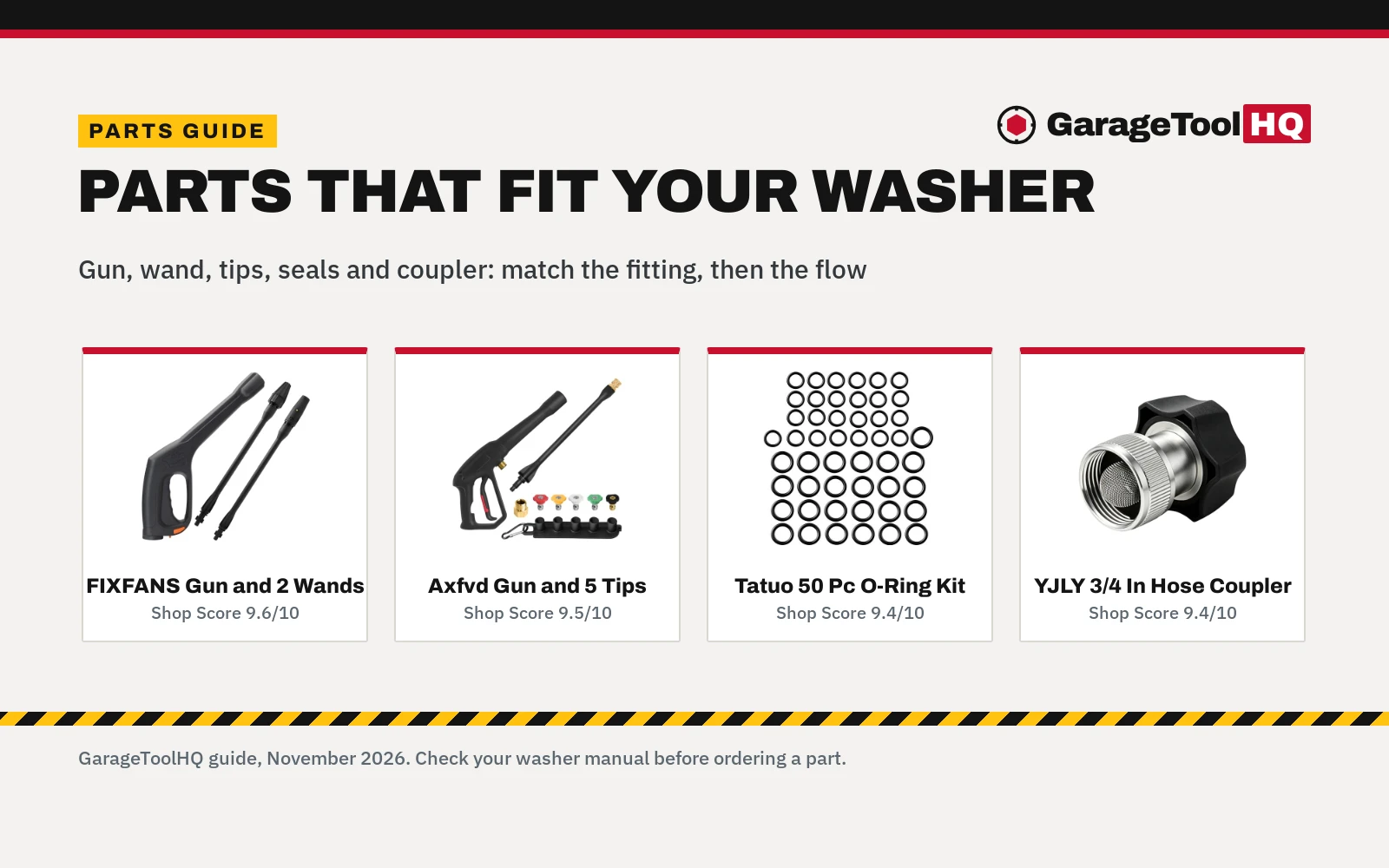
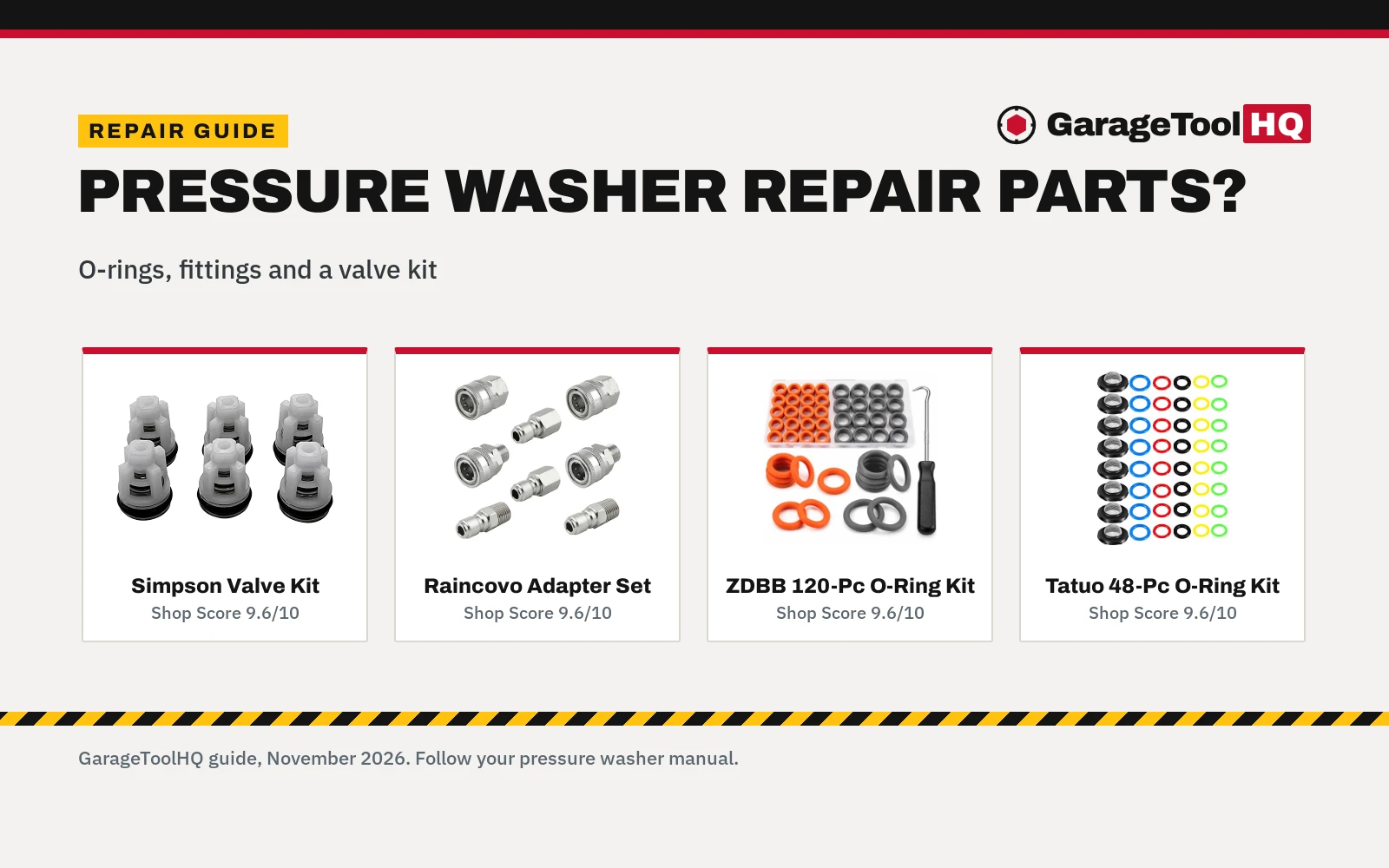
The high-pressure hose carries water from the pump to the gun, and it flexes, drags and coils every time the washer comes out. Look for bulges, cracks near the ends, and leaks at the crimps where the hose meets the fittings. A leak at a threaded or quick-connect joint can sometimes be stopped with a fresh O-ring at that joint, while a leak at a crimp, a cut or a soft spot in the hose calls for a replacement hose. Match the replacement hose by fitting type and length, per the manual.
Fittings come in many shapes, and the right shape depends on where the joint sits. The maker WHOLESUN lists a two-way fitting for a high-pressure hose failure on the reel side, measures 3 x 3 x 1 inches, states a 1-year warranty, and states 24-hour sales service. Check the fitting threads before ordering, since a fitting that looks right can still be the wrong thread. The guide to pressure washer quick-connect sizes shows the common fitting styles, and the quick-connect O-ring size guide covers the seals that stop leaks at those joints.
Nozzles and spray tips
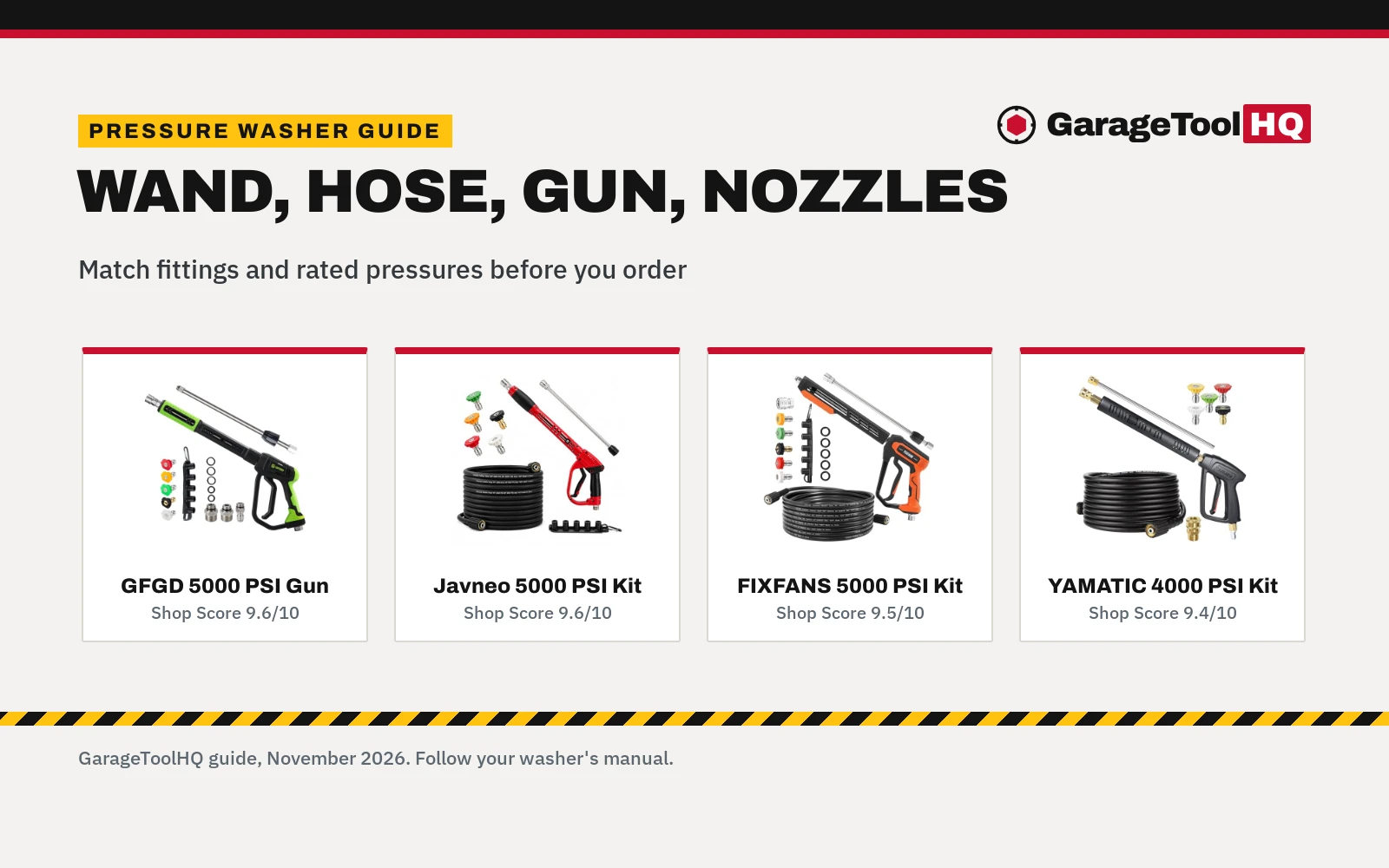
The nozzle sets the spray shape, from a narrow jet that cuts grime to a wide fan for rinsing and a soap nozzle for detergent. A nozzle clogs when grit or dried soap lodges in the orifice, and it wears when the opening grows larger than the maker intended, which drops pressure even though the pump is fine. Clear a clog with the cleaning pin the washer maker supplies, and rinse the tip before refitting it. If cleaning does not bring the spray back, the nozzle may be worn and needs a replacement with the same spray pattern and the orifice size the washer maker specifies for the pump flow and pressure. The pressure washer nozzle repair guide walks through a clogged or worn nozzle step by step.
Pump parts and pump oil
The pump builds the pressure, and its seals, valves and oil take the hardest wear in the machine. A pump that leaks water from its body, pulses, loses pressure, or makes a knocking sound may have worn seals or valves. Pump oil needs a check too: low or milky oil points to water getting past a seal, and the manual states the oil type and the fill level for your pump. See pressure washer pump types for how the common pump designs differ, and what type of oil a pressure washer pump takes before topping up. When a pump is beyond a seal kit, removing the pressure washer pump is the path to a full swap, per the manual for your model.
Unloader valve and pressure controls
The unloader valve bypasses water when the trigger is closed, so pressure does not keep climbing at the pump. Surging, pressure spikes or a trigger that gets hard to pull can point to a sticking unloader or a weak spring, though other faults can cause the same signs. Match it by the pump model, since the valve threads into the pump body and the setting comes from the maker.
Soap dispenser and detergent parts
The soap dispenser draws detergent into the water stream, and on many washers it draws only in the low-pressure soap setting. A dispenser that stops drawing soap can have a clogged pickup tube, a cracked bottle or a blocked tip, or the washer may not be in its soap setting. Rinse the pickup tube and bottle after each soap wash. The guide to how to use a pressure washer soap dispenser shows the setup and the common faults.
Gas pressure washer parts
A gas pressure washer adds an engine to the parts list, and the engine parts follow the same wear pattern as any small gas engine. The spark plug, the air filter and the fuel line are the parts to look at when the engine is hard to start or runs rough, and the manual states the plug type and the filter for your engine. Follow the manual for fuel storage, and the guide to how to drain gas from a pressure washer covers the job. For the running routine, see how to use a gas pressure washer. Keep engine spares and pump spares apart, since they do not swap.
Surface cleaner and accessory parts
A surface cleaner spins a spray bar under a round cover. Its wear parts are the bar nozzles, the swivel and the skirt. Streaks or a bar that stops turning point to a clogged nozzle or a worn swivel. The pressure washer surface cleaner repair guide covers streaks, clogs and leaks.
How to match a replacement part
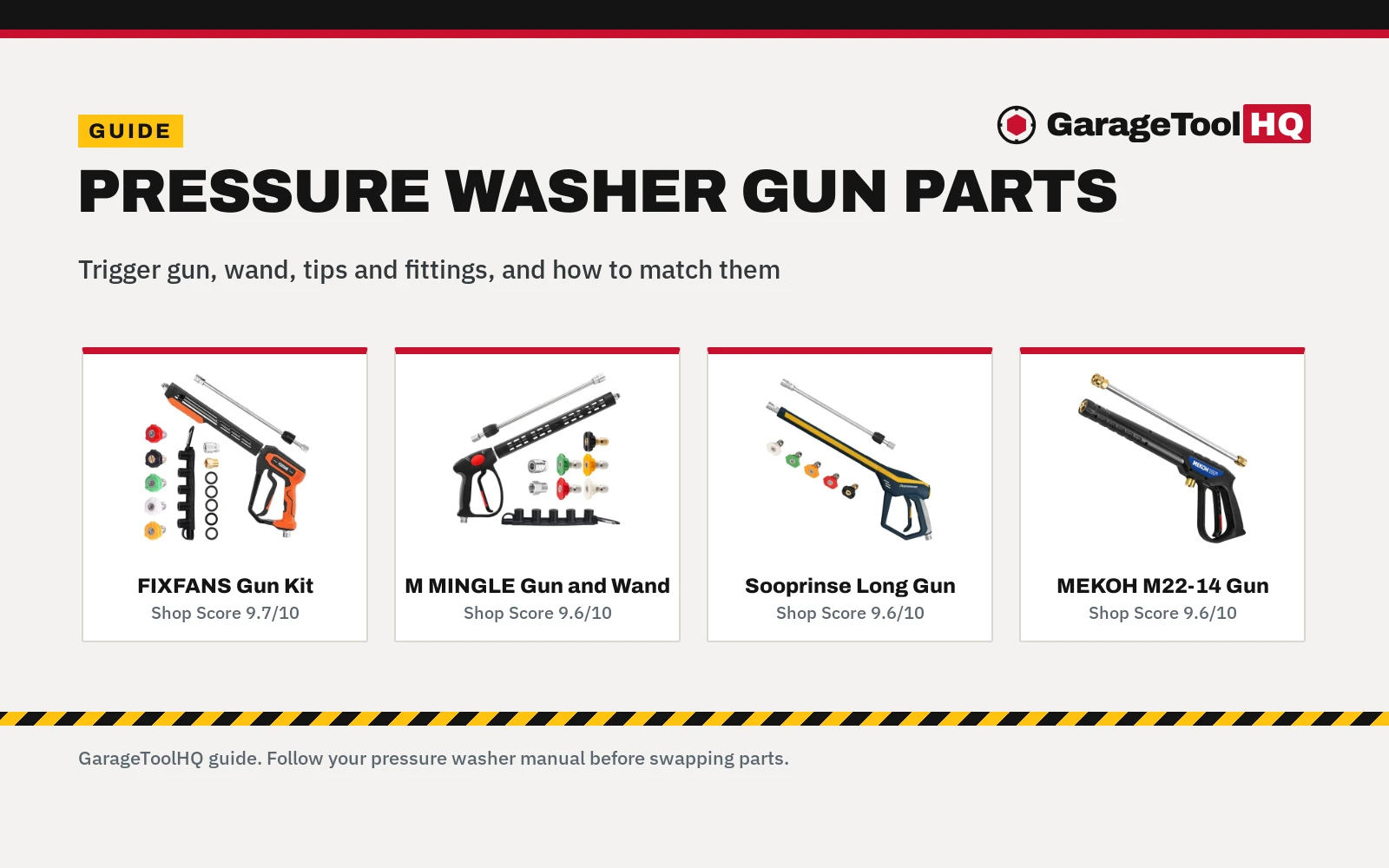
Matching matters more than brand shopping: a replacement must match the thread, the pressure rating and the flow of your washer, and a part that does not match can leak, starve the pump or put the wrong load on it. Read the model and the fitting type off the washer, the pump and the gun before ordering, and compare the thread, the pressure rating, the hose bore and the nozzle pattern and orifice size with the part details. Keep the old part until the new part is fitted, since it shows the size and thread.
When to replace instead of repair
An O-ring, a nozzle or a hose is a small swap, and it is worth doing as soon as the spray changes. A pump that leaks from the body, a cracked frame, or a washer that needs a pump, a hose and a gun together is a different call: weigh the parts and the time against a new washer of the same class. If the engine on a gas washer still runs well and the pump is the only tired part, a pump swap can keep the machine going.
Storing parts and the washer
Keep parts dry and out of the sun between jobs. Drain the hose and gun after the wash, coil the hose in wide loops, and keep nozzles and O-rings in a small box. Before cold weather, run pump protector through the pump as the manual directs, and see how to use pressure washer pump protector for the routine. The pressure washer maintenance kit guide lists what to replace on a schedule.
Read the manual before first use, wear eye protection, keep the work area clear and ventilated, and stay within every stated rating. Read our Safety Disclaimer.
FAQ: garage tools
What pressure washer parts wear out the most?
Hoses, nozzles, O-rings and pump seals are common wear points, since they handle pressure, flex and grit on every wash. Check the nozzle and the fittings when the spray weakens, and the pump seals when water leaks from the pump body.
Which hose fits a pressure washer?
Match the fitting type on the gun and the pump, and check the manual for the fitting style and hose length your washer uses. Keep the old hose until the new hose is fitted, since it shows the thread plainly.
Why does a pressure washer lose pressure?
A clogged or worn nozzle, a leaking O-ring or hose, and tired pump seals are the usual causes. Work from the gun back to the pump, checking the nozzle, the fittings and the hose before the pump itself.
Do gas pressure washer parts differ from electric ones?
Gas and electric washers use the same kinds of pump, hose, gun and nozzle parts, but the parts are not interchangeable unless the fittings and ratings match. A gas washer adds engine parts such as a spark plug, an air filter and a fuel line, while an electric washer has no engine parts to service.
How often should pressure washer parts be replaced?
Replace a part when it shows wear: a leaking hose, a nozzle that stays weak after cleaning, or a seal that weeps water. Check the parts the manual lists at the start of the washing season.
Related: best pressure washer for car cleaning, the best pressure washer for vehicles, the mobile detailing pressure washer setup and the engine and shop equipment hub. Also see how much PSI a pressure washer makes.